I wrote this back in April for the Noon Day Prayer Meeting reflection for work.
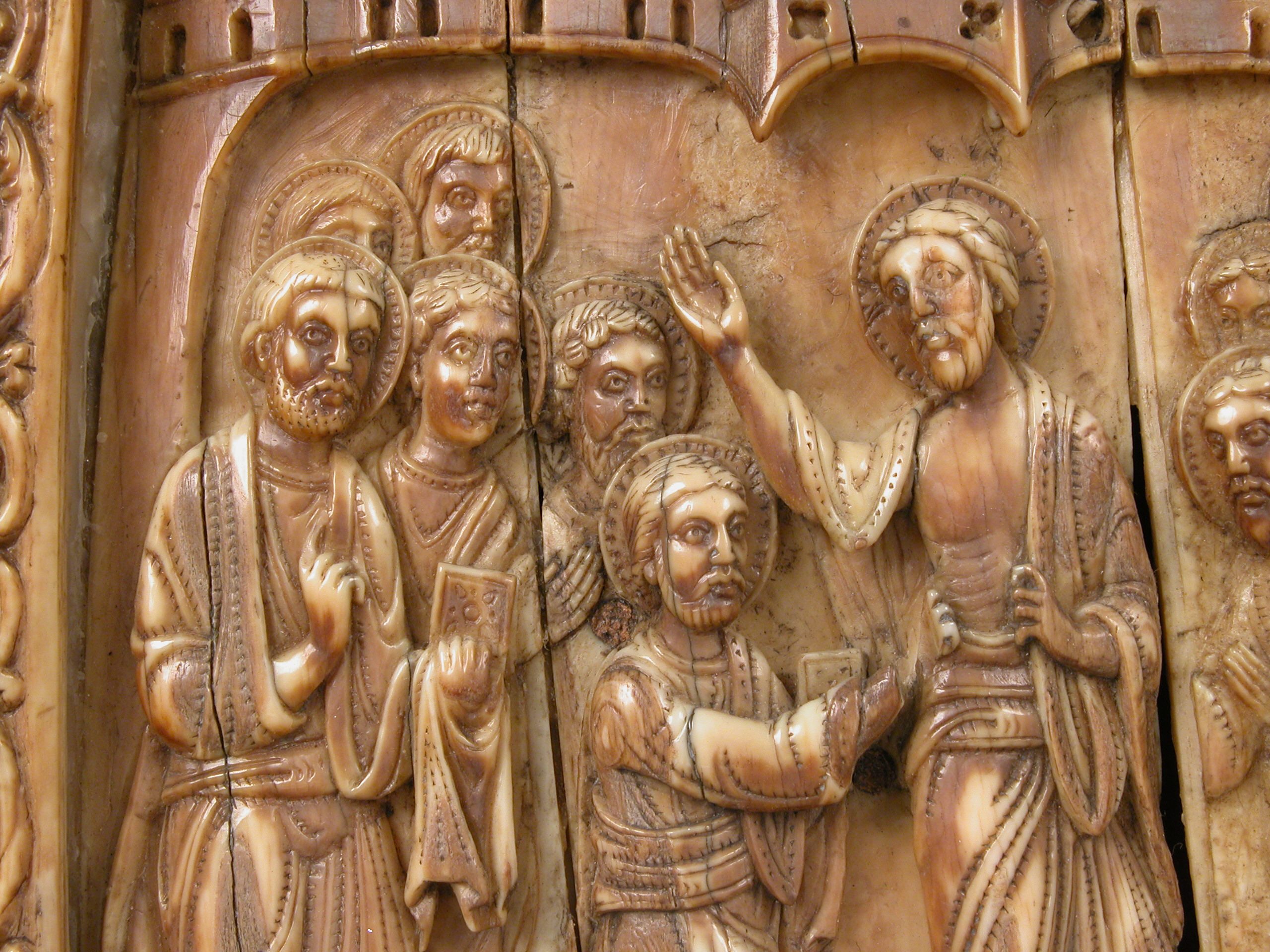
"But Thomas (who was called the Twin), one of the twelve, was not with them when Jesus came. So the other disciples told him, "We have seen the Lord." But he said to them, "Unless I see the mark of the nails in his hands, and put my finger in the mark of the nails and my hand in his side, I will not believe."
A week later his disciples were again in the house, and Thomas was with them. Although the doors were shut, Jesus came and stood among them and said, "Peace be with you." Then he said to Thomas, "Put your finger here and see my hands. Reach out your hand and put it in my side. Do not doubt but believe." Thomas answered him, "My Lord and my God!" Jesus said to him, "Have you believed because you have seen me? Blessed are those who have not seen and yet have come to believe." - John 20:24-29 (NRSV)
I doubt there is anyone more relatable in the Gospels than the Apostle Thomas.
I mean, you miss one hangout with the crew and all of a sudden, you’re supposed to believe your teacher is alive. It sounds like a giant practical joke if you’re Thomas. It would be difficult not to respond with the, “I won’t believe anything until I put a finger through his hand!” After all, it was not like people came back from the dead all the time then. But when Jesus comes back, Thomas sees him, and while we are not told he touches the wounds, we know for Thomas, the world is turned upside down. Jesus has pulled one over on humanity, and the rest of the world because he has moved from death to life. When he asks Thomas, “have you believed because you have seen me?” what answer could be expected other than yes?
While Hebrews tells us that faith is being sure of what we hope for and certain of what we do not see. I for one cannot imagine how it was expected of Thomas to believe without seeing. It reminds me of Exodus when Moses is tending Jethro’s flock and he walks by Mount Herob and sees the burning bush. Something that is on fire but not being consumed by it. If Moses had told me he’d seen a burning bush I would have believed him. After all, I have three in my yard. If he had told me he’d seen a bush that was on fire but not being consumed by it, it would take me a little time to let that sink in.
But both of these interactions have something in common. It is the space between Jesus showing Thomas the marks, and Moses absorbing what God had to say that action comes forth. The Apostle Thomas eventually goes on to take Christianity to India and is eventually martyred for it. Moses, as we all know, after some convincing by God, goes on to free the ancient Israelite’s from slavery. Both of these actions have humanity partnering with God to bring about sharing the love of God.
It is easy to ignore the holiness of space, and for that matter the time that takes place in the space. In his book The Sabbath, rabbi, and philosopher Dr. Abraham Joshua Heschel states:
“we know what do with space but do not know what to do about time, except make it subservient to space. Most of us seem to labor for the sake of things of space. As a result we suffer from a deeply rooted dread of time and stand aghast when compelled to look into its face. Time to us is sarcasm, a slick treacherous monster with a jaw like a furnace incinerating every moment of our lives.”
When I read this section of John’s Gospel this week, the space of the crucifixion wound and the time between Thomas hearing of Jesus’ resurrection, and seeing him really stood out. How many times do you think the Spirit tried to make contact with Thomas that week? Where there times when Thomas was sitting alone at night? Did he lay awake wondering if this was true that Jesus was back? Was he pushing the door shut while the Spirit was trying to break it open? What makes the Apostle Thomas so relatable for me, is there is space for his doubt. Space for his thoughts. And space for him to allow God to enter his midst and partner with him.
I’d like to end with a meditation from Dr. Heschel’s book Between God and Man. Just so we are all aware, “man” in the title refers to humanity:
“The presence of God is a majestic expectation, to be sensed and retained and, when lost, to be regained and resumed. Time is the presence of God in the world. Every moment is His subtle arrival, and man’s task is to be present. His presence is retained in moments in which God is not alone, in which we try to be present in His presence, to let Him enter our daily deeds, in which we coin our thoughts in the mint of eternity. The presence is not one realm and the sacred deed another; the sacred deed is the divine in disguise. The destiny of man is to be a partner of God and a mitzvah is an act in which man is present, an act of participation; while sin is an act in which God is alone; an act of alienation. Such acts of man’s revelations of the divine are acts of redemption. The meaning of redemption is to reveal the holy that is concealed, to disclose the divine that is suppressed. Every man is called upon to be a redeemer, and redemption takes place every moment, every day.” (pg. 80)
 George of Sylvania
Leave a comment