Tag: theology

  • Prisoners of Prophetic Hope

    Prisoners of Prophetic Hope

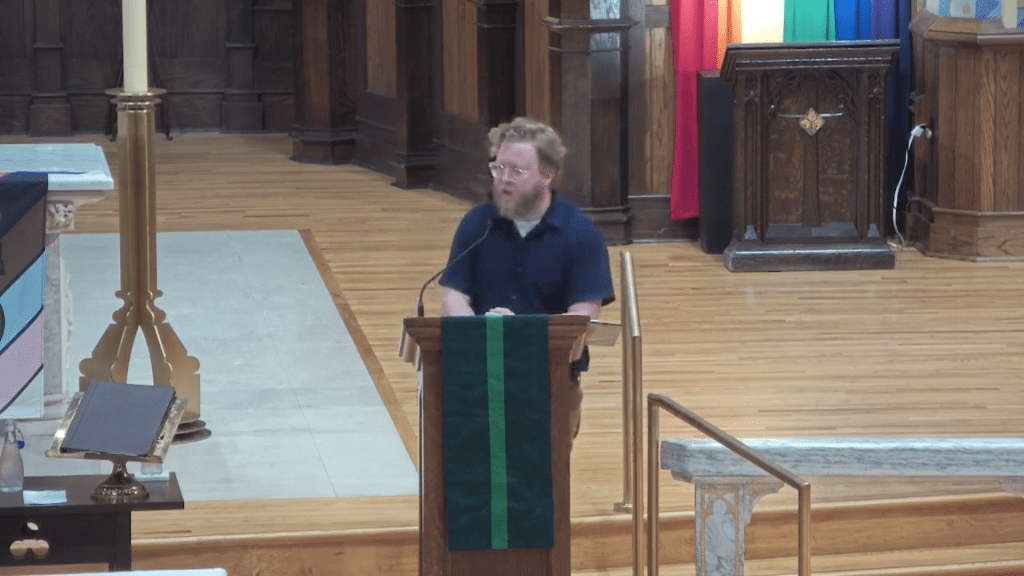
    Yesterday I had the honor to preach the sermon at my home, Trinity Episcopal Church, a progressive, inclusive, creative, downtown church. It has been a cornerstone of Toledo since 1837, and a bedrock of those seeking to act justly, love mercy, and walk humbly with God. If you’d like to watch the service you can follow the link here, or watch the sermon itself on my Facebook which is linked here. All of the quotes from Bishop Barber, including the Walter Brueggemann quote, can be found in the book, Revive Us Again: Vision and Action in Moral Organizing by Bishop Barber. A video of his 2015 MLK Jr. Day sermon can be found here. Also, I have updated some action items that allow for online reach out, so here we go!

    I am going to start with just naming one of the many elephants in the room, yesterday, the country we call home celebrated its 250th birthday. There is tension, joy, anger, and a weird dash of patriotism if, you have been following Europeans visiting for the world cup. Some of us were on the plaza celebrating until the early hours of the morning, some of celebrated with family, and others, friends of mine, to paraphrase a song written by Ben Stalets, who just wanted to be holed up in a hotel room, hoping to God they could get through the night. There is a lot to sit with in this moment we find ourselves, as Christians in this country. To quote Michael W. Austin, co-author of American Christian Nationalism: Neither American nor Christian, “in one sense love of country is a good thing. But in another, it is deeply problematic. Love of Jesus and love of country can come into conflict.”

    It is that conflict, and a way to advocate the world we want, not the one we live in, I would like to spend some time talking about.

    The passage from Zechariah is very small but powerfully packed. Something that was important to ancient Israel, and current Judaism, is the story of the exodus from Egypt. The origin story of where these people called by God, were brought up out of slavery, rescued from the oppressors, welcomed into covenant with God at Mount Sanai, and ultimately brought through the wilderness. There is a constant call back to this story throughout the Jewish and Christian Bibles, and we can see that in how the author of Zechariah phrased the ancient nation of Judah and Israel. Any time we read about chariots or war horses, it should give us pause, because these descriptors are triggers for the original listeners of this story to be brought back to Egypt.

    Pharaoh and his army, with chariots and war horses, chased after the ancient Israelites as Moses led them through the Red Sea. In quick words, the Prophet Zechariah is drawing a one-to-one comparison to Egypt and the people who escaped that oppression to their current status. In their journey to be a blessing to all nations like they promised God to be, the ancient Israelites have become the opposite, they have become the new Egypt, oppressing and enslaving others. This group of people that pledged themselves to God have instead become an empire seeking its own means, claiming it is from God because they are clearly prosperous. It is to this point that Zechariah calls out from God for the dismantling of the military industrial complex, the command that peace be waged in all nations, and for the people who will be doing this work, the prisoners of hope, to be restored.

    Over two thousand years later the people of God, these prisoners of hope, continue to call out this need to dismantle our faith from the oppression, violence, and injustice of empire.

    But how do we do this work, after all, for the past decade there has been an incredibly charged political climate with culture wars and the like dictating new fronts to fight on. While it is incredibly overwhelming, even if we only have the energy in ourselves to voice opposition and to support the marginalized, targeted, and oppressed it can be enough. There is a Palestinian priest in the Evangelical Lutheran Church named Munther Isaac, and in his book, The Other Side of the Wall: A Palestinian Christian Narrative of Lament and Hope, he writes, “Our silence towards injustice is a political statement itself” and he is right.

    With so much turmoil, what are we to do? Zechariah reminds us we need to take our instruments of oppression, and to turn them into plowshares, garden tools, or fine art. Whatever these 21st century swords and shields we still cling to need to be laid down by the riverside, and we must study war no more. When we start to practice this laying down, we can move from prisoners of hope to what Disciples of Christ Bishop, former North Carolina NAACP President, and current co-chair of the Poor People’s Campaign, Bishop William Barber II has coined, Prisoners of Prophetic Hope.

    Touching back on the conflict between the love of country and Jesus, it is easy to get frustrated. However, when I look around this room, think of our ministries, I see the truth in the country I love, and it is all of you, and the diversity we offer. When we lay down an old way of life, a new direction and leader is required for us and Jesus offers this in abundance. “Come to me, all you that are weary and are carrying heavy burdens, and I will give you rest. Take my yoke upon you and learn from me; for I am gentle and humble in heart, and you will find rest for your souls. For my yoke is easy, and my burden is light.”

    Every Sunday at 8:20am I give a little pre-breakfast peptalk that touches on this passage, because above the plaza doors in My Brother’s Place lives a sign that reads, “A Place To Nourish Both Body and Soul.” It is a remnant of our past, that screams truth into our future, because we want our friends who come to Breakfast at Trinity to lay their burdens down.

    Trinity has a long history of guiding and advocating for the world we want to live in and trying to reshape America, and I would like to name four examples:

    1. Morrison Waite, who served on vestry from 1852-1874 when he was selected by President Grant to serve as Chief Justice of the Supreme Court during Reconstruction. During his time, he expanded the Freedmen’s Bureau, protected people of color from the KKK, and while there was more work to be done to protect Black and people of color during Reconstruction, he showed up and tried.
    2. There is a legend that the first free kindergarten in Lucas County was founded out of Trinity, and while I am unsure how true that is, what I do know is according to our September 1875 Parish Guide, a new term of school started on Monday the 13th, which the author states, “it is with particular gratification that I have been able to announce the establishment of the Kindergarten department, which I consider a great addition to the educational facilities of our city.”
    3. In March of 1912 Jennie Barnes and Hester Scrafford founded the Business Woman’s Guild of Trinity Church where women who worked downtown could come and eat their bagged lunch safely, in community with one another. There are pictures of the café that started in the basement because of this, and there is a bronze plaque commemorating this ministry that lasted well through the 20th Century in what is now our AA room.
    4. If you were present for the Queer Joy Symposium you heard Toledo Councilman Nick Komives talk about how the first Toledo Pride started in this sanctuary with the first Pride interfaith service.

    Again, and again, and again these walls have housed fellow prisoners of hope as we step forward in works of justice brought out from love. The continued work of making spaces safe for everyone is a justice issue Jesus calls us to be active members in creating.

    “Take my yoke upon you, and learn from me; for I am gentle and humble in heart, and you will find rest for your souls. For my yoke is easy, and my burden is light.”

    These words of Jesus would have called his fellow farmers and working class listeners to think of the oxen in the field shouldering the huge wooden yoke to help plow the fields. Every single one of those examples of Trinity members had days where they wanted to give up.

    At times they may have thought the strain is too much, the world is too dark, and this burden is not light, but too heavy.

    The yoke and burden that Jesus gives us is only light and easy because we have each other to lean on, to help share the load because we mustn’t do this work alone. That is why we must move from being a prisoner of hope, to becoming a Prisoner of Prophetic Hope like those who have come before us.

    In January 2015 at Duke University, Bishop Barber preached the Martin Luther King Jr. Day service, and in that sermon, he speaks on this transition from prisoner to prophet. To become a Prisoner of Prophetic Hope, Bishop Barber says that it is crucial to publicly own the despair in the world we feel and know to be true. The need for this is because when we read the prophets we see how the hope in their words is subversive to the suffering and world around them. Bishop Barber is backed up by the words of Old Testament scholar Walter Brueggemann, when he writes “prophets must be able to speak in both grief and hope.”

    Because of my role here, I find myself in conversations with random people throughout the week, and there is one consistent throughline in almost every talk that comes up about Trinity. It is not about our building, the pride flags, or any of our ministries. While those do come up, the one consistent thing people tell me about their experience with Trinity is, how welcoming and at home the people here make them feel. The reason why we are so good at welcoming people into Trinty, is because almost all of us that find ourselves through these doors in person or online, we have all been rejected from community. At one point or another, we have found ourselves outside of the place we once called home, and we never want anyone else to feel that way again.

    If you feel called to take on the yoke and burden of Jesus, and you want to move from being a prisoner of hope to a Prisoner of Prophetic Hope I have a few opportunities for you. In a way to publicly own this grief we feel, use 5 Calls to contact your senator about HR 1689. It is a recent bill that passed the House with bipartisan effort, House Resolution 1689 which determines the Temporary Protected Status of Haitian and Syrian immigrants.

    The second opportunity is on July 22nd from 9-11 there is a protest at the Central Corrections Facility of Northwest Ohio which is now contracted as an ICE detention center. I will be there, reach out and I’d love to have you with us. Finally, It is crucial now, more than ever we show up to support our LGBTQ+ siblings.

    To close, I want to leave you again with words from Bishop Barber, because we can be the hope that is missing in the world. “When the rejected get together they can in fact redeem America from hate and discrimination… when all those hands get together and when the rejected join hands our togetherness becomes the instruments of redemption.”

    Amen.
  • Henrietta Butler

    Henrietta Butler

    A few months ago my wife, child, and I took a little jaunt to New Orleans to visit some family that has lived down there for a long time. It is a trip we try to make every 18 months to two years, and this time it just happened to coincide with New Orleans Jazz Fest where Jon Batiste was closing down Friday night. It was a great time, I got to see almost a full set of The Dirty Dozen Brass Band in between getting snacks and drinks. By the time Jon Batiste was getting ready to go on, our almost four year old was cooked, and I took him back to the house. While I love Batiste, it was my wife’s bucket list item to see him play jazz fest. It was a trip that was hard at the start, but was incredibly enjoyable by the end.

    Whenever we go somewhere, I know there will be downtime in the middle of the day while those two nap to run out and check out something I know others either won’t want to see, or is just too off the beaten path. For this trip, my main goal during this limited time, was to see the Whitney Plantation Museum. Plantations are not places I have ever had any interest in visiting, I do not care for Gone With the Wind, or the revisionist history that white southerners have spent so much time trying to cover up. The whole idea of a tour being focused around the big house makes my skin crawl. So when I read Clint Smith’s book, How the Word is Passed: A Reckoning with the History of Slavery Across America, and his chapter on the Whitney Plantation, I knew I had to try and see it.

    What sets the Whitney apart from other places like this, from their website, “Whitney Plantation is a non-profit museum dedicated to the history of slavery, situated on a historical sugar, indigo and rice plantation which operated from 1752-1975.” Their focus is strictly on the the lives of those enslaved, which was genuinely breathtaking, tear inducing, and uncomfortable which is perfect for every white person that walks those grounds. One thing that surprised me, aside from how stark the big house was (no decorations, no furniture, just there as a reminder which was 10/10), were the carved statues of children all around the grounds.

    When you check into the tour, you are handed a lanyard that has a name and picture of one of these statues because they are real people with real stories about being enslaved. During FDR’s time in office, he pass the New Deal, a sweeping group of legislation from 1933-1939 that was designed to help lift this country out of the Great Depression. One of the projects that came from it was the Work Progress Administration (WPA), and journalists like Zora Neale Hurston, and others were sent out to record the accounts of those formerly enslaved. From those records, the Whitney pulled names, and on the back of the lanyard was written part of their story.

    Henrietta Butler, around 80 years old when she gave her testimony, is who was on my lanyard. Her testimony is held on record at the Northwestern State University of Louisiana, Watson Memorial Library, in the Cammie G. Henry Research Center. The section of her story that is on my lanyard, which lives in my office, states:

    I’se 80 some odd years ole, born at LaFourche. I was born in slavery. I’se not ashame’ to tel it either an’ knows somethin’ about it.

    My damn ol’ missus was mean as hell; I know ever; night I had to wash dat ol’ woman’s foots an’ rub dem ‘fo I could ever go home to bed…they made my ma have babies all de time.

    She was sellin’ the boys and keepin’ the gals.

    If you are interested in reading some of the slave narratives from the WPA, you can access it online through the Library of Congress by clicking here. I cannot recommend visiting this place of history enough. Pick up Clint Smith’s book, read up on the Whitney, and friends, do your part to make sure nothing like this happens again. The 13th Amendment still allows slavery via the prison industrial complex, and those siblings who have been wrongfully or correctly imprisoned deserve the dignity they inherently have. Families are still being torn apart, I encourage you to contact your reps so that we do not find ourselves replaying this history. When we start to dehumanize our fellow image bearers, it becomes easier to think we are above “them” which we are not.

    Grace and peace.

  • Broken Clocks

    Broken Clocks

    Imagine my utter surprise when I get a news alert about something Ohio Governor Mike DeWine says, that I not only agree with, but am actively championing. Per our local paper, The Toledo Blade:

    COLUMBUS — The state of Ohio should end the death penalty, Gov. Mike DeWine said Tuesday.

    “I no longer believe that the death penalty is a deterrent,” Mr. DeWine said during a news conference at the Riffe Center. “The moral justification I had for voting for the death penalty simply no longer exists.”

    The governor said the Ohio General Assembly should take action to end capital punishment.

    “If the legislature does not want to make that decision, they can leave it up to a vote of the people of the state of Ohio,” Mr. DeWine said.

    The fact that Gov. DeWine is calling for this is proof that no matter what, if you’re open, you can change. I appreciate that as for part of my life, I was a death penalty purist, if you did the crime worthy of it, your life is forfeit.

    During the first year of marriage, my wife and I were reading Jonathan Wilson-Hartgrove’s book, New Monasticism: What it Has to Say to Today’s Church. A former friend and colleague had recommended it to us as we were interested in the movement, and I will never forget how challenging the chapter on the death penalty was. Through many drives from Chicago to Toledo, we had argued and discussed it ultimately landing on, who are we to say when God is done with someone.

    Today, the day that DeWine has come out against the death penalty should be one we remember. On June 16, 1944 George Stinney Jr. was executed via the electric chair in Columbia South Carolina. It was alleged that he murdered two white girls, and this poor 14 year old Black child, was tried, convicted, and sentenced in one day. Then, 82 years ago today, he became the youngest confirmed person to be murdered by the state in the 20th century America. George Stinney’s case was reopened, and in December of 2014 he was vacated of the crime due to new evidence.

    Per the Equal Justice Initiative, an incredible organization founded by Bryan Stevenson, 202 people have been exonerated and released from death row since 1973, and 1,661 people have been executed in the U.S. since 1973. This means for every eight people executed, one person on death row has been exonerated. The odds are too high to not do something about it.

    As the old adage goes, broken clocks are right twice a day, the same can be said of politicians, and today is one of them.

    Ohioans, call your reps and ask them to support Governor DeWine’s push to abolish the death penalty in Ohio. You can find your State House Rep here, and your State Senator here.

    Grace and peace.

  • Everytown, OH

    Everytown, OH

    By now I am sure you have heard about the mass shooting event that occured on Saturday during the Old West End Festival here in Toledo Ohio. This festival holds a special place in my heart, as my wife and I lived in the OWE when we were first married. The very first place we called “our” home together was an apartment on the corner of Parkwood and Acklin from 2011 to 2013. There are few places in the world where you get the understanding of what a neighborhood and neighbors are, and the first real time I experienced it was here.

    While I was not present for this uncalled for violence, like most people in this wonderful city, I have friends who were. The church we belong to participated in the parade for the first time in years, and my son and I left hours before this occurred. For months members spent planning what was our Pride celebration kick off, and the two mile march was a great time. But the next day, Sunday, our annual Wear Orange/Gun Violence Awareness service which happens the first Sunday in June, was more somber than usual.

    I pray and give thanks that no one was killed, the community and fest goers responded in the way we hope people will, I mourn the fact that it happened. At a vigil I went to with some friends on Sunday, I overheard someone say that they were surprised this hadn’t happen here yet. And I am disgusted that I too found it surprising.

    Ohio ranks 30 of 50 in gun laws, which is down from last year when we were ranked 29th, per Everytown’s website. It was also no surprised that when I too posted about this on social media asking people to call their reps and demand gun legislation that there were people parroting the “it won’t work” talking points. I’m tired of listening to them, or giving that point oxygen.

    Gun legislation now,

    gun legislation tomorrow,

    and gun legislation forever.

    I’m sure there will be more to come on this, but today my heart is weary. While as of writing, there is one suspect in police custody, an 18 year old kid that doesn’t have a fully developed frontal cortex. My friend Alyx I think summed up my thoughts best in their post when they wrote, “You can’t expect kids [or anybody] to care about a future we’ve robbed them of.

    Flood your reps with calls, letters, emails, etc. demanding gun reform. If you happen to find yourself in Toledo this weekend, I highly encourage you to attend Unwanted Firearms Disposal event sponsored by the Multifaith Council of Northwest Ohio. If you’d like a sample letter to send to Governor DeWine to enact common sense gun safety executive orders, I’m happy to provide one.

    We don’t have to live this way.

    Grace and peace.

  • Wake Up Sheeple

    Wake Up Sheeple

    Hey, I am back after a bit of some time off. It was nice to take a short break from writing a few times a week and to observe Lent, Easter, and a bit of vacation without having to worry about this.

    Now I’m back on my bullcrap, and today’s post is brought to you by John 10:1-10:

    John 10:1-10

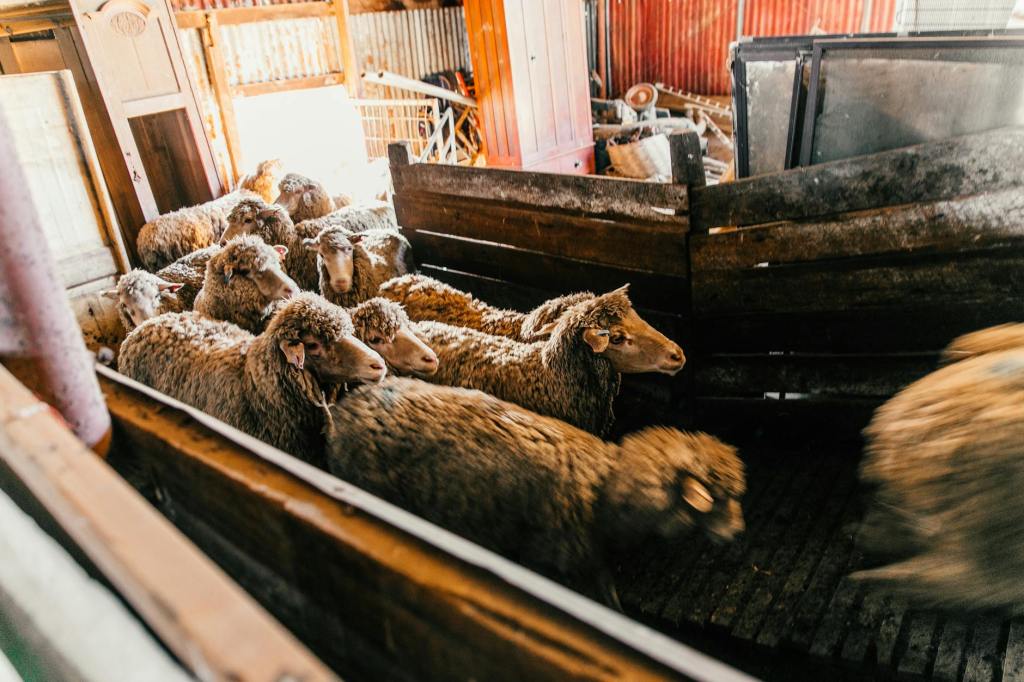
    Jesus said, “Very truly, I tell you, anyone who does not enter the sheepfold by the gate but climbs in by another way is a thief and a bandit. The one who enters by the gate is the shepherd of the sheep. The gatekeeper opens the gate for him, and the sheep hear his voice. He calls his own sheep by name and leads them out. When he has brought out all his own, he goes ahead of them, and the sheep follow him because they know his voice. They will not follow a stranger, but they will run from him because they do not know the voice of strangers.” Jesus used this figure of speech with them, but they did not understand what he was saying to them.

    So again Jesus said to them, “Very truly, I tell you, I am the gate for the sheep. All who came before me are thieves and bandits; but the sheep did not listen to them. I am the gate. Whoever enters by me will be saved, and will come in and go out and find pasture. The thief comes only to steal and kill and destroy. I came that they may have life, and have it abundantly.”

    The parable found here should give us pause and time to reflect because of how relevant Jesus’ teachings continue to be in our world. While I am sure we can all think of times when we have been involved in a conversation or situation where one of us is thinking, “there is no way this sibling in Christ reads the same Bible I do.” This has happened to me probably more times in the past 11 years than the rest of my life combined.

    As I was reading and preparing for my noonday prayer service, two verses struck me which are, “the sheep follow him because they know his voice” and “they will not follow a stranger, but they will run from him because they do not know the voice of strangers.

    For a few moments I just sat staring out the window, because all I could think of was, “this is the gap of the Gospel, and people who are stuck on the idea that it is woke propaganda.

    In an interview with NPR in 2023, Russell Moore, Editor and Chief of Christianity Today stated the following on the crisis of Christianity in these churches:

    It was the result of having multiple pastors tell me, essentially, the same story about quoting the Sermon on the Mount, parenthetically in their preaching— “turn the other cheek” —[and] to have someone come up after to say, “Where did you get those liberal talking points?” And what was alarming to me is that in most of these scenarios when the pastor would say, “I’m literally quoting Jesus Christ” would not be, “I apologize.” The response would be, “Yes, but that doesn’t work anymore. That’s weak.” And when we get to the point where the teachings of Jesus are subversive to us, I think we’re in a crisis.

    In his book, John’s Wisdom, theologian Ben Witherington writes:

    John 10 it appears, in fact that we are dealing with two parabolic images that have been combined here, one having to do with Jesus ads the good shepherd, and one having to do with Jesus as the door, or gate, for the sheep. (pg. 187)

    Witherington goes on to write that:

    It should be seen from the general tone of this material that this teaching is directed to a situation where there are competing claims about who is the true leader and way for God’s people…

    …this material does not suggest a purely defensive and in-house situation (a flock is being raided by outsiders, but suggests competition for the same sheep and a situation where Jesus and his followers are still reaching out for “other sheep” not of his fold. In other words, it will not do to interpret this material without due attention to its missionary overtones. (pg. 188)

    Christian nationalism has ripped the mask off of the nice white gospel in a way that has not been seen or at least felt this public, since the Civil Rights era. When John writes about the confusion of the listeners, it is not so hard to believe how true it rings almost 2,000 years later.

    When we are wake up to accepting our place in God’s family, we are called to give up some things, usually revolving around our ego. Not that we cannot use our talents, but I am thinking more about how we feel when there is a clear line drawn between us and the “other.” How we give into the class system that keeps our collective humanity separated, and the need and want to drive down “others.”

    My friends, may we realize that there is a better way, and that as we shepherd others, we continue to not hop gates, but to seek learning and understanding from the one who reminds us to love our neighbors as ourselves.

    Grace and peace my friends.

  • Nuclear War: A Scenario

    Nuclear War: A Scenario

    This post is brought to you by our current executive branch, the country committing ongoing genocide in Palestine, and the trouble they are causing in the Arab World.

    In 2024 I read the book Hiroshima by John Hersey which was the first time in possibly 20 plus years I had spent reading about World War Two. When I was in junior high and high school, I was obsessed with that period of history, whether it was through video games, movies, or television, it was all I liked to study. My grandfather served in the Pacific Theater on the U.S.S. Drayton as a Signalman, which heavily influenced my decision to join the military after I graduated high school.

    Spending time looking through his photo scrapbook that included his initiation into the Domain of Neptunus Rex as he crossed the equator left me with a romanticized version of this history. He had been dead for a while and all I had to go on was what he left behind, and I constantly ignored my dad telling me that he (my grandfather) would have taken my dad to their fishing cabin in Canada. Thank God I have lived long enough to be ashamed of supporting our military industrial complex, and the war crimes they have been committing.

    Anyway, back to the book.

    In this almost second by second account of what happens if the US were to experience and respond to a nuclear bomb, it really makes you sick with how much can go wrong in such a short time. The fragility around this, and the fragility of what it takes to maintain our nuclear arsenal displays how truly weak our leaders are to result to this kind of destruction. In short:

    These weapons should not exist.

    The infrastructure around these weapons should not exist.

    The people leading the country right now should never have access to this kind of destructive power.

    These are things I have believed for a few years, but, this book will cement it in the long run.

    10/10, this should be a must read for everyone.

  • It is Never Too Late

    It is Never Too Late

    Tomorrow is Ash Wednesday, and thus begins the season of Lent. It is with this in mind, I’d like to share with you something I wrote last year. On January 29th of 2025, I riffed off of First They Came by Lutheran Pastor Martin Neimöller. It is probably something you are familiar with, whether your know it or not, it reads as follows:

    First they came for the socialists, and I did not speak out—because I was not a socialist.

    Then they came for the trade unionists, and I did not speak out—because I was not a trade unionist.

    Then they came for the Jews, and I did not speak out—because I was not a Jew.

    Then they came for me—and there was no one left to speak for me.

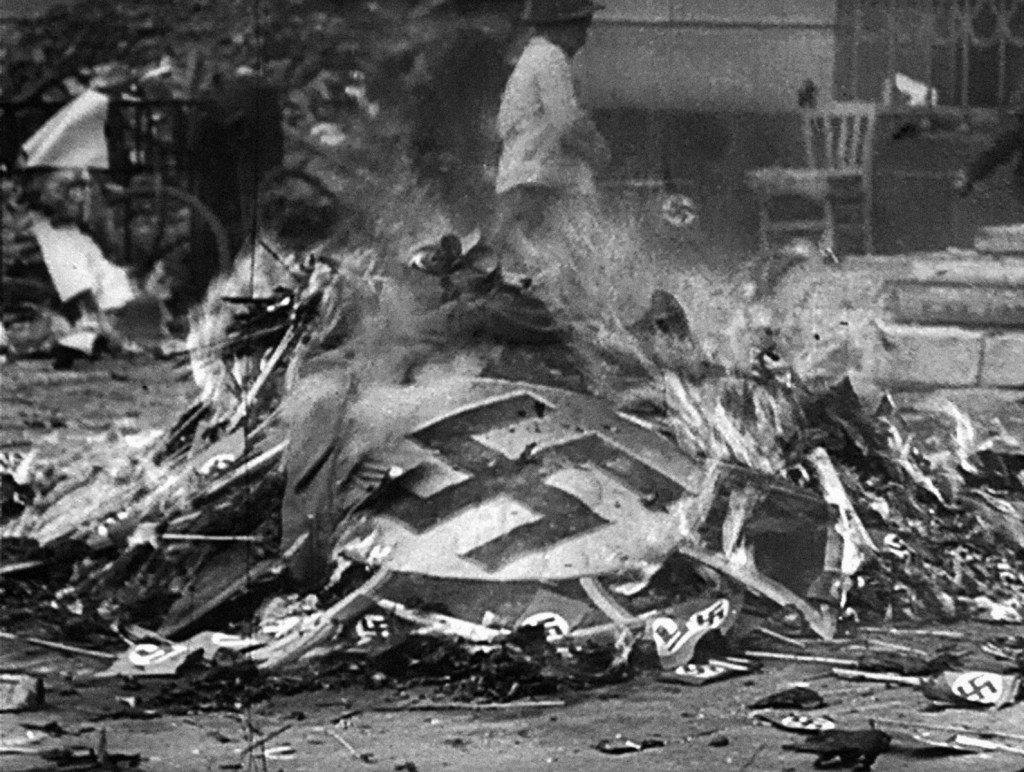
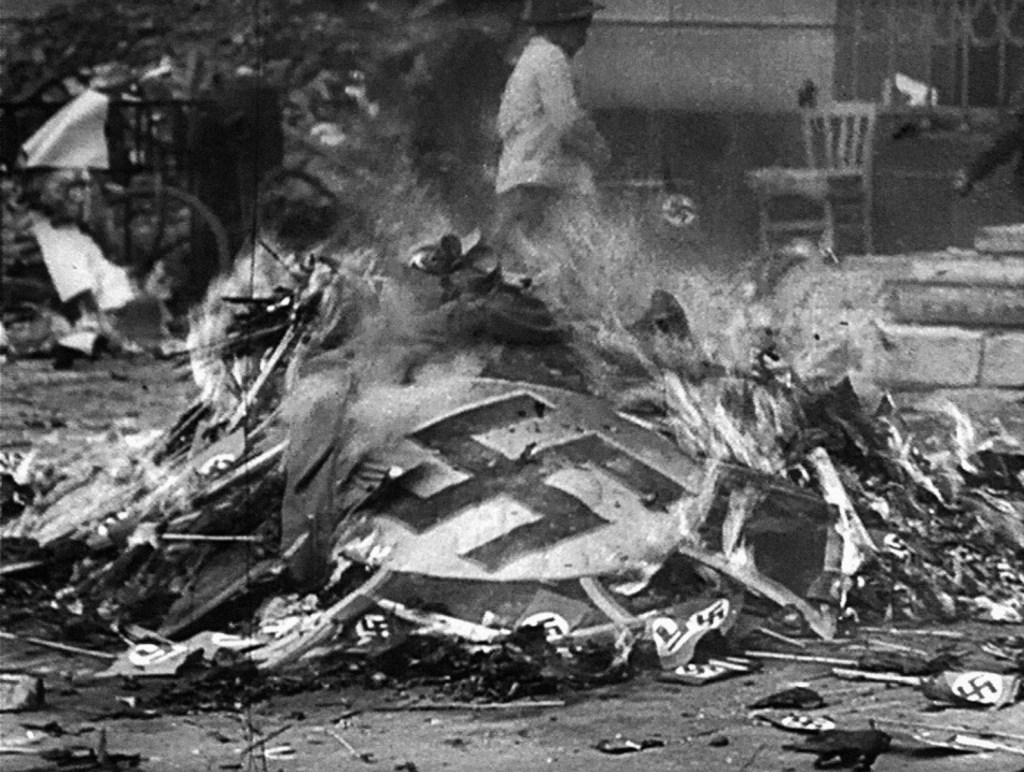
    Pastor Neimöller’s words have been echoed in many places since he wrote it. It is one of those quotes that I thought I knew the history of, but in reality applied my own ideologies to. I was surprised to find out when I was reading up on Pastor Neimöller that he was a supporter of the early n*zi party. Not only that, but, he had remained silent on how the party operated early on because they were going after the left and leftists. He didn’t feel the need to speak up about it because he did not agree with their politics.

    This may sound or feel familiar for some of you, if not now, perhaps in the future.

    It was not until Hitler came for the Lutheran Church in Germany did Neimöller start to wake up. He had helped formed a group called the, Emergency Pastor’s Group, to help confront some of these issues. Because of the state of Germany, it was believed by the group that the protestant faith could only be compromised that someone could be in the n*zi party. The two were not compatible.

    This may sound or feel familiar for some of you, if not now, perhaps in the future.

    As we stared down the start of a second Trump administration, and the ramp up of the familiar hatred that defined his first term, I sat and Neimöller’s words. It isn’t perfect but it captured my fear of the moment, a fear that has continued to be re-enforced.

    First they came for the undocumented and other immigrants. We didn’t speak out because we thought our privilege protected us.


    Then they came for those on the margins. We didn’t speak out because we thought our privilege protected us.

    Then they came for the LGBTQIA+ community. We didn’t speak out because we thought our privilege protected us.


    Then they came for the allies. WE didn’t speak out because we thought our privilege protected us.

    The last year has seen undocumented, legal, and American citizens who are immigrants disappeared by ICE.

    The last year has seen the criminalization of our unhoused and friends via the Ending Crime and Disorder on American Streets executive order.

    The last year has seen the almost complete dismantling of diversity, equity, and inclusion, not to mention the roll back of civil rights era legislation has been nothing short of monstrous.

    The last year has seen false information about our trans siblings being spoken from the highest ranks of government, the attempt to throw out Obergefell v. Hodges, and many more targeted acts of legislation state and nationwide.

    My friends, it is time, like Pastor Neimöller, it is time to find your voice. With tomorrow being Ash Wednesday, and the start of Lent, I pray you meditate on this.

    If you are interested you can read more about him here.

    Grace and peace.

  • The Salt and Light in Your Own Darkness

    The Salt and Light in Your Own Darkness

    The Gospel of Matthew’s recount of the infamous sermon that Jesus gives is my favorite. While it shows up most notably in Luke as well, it is in Matthew that I find my connection. It may be because when I first started reading the Christian Bible, I started at what I thought was the beginning, the New Testament, which starts with drum roll… the Gospel of Matthew.

    I only started referring to people as “salt of the earth” consistently a few years ago. One of my co-workers says it all the time about people she adores and has stuck through osmosis. These are the people that make me want to be a better, and more consistent presence in my life. It is such a weird tension to hold right now, trying to be the salt of the earth as the world is falling apart around us, and I mean that, almost quite literally.

    I am not just talking about the genocide still happening in Gaza, Palestine, Sudan, Myanmar, the Uyghurs in China, and the Democratic Republic of Congo. The political violence we have seen in America over the past 10 years continues to rise to a crescendo with ICE abducting people off the streets and disappearing them to what an Irish immigrant referred to as a modern-day concentration camp. Not to mention murders of Alex Pretti, Renee Nichole Good, Gerardo Lunas Campos, and Keith Porter.

    The fact that all of this has this has led into the newest 3.5 million documents of the Epstein files that have been released, with still millions of pages to go has been more than overwhelming. Jeffrey Epstein has had his hand in more things that have shaped the United States in the past decade than anyone outside of his circles could have imagined. And it is horrifying. Absolutely horrifying. The cache of information that has come out about what he, other celebrities, politicians, and wealthy people have done to children, if 5% is true, should be enough to make every decent person in this world cry out in terror. It has been so disturbing following this story, I almost took out the prayer in the Coventry Litany of Reconciliation that I updated which reads, “The lust which dishonors the bodies of men, women, non-binary, and children, God Forgive.

    So, when I sit and think about all of this, a very small portion of what is happening in our world right now, to think of being the salt is a bit overwhelming. Something that has helped recently I found few weeks ago, when I was reading the Essential Writings of Brother Roger of Taizé. On page 33, I came across this quote of his,

    “… always keep in mind that you are advancing with [God] toward the light, even in the midst of your own darkness.”

    The light that we shine forth, that we are not to hide in the bushel is helping light my way in my own darkness. It is helping me remember that salt we are supposed to be isn’t table salt, it is, for me supposed to be course, course and in your face. It is the kind that is brought out by the kitchen and given table side. It is what you see sitting on top of your meal that bring a blast of flavor. It is the people who continue to do their good works in a time of despair, as if it is water off their back.

    It is seeing the weight of the world, and saying to yourself, I think I can bring some flavor to this bland story that keeps being repeated throughout history.

    It is the same example of Jesus bringing liberation, and hope to the masses of people who are being held in oppression by the state.

    It is the story we find ourselves in the midst of now.

    It is who we are called to be in this world, now more than ever.

    My friends, may you find the salt around you, and if you can’t, please remember that the salt may be you.

  • Jude, the Saint of Despair

    Jude, the Saint of Despair

    John 15:17-27:

    Jesus said to his disciples, “I am giving you these commands so that you may love one another.

    “If the world hates you, be aware that it hated me before it hated you. If you belonged to the world, the world would love you as its own. Because you do not belong to the world, but I have chosen you out of the world– therefore the world hates you. Remember the word that I said to you, ‘Servants are not greater than their master.’ If they persecuted me, they will persecute you; if they kept my word, they will keep yours also. But they will do all these things to you on account of my name, because they do not know him who sent me. If I had not come and spoken to them, they would not have sin; but now they have no excuse for their sin. Whoever hates me hates my Father also. If I had not done among them the works that no one else did, they would not have sin. But now they have seen and hated both me and my Father. It was to fulfill the word that is written in their law, ‘They hated me without a cause.’

    “When the Advocate comes, whom I will send to you from the Father, the Spirit of truth who comes from the Father, he will testify on my behalf. You also are to testify because you have been with me from the beginning.”

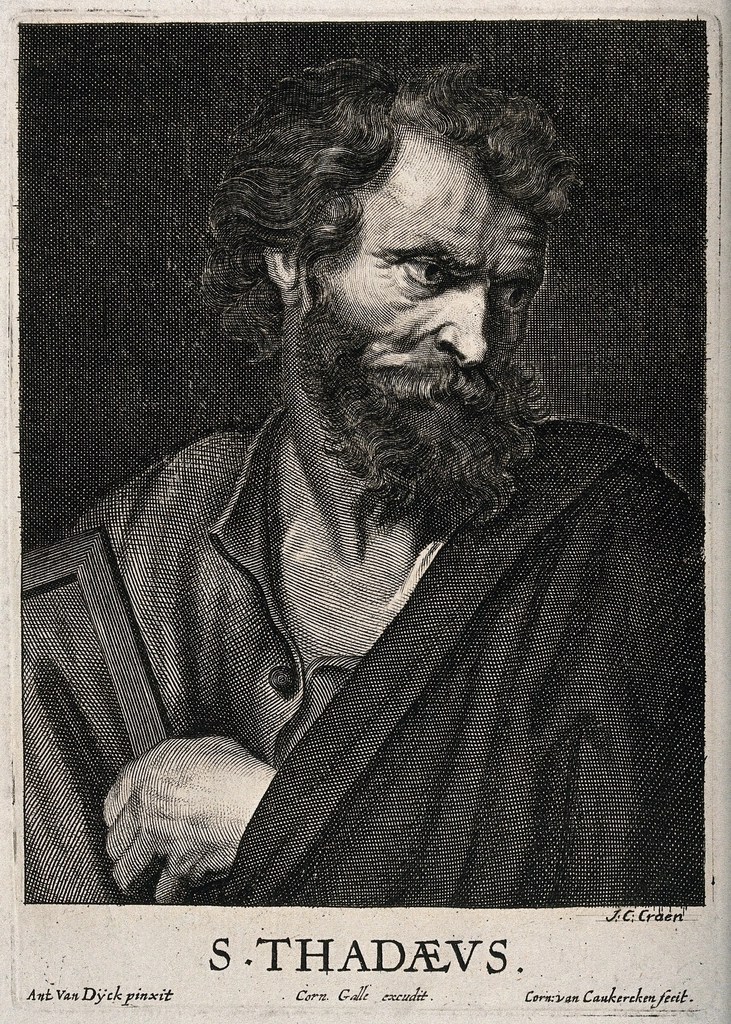
    Saint Jude is the patron saint for lost causes, impossible situations and despair. It is a hard time for those of us who don’t believe empathy is a sin. When holding all that has happened in Minneapolis, thinking about Keith Porter Jr being murdered by immigration customs and enforcement, the horrific details in the newly released Epstein files, I needed to think about, and create space for despair for a bit.

    When I read this Gospel passage, which is specific in the lectionary to St. Simon and St. Jude (who both share the martyrdom on 10/28), it really had my mind going. See, when I read of Jesus in this passage talking about not being of this world my context, historically, of this passage is much different than what I believe now.

    For a long time I feared the idea of the day of judgment, specifically because of the language around it. I grew up around the apocalyptic concept of fire, brimstone, etc., but then I found out that apocalypse literally means uncovering in Greek, as in, learning something new. When I found this out, I dove deeper into the Jewish roots of Christianity. Because of this new information, I was deeply curious about what this day of judgment would mean. After some time, I became much more comfortable.

    The idea of the day of judgement, is the work of God setting things right, the way they were supposed to be.

    It is creating justice in an unjust world, and for those of us who seek justice, who seek the safety of others, who seek after the words of Jesus, it really isn’t a scary thing. Sure, there are aspects of our lives where we are continuing to hone and align the way we believe with how we live our daily life, but on the whole, the setting of things in their correct manner shouldn’t be that scary.

    When we strip down the concept of wanting to live in a world where everyone is safe, no one has to worry about food, healthcare, being othered, bombs, and genocide as seen in Sudan and Gaza to name a few. These things that make us feel fear in our daily lives, these systematic issues that cause us to live into despair. As I sit with this, I feel connected to the despair that St. Jude is the patron saint of. It’s not hard right now to let those feelings consume us, but cynicism is easy.

    Then I remember, despair is easy.

    Hope, love, and taking care of one another in community is hard.

    It takes bravery to love someone.

    It takes bravery to stand up for someone.

    It takes almost nothing to cast someone aside, and not only deny their humanity, but the image of God that is interwoven through their very being.

    So when I read and sit with the part in Luke where Jesus says, if the world hates you, be aware that it hated me before it hated you, my mind goes to the lie that is christian nationalism. Those I have heard prosecution stories loudest, come from those that uphold white Jesus. And we know that they cannot be the people Jesus is talking about here.

    May you find some hope in these words my friends.

    Grace and peace.

  • St Thomas Aquinas and Reason

    St Thomas Aquinas and Reason

    Yesterday was the feast day for Saint Thomas Aquinas, who died in 1274. A Dominican priest, he came from a rich family and was the youngest of four boys. It was not uncommon for rich families to send their “expendable” children into religious orders at the time, and those same families gave heavily to the Roman Catholic Church. They supported monasteries where their kids lived, and it was also expected that they would rise to high points of leadership within the church.

    Thomas’s family had hoped he would also move up the ranks of the catholic church, and when he told them he was going to join the Dominicans, they were surprised. Well, surprised may be an understatement, because they kidnapped him and held him hostage in their family castle for a year. Even after that time, he still wanted to join so they let him go, and their dreams of an important child in the catholic church went with them… not. It’s a joke, get it, because today he is a saint!

    The reason why his family responded this way, was because the Dominicans were a newly formed group, barely 15 years older than Thomas was at the time. However, it was during the 13th century when Dominicans would start to be hand picked to replace judges and others, and the inquisition would be up and running. While Thomas wouldn’t be picked to find them, he started making a name for himself within the order because of how smart he was.

    What Thomas clung to during his studies, was reason, and he began to show his aptitude for reading various “heretical” works and working out how they fit within his religion. The greatest example of this, is Aquinas’ work Summa Theologiae, a large work he had started after he had a mystical vision but then died three months later leaving the work uncompleted. I have not spent a lot of time reading about the saints, after all, I’m a retired evangelical, saints weren’t our thing, they were idols. The irony of that, and the rise of the celebrity preacher is not lost on me.

    Since being received into the Episcopal church, I have made this a practice of mine, as we celebrate the saints and their lives of faith who came before us. Personally, it has been a fruitful endeavor as it has helped me feel more connected to the story of God. But what I enjoyed reading about St. Thomas Aquinas was the importance of reason to him. For those who do not know, the Anglican/Episcopal church rests on a three leg stool, one leg is scripture, one is tradition, and the final is reason.

    Using our brains to wrestle with the world in front of us is crucial, especially in the days we find ourselves. It is because of this that I personally struggle with understanding how self professing Christians can support the policies being acted out. What the Trump administration is doing is monstrous, and there is no way we can reason ourselves into supporting it while reading Jesus’ words. The federal funding for USAID being cut, to the violence enacted by the immigration and customs enforcement agency, and everything in between is cruel and monstrous. Reason forces us to confront the parts of us that seek power over one another, and give it over to God.

    There are so many things my soul cries to scream about, but instead of that, I will leave you with a poem from the hand of St. Thomas Aquinas. Found on page 127 in, Love Poems from God, by Daniel Ladinsky:


    The Mandate

    Because of my compassion, the sun wanted to be near me all night,
    and the earth deeded her fields to me,
    and all in heaven said,

    “We have voted you our governor; tell us your divine mandate.”
    And I did, and God will never revoke it:

    Nothing in existence is turned away.

    More tender is my Lord’s heart than any heart has ever been.

    So, when the divine realm asked me to govern it
    with one simple
    rule,

    I looked into His eyes and then knew
    what to say to any angel
    who might serve as
    a sentry to
    God:

    No creature should be
    turned away

    Grace and peace my friends.