I enjoy reading, a lot. I do not care if it is physical, digital, or audio, books are a constant companion in my life. To the point where I have averaged reading about 73 a year since I started tracking them in 2020.
I just love the concept of them, how words can contain multitudes of worlds. The smell of them, the thrill of finding one you’ve been looking for. This is not always a relationship I have had with them. Growing up I also liked the idea of them, I would read almost any of the Great Illustrated Classics I could get a hold of. As someone with a reading disorder, that was incredibly embarrassing, those classics were perfect for me. Every other page was an illustration, and it helped immerse me in the story.
The only books I remember reading that was required in high school were A Tale of Two Cities (which I love) and A Catcher in the Rye (which I hate). When I joined the navy, I spent time out to sea reading in the tower I worked in, and would get through maybe a book a month. Then I found out about audio books, which started my practice of purchasing two copies, one to listen to, one to mark up and use for rereading/bettering comprehension.
As my interest in theology deepened so did my insistence on reading physical copies of books. This allowed me to destroy whatever book was in my path; underlining, writing in the margins, dog-earing, whatever. I still do this, then pull out whatever half filled moleskin I thought would fix me to start writing the ideas and thoughts that came with whatever I had just read.
During the pandemic, my wife encouraged me to try out more fiction, which was something I did not really want to do. Do not get me wrong, I was not taking an elitist position, it was just that fiction wasn’t something I liked outside of my comic books or graphic novels. At the time I just preferred to read non-fiction or theology if I was going to dedicate the time to picking up a book. I wanted to learn something true about the universe/world/life/whatever, if I was giving up anywhere from 5-12 hours of my time. It was when I started back to school to finish my bachelors degree, and after we had our kid that I took her advice.
I was so wrong for waiting so long.
With all of that in mind, please enjoy the top 25 books I read in 2025. These are listed in no particular order, and over the next year I will be posting about each one individually. Some posts may be long, some will be short, but in the dark time we find ourselves in where Americans are being abducted by masked police, a white kid who has no business podcasting are trying to break into daycare’s, and abducting a leader of a foreign country, sometimes a book recommendation will help provide some balm to the soul.
Operation Paperclip: The Secret Intelligence Program that Brought Nazi Scientists to America by Annie Jacobsen
The Ethnic Cleansing of Palestine by Ilan Pappé
We Uyghurs Have No Voice: An Imprisoned Writer Speaks by Ilham Tohti
Katabasis by R.F. Kuang
The Bible Told Them So: How Southern Evangelicals Fought to Preserve White Supremacy by J. Russell Hawkins
Tender is the Flesh by Agustina Bazterrica
Ordinary Men: Reserve Police Battalion 101 and the Final Solution in Poland by Christopher R. Browning
Monk and Robot: A Psalm for the Wild Built and A Prayer for the Crown Shy by Becky Chambers
One Day Everyone Will Have Always Been Against This
Nuclear War: A Scenario by Annie Jacobs
The Whole Language: The Power of Extravagant Tenderness by Gregory Boyle
Between Two Fires by Christopher Buehlman
Ring Shout by P. Djéli Clark
The Trees by Percival Everette
The Bone and Sinew of the Land: America’s Forgotten Black Pioneers & the Struggle for Equality by Anna-Lisa Cox
The Burning: The Tulsa Race Massacre of 1921 by Tim Madigan
The Color of Compromise: The Truth about the American Church’s Complicity in Racism by Jemar Tisby
The Black Wolf by Louise Penny
Coming Up Short: A Memoir of My America by Robert B. Reich
Slewfoot: A Tale of Bewitchery by BROM
Erasing History: How Fascists Rewrite the Past to Control the Future by Jason Stanley
The Message by Ta-Nehisi Coates
King of Ashes by S.A. Cosby
Bringing the War Home: The White Power Movement and Paramilitary America by Kathleen Belew
Twilight of Democracy: The Seductive Lure of Authoritarianism by Anne Applebaum
Hello friends, and happy new year! What a weird and interesting post for the first one, but here we are. As you may know, the United States decided to abduct the President and First Lady of Venezuela. President Trump also said that U.S. oil companies will be taking over Venezuela’s oil.
As an Episcopalian, I thought I’d widely share the official statement on what has happened. You can read it more on the church’s stances here.
The people of The Episcopal Church offer prayers for our beloved siblings in Christ in the Episcopal Diocese of Venezuela, and for people across the region following this morning’s U.S. military operation that removed President Nicolás Maduro.
Episcopalians in Venezuela carry out vital ministries in increasingly challenging conditions, and we fear for their well-being and their church community if these military interventions, and any form of U.S. occupation, lead to more instability and violence. Episcopal Church Center staff have spoken with and offered support to the Rt. Rev. Cristobal León Lozano, bishop of the Episcopal Diocese of Ecuador Litoral and bishop provisional of Venezuela; the Rt. Rev. Lloyd Allen, bishop of the Episcopal Diocese of Honduras and president of Province IX; and to standing committee leadership.
The Episcopal Church’s General Convention has long-standing policy that “condemn[s] in any nation the first use of armed force in the form of a preventive or pre-emptive strike that is aimed at disrupting a non-imminent, uncertain military threat.” Even as we recognize that intervention in sovereign states can sometimes be necessary to prevent atrocities, we discourage “the abuse of this norm to rationalize military actions in sovereign states for political ends.”
We urge Congress to call for an investigation and accountability for this most recent unauthorized operation, as well as the related military actions carried out in recent months. We urge all regional parties to support a peaceful transition that respects the rule of law and the will of the Venezuelan people. Join us in praying for our siblings in the Diocese of Venezuela and the Venezuelan people.
I wrote and submitted this as an op-ed, but decided to release it here as well because it is important.
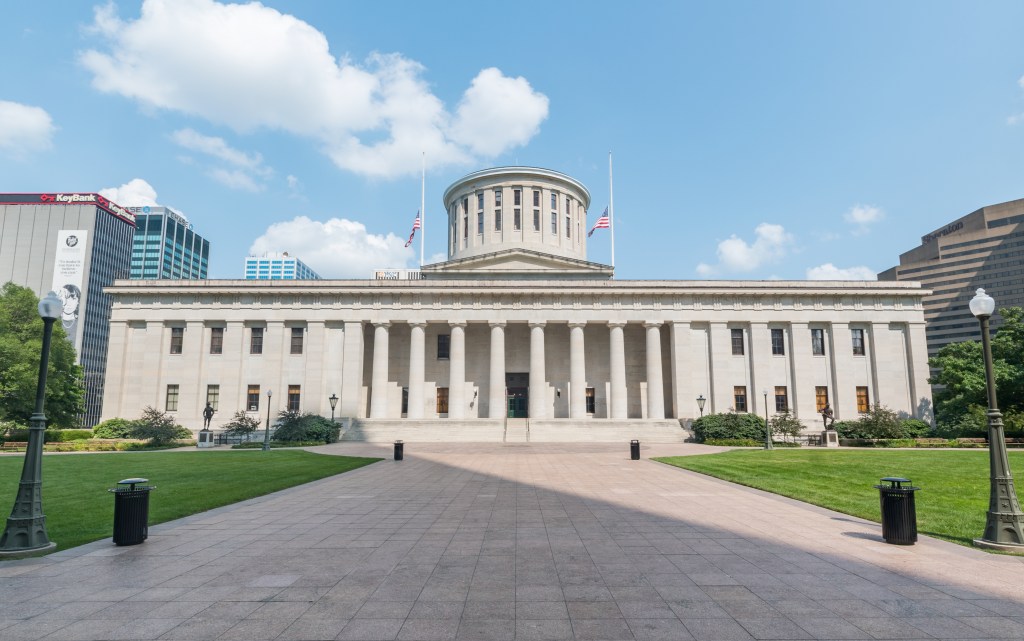
The Ohio State House is attempting to pass House Bill 486, and it should cause us concern. If passed, this bill would allow for educators in state sponsored higher education and public schools to discuss Christianity’s positive influence on culture and history in America. This proposed act also includes examples talking points to be used classrooms, as historical examples and not alleged proselytization. However, the examples in this proposal read as a complete whitewash of American history which does a severe disservice not only to students and educators, but the accuracy of Christianity’s influence in the United States of America.
The influence, whether positive or negative, that Christianity has had on American lives past and present, should be left to religious professionals to teach. To think that an educator can only talk about the positive influence and can willfully ignore the historical stance of white Americans using religion to maintain slavery, segregation, and anti-LGBTQIA+ stances is morally and ethically wrong. And, unfortunately, that is not the only moral issue in this act.
The co-sponsors of this bill have an agenda with which we should be uncomfortable. On the surface, this bill unequivocally pushes the talking points of christian nationalism. A popular movement in this country that, at its core, is antithetical to the Gospel. If we want to talk about the impacts of Christianity in history, we must do so in an unbiased and truthful way, and these conversations should be led by those qualified to do so. Not by someone that holds a degree from a bible college, which is one degree I hold, but from an unbiased institution.
The miseducation of Christian influence on a country that refuses to reconcile its sin of slavery and the mistreatment of Indigenous peoples at best could only lead to prolonged ignorance, and at worse, political or religious based violence. I encourage everyone to call upon their reps and advise against voting for this bill, especially Rep. Josh Williams, who is a co-sponsor. Now is not a time to stay silent, and it is our job to let our representatives know we do not want HB-486 to pass.
To contact OH D41 Rep Erika White, click here. To contact OH D42 Rep Elgin Rogers Jr., click here. To contact OH D43 Rep Michele Grim, click here. To contact OH D44 Rep Josh Williams, click here.
Friends, this is my sermon from this past Sunday on a passage from Luke. If you prefer to watch, you can watch above, it starts at the 24 minute mark-ish. While I go off script in the video, you can read below my notes for the morning of.
This is a good parable. Jesus is tossing out some, what I would call, weird for the day theological ideas, but it’s good. This is one of those passages I would really like to spend time digesting and getting pretty nerdy with you all. Starting with how the afterlife as a concept or belief was one held on to by the Pharisees, or how the rich guy is buried, and Lazarus died and is taken away by angels.
This sermon has gone through many drafts, which is normal, but the content has changed quite a bit. In fact, in hindsight was a joke, I asked Father Jon if he wanted to read what I was confident my final draft on Tuesday. However, as I was working to finalize this, this week, I kept growing increasingly unsettled, not just by the content but by ridiculously relevant it is. In fact, I completely re-wrote it last night after 8pm. Through the Gospels, there are times when Jesus tells a parable and the disciples have no idea what he is talking about, but not here.
There is an assumption I find with most Christians I speak to, and that is, speaking broadly, everything in the New Testament is applicable to them. While you can make the argument, what I would like you all to think about is, does. This parable apply to you or us? If it does not, how are we as readers and followers meant to hear it and interact with it? Hold onto those thoughts as we live out this week and let me know your thoughts.
Lazarus is a man who is poor, a beggar, who lives most of his time outside of a very rich man’s house. Lazarus is so down, dogs lick his open sores, and he cannot do anything about it. There is a lot that we can know about this very rich man by the description, and I am going to nickname him now. Since Lazarus gets a name so does this guy, how about… Elon Musk? I originally had another in mind, but Jon+ threw this out this week, and I decided to run with it.
So, Musk wears purple gowns, throws daily banquets, and most likely parties with his family. Musk also does not celebrate the sabbath, which means all who work for Musk do not get the time off required for their religious beliefs. Not only that, but they also get no rest, and I’m sure their pay isn’t great as well. Musk also does not care about Lazarus who is laying right outside his gate.
In his book, Jesus Through Middle Eastern Eyes, theologian Kenneth E. Bailey points out just how rich Musk is according to this parable:
“He also wore ‘fine linen.’ The word in Greek is busses, which transliterates the Hebrew word butz, which, in turn, refers to the quality Egyptian cotton used for the best underwear… This man not only had expensive outer robes, but in case anyone was interested, he also wore fine quality underwear.”[1]
Musk, in this story, is committing the same sin that God destroyed the city of Sodom over in Genesis. Hording exuberant wealth and not caring for those in need, whether they are neighbors, or those outside of the gates of their property. But we see how it turns out for Musk and Lazarus, and for Lazarus, who is the only person ever named in a parable, and his name means, “one God helps” turns out okay.
You could not get more opposite of the class hierarchy than these two, which is interesting because Baily offers another tidbit in his book. A sort of way to let the rich man off the hook, that I do not agree with. He writes:
“…it is easy to survive by developing compassion fatigue. Beggars are ever present. There are so many of them. One’s resources are limited. Finally, one doesn’t notice anymore. Compassion fatigue becomes a way to cope and a strategy for survival. Perhaps this is what happened to the rich man.”[2]
I completely agree that compassion fatigue is a real thing, and I have experienced it myself. Anyone who has worked in social justice efforts can I am sure relate. But compassion fatigue exists because our society, at almost all levels would rather uphold systems and structures that keep people oppressed then help liberate them. Those who vote for the budget cuts, and believe the lie that anyone, no matter what they are born into have the same chance of pulling themselves up by their bootstraps do not realize they are stuck in the same hole as us.
It is not compassion fatigue that caused Musk to ignore Lazarus, but the status quo. When the world allows for, according to a Forbes article from February of this year, in the USA 71.2% of the wealth is held by the top 10% in the country. Musk doesn’t help the poor because he has compassion fatigue.
Baily continues, “Lazarus was sick, hungry, and covered with sores. But his deepest suffering was psychic. Traditional Middle Eastern villages are geographically tightly compacted. The gate at which Lazarus lay was certainly within easy earshot of the daily sumptuous banquets of the rich man. Only a few feet from Lazarus a group of overfed men” in designer underwear… “while Lazarus lay hungry and in pain, listening to their conversation. Those same men passed him every day as they entered and left the rich man’s house. They didn’t need the food—he did. Help was always near at hand yet withheld from him.”[5]
In this parable, like in life, there is no economic justice, and because of this beggars, the unhoused, will always be with us. When Jesus says that the poor will always be with us, this is what he is talking about. Because we do not live in a just society, we will always have those in need. Back in May, myself, and Trinity Response Team members Becky Koskienen, Mark Dubielak, and Phil Skeldon went to Washington DC to lobby our representatives into a more just world. This meant asking them to vote against the Big Beautiful Bill. Instead of chasing compassion and justice, our Ohio senators chose to support the status quo and give men in our parable more money.
If you have been watching the news or have been on social media in the past few weeks, we have seen it in the coverage of Christian nationalist Charlie Kirk’s death, memorial service, and fallout. His fans are attempting to prop him up like a modern martyr for his faith, and how the gospel was shared in such an impactful way because of his death. But I’m sure I am not the only one that sees the lie in it all.
When there is no room for Lazarus at the celebration, there is no room for the Gospel.
The question I asked at the beginning of this was, does this parable apply to you, and if not, how are we as readers/listeners/followers of Jesus supposed to interact with this. If anyone here had the wealth gap between Lazarus and Musk, I would be surprised you’re still a member.
This parable is supposed to shake us out of apathy and into advocacy.
This parable is why Trinity works hard to develop ministries like Breakfast at Trinity. Sure, Lazarus needed the food, but he isn’t the focus of this story. Musk is the focus. This parable is the Christmas Carol without the three ghosts changing Scrooges mind!
Breakfast at Trinity doesn’t exist solely for feeding the people, but we borrow from our forbears of that space to nourish body and soul. There are a number of people who can make their own food and have the means to, but they are all weary. Musk, in this parable, is weary, but he doesn’t know a better way exists.
All Musk knows is the status quo, which are the systems that keep him in place to be that rich, and isolated.
Like water dripping on a stone, the Gospel breaks through everything and everyone. But sometimes, we need to be like Jesus and point that out for people who are unaware of how bad it is out there.
[1] Bailey, Jesus Through Middle Eastern Eyes, pg. 382
[2] Bailey, Jesus Through Middle Eastern Eyes, pg. 382/383
About six months ago, I purchased a bottle of Absinthe because, for some unknown reason, I thought it was a good idea. It had been at least a decade since I had tried it, and it did not go down very well. The wormwood in the drink, if you have never had it, leaves an incredibly bitter taste in your mouth if you don’t mix the properly. The other day, as I sat drinking my morning coffee, I was wondering what mixture of mouthwash/seltzer water/whatever I had that is now leaving this similar taste in my mouth.
That’ll flavor combination will wake you up.
As I am sipping this, I have been working my way through the prophet Amos in my morning quiet time. This reading of the prophet has been compounding some outlying frustration. A genocide has been broadcasting in real time, in spite of murdering journalists, in Palestine for those of us paying attention. Children, and people of all ages have been intentionally starved, and the footage of it will leave a mark. Kids, and others, have been murdered while waiting in line for water, food, etc. The intentional cruelty, and war crimes committed is an abomination.
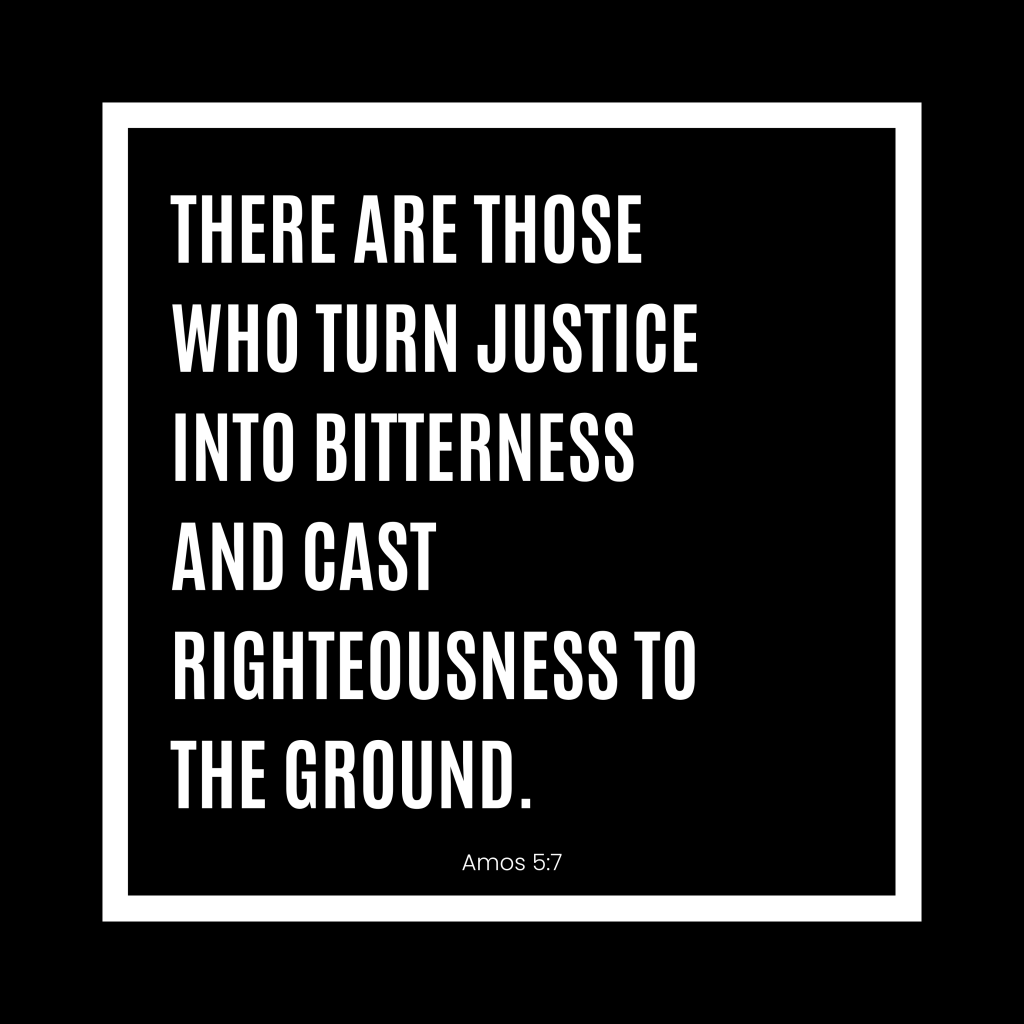
So reading through Amos, seeing this massacre play out in real time over the past 18 months and all of it taking place in the region the prophet is talking about has brought a new flavor to the text. For about a week, Amos 5:7 (NIV) has had its claws in me, “There are those who turn justice into bitterness and cast righteousness to the ground.” I have been meditating on this, and it has like a stick in my craw, but I couldn’t figure out why.
There is the obvious tug at what Amos is saying on face value, but I decided to check out the Apostolic Polyglot, an interlinear literal Greek-English of the Christian Bible. When I read it, and it made no sense, I looked to the New Oxford Annotated Bible. It is just a fancier version of the New Revised Standard Version, which reads:
“Ah, you that turn justice to wormwood, and bring righteousness to the ground!”
There it is, the stick in my craw.
The verse in the New International Version was too nice for me. Bitterness can be a variety of things. I love lemons, and they can be bitter as hell. But you know what, wormwood will make almost anyone gag!
Every time we read or see what has been happening in Palestine, Sudan, and to the Uyghurs, we should taste wormwood in our mouths.
Every time we read about those fighting against releasing the Epstein client list, we should taste wormwood in our mouths.
Every time we see another mass shooting in the news, we should taste wormwood in our mouths.
Every time we see or hear reports of ICE agents snatching people off of the streets, we should taste wormwood in our mouths.
Every time we see military personnel being mobilized against citizens, we should taste wormwood in our mouths.
In fascism, there is no peace. There is no peace without reconciliation. There is no reconciliation without justice. There is no justice in attempting to control others. Control is void of love, and without love, God can be incredibly difficult to find.
It may seem like nothing, but speaking about what is going on may help wake people up. Going on the record and contacting your representatives is called slow activism for a reason, but it is worth doing. If you have not tried 5 Calls yet, follow the link, and use it for good.
Everyone has to start somewhere, and I hope the bitter taste in your mouth that the Trump administration has helped bring about in the past eight months spurs you into action.
This week flyers for the knights of the klu klux klan was found scattered around in Norwalk Ohio, and according to the news story from 13ABC Toledo (which you can watch by clicking here), this is the second time in a few months this has happened.
I have been relatively quiet on the writing front even though there has been much to say. There is so much shit going on, I haven’t known where to start, so here are four things that have happened since I posted my last sermon:
President Trump has occupied Washington DC with armed National Guard personnel, including those from my own state of Ohio. (Click here)
President Trump decided to comb through the Smithsonian and remake history in his image. (Click here)
The concentration camp Alligator Alcatraz has opened up, and is on its third attempt to stay open. (Click here)
Don’t get me started on the Epstein list. Everyone on it needs to be arrested.
Israel continues to commit war crimes against Palestinians killing journalists, people trying to get food, and mass amounts of children. (Click here)
And now, I pull open the news to see KKK flyers in my neck of the woods, while having sifted through conservative hate messages and comments targeted at my place of worship for our incredible presence at Toledo Pride. In addition to that, a friend of mine shared a first hand account with me of racists trying to instigate a fight at a baby shower.
This year the state of Ohio passed our version of the Parents Bill of Rights, and kids are being introduced to Lifewise Academy during their school hours at their parents permission. Lifewise is a christian nationalist curriculum and should have no place in public schools. The flyer found in Norwalk has a line written on it that says, “stop attacking our christian values.” Any religion that puts national values first, and upholds whiteness is void of Jesus’ love.
Full stop.
I’d say it is not that hard, but it is because following the call of Jesus costs us, it costs everyone.
Jesus’ love is not found in exclusion, but inclusion.
Jesus’ love is nowhere near white power, because Jesus remains with the powerless.
Jesus’ love casts out hate, and emboldens righteous indignation surrounding those on the margins (see table flipping, sermon on the mount, etc.).
To paraphrase Matthew 6:24 you cannot love and seek power, you cannot love and seek money, you cannot love and uphold whiteness, and serve Jesus at the same time.
Keep an eye on each other, it’s not dark yet, but it’s getting there.
This past Sunday I had the honor to preach at my home church. Below is the sermon, but if you feel like watching it you can start the above link at 27:20 and enjoy all the little jokes I put in.
I’d like to open with a quote that I couldn’t find a home for, but it has latched onto me. It is from one of my favorite theologians, Ben Witherington. “It would appear that Mary’s announcement of the good news was insufficient to transform the mood of these male disciples.”[1]
I doubt, at times, there is any disciple more relatable than Thomas. I mean, you miss one hangout with the crew and suddenly, you’re supposed to believe your teacher is alive. It makes no sense. It sounds like a giant practical joke if you’re Thomas. It would be difficult not to respond with the, “I won’t believe anything until I put a finger through his hand!”
After all, it wasn’t like people came back from the dead all the time. But when Jesus comes back, and Thomas sees him, and while we are not told Thomas touches the wounds, we know for Thomas, the world is turned upside down.
Jesus has pulled one over on humanity, and the rest of the world because here was someone who has moved from death to life, from cursed to redeemed.
When Jesus asks Thomas, “have you believed because you have seen me?” what answer could be expected other than yes?
When I read this section of John’s Gospel, the space between the crucifixion wound, the time it took for Thomas to hear of Jesus’ resurrection and seeing him really stood out.
How many times do you think the Spirit tried to make contact with Thomas that week?
Where their times when Thomas was sitting alone at night, awake wondering if this was true that Jesus was back, and was he pushing the door shut while the Spirit was trying to break it open?
What makes the Apostle Thomas so relatable for me, is there is space for his doubt. Space for his thoughts. And space for him to allow God to enter his midst and partner with him.
It is that doubt that drives Thomas back to meet with the other disciples, and it is that doubt that shatters in the face of hope.
There is no way we get to our first reading from Acts without doubt. Everyone one in that group was Thomas, except for the people the entire history of the church owes its allegiance to, and that is the women.
Now, this newfound hope in the future of the world changes the disciples in a way that is still echoed almost two thousand years later into this very room. I say this because there is no way we go from doubts of resurrection to the hope of the holes in Jesus’ palms and not end up in the position Peter and the apostles find themselves in, in Acts 5.
So, this council that Peter and the others find themselves in front of, what the heck is it? Well, according to the Oxford Annotated Mishnah, we can be certain of a few things.
It is the judicial and deliberative body that was presided over by the high priest
This was the justice system for ancient Palestinian Jews
This group covered civil and penal law
There were two courts of judges depending on the severity of what was being decided, 23 judges or 71 judges
It was made up of the elders, sages, and various priestly factions of the day
Because it was controlled by the high priest, this group the apostles find themselves in front of, the same group that fought for the condemnation of Jesus, are the Sadducees
Yes, they deliberated over civil and penal law, but that meant a few things
They oversaw when civil procedure and criminal procedure acted as a fulcrum, depending on how the case went it would be a fulcrum for criminal proceedings
They also were in charge of the criminal execution and capital crimes, along with the liability for each one
At this time, the Sadducees. The Chief Priest Caiaphas that we heard from taking Jesus to Pilate during Holy Week was in charge of this group
According to Rabbi Jacob Neusner the Sadducees their name means “righteous one” so that’s hard to argue with
But they also, at the time in first century Palestine, rejected the “recent belief” of the afterlife and resurrection. Resurrection and afterlife theology belonged to the Pharisees.
The Sadducees are only spoken of a few times, as we see Jesus mostly go toe-to-toe against the Pharisees in the Gospels.
So why does all of this matter?
The Apostles are standing in front of people that have the ability to kill them. The Mishnah I quoted from earlier also says that there are, “…four execution methods—stoning, burning, decapitation, and strangulation—and, while it lists almost thirty capital crimes, it gives greatest attention to blasphemy…[5]”
Now, something I want to be clear about is, this is not a bloodthirsty group, and if not careful, they can be portrayed as one. The Mishnah says, A Sanhedrin that executes a transgressor once in seven years is characterized as a destructive tribunal. Since the Sanhedrin would subject the testimony to exacting scrutiny, it was extremely rare for a defendant to be executed.[6] The care for the life of a person was extremely important to this council.
But, if you are a person preaching of the resurrection of a perceived blaspheming rabbi, it is easy to see why the high priest would want that locked down. Not only do the Sadducees in charge not believe in resurrection or an afterlife, they had just had Jesus killed.
Peter says, “we must obey God rather than human authority.” The God of our ancestors raised up Jesus, whom you had killed by hanging him on a tree.” Part of the culture in first century Palestine with members of ancient Judaism is calling out scripture in conversation.
Everyone sitting in that room knew that Peter was connecting what happened with Jesus to Deuteronomy 21:22-23 which reads, When someone is convicted of a crime punishable by death and is executed, and you hung him on a tree, his corpse must not remain all night upon the tree; you shall bury him that same day, for anyone hung on a tree is under God’s curse.
Scholar Ben Witherington writes that Josephus, a Jewish historian who was alive during the first century in Palestine, “indicates that such a public hanging of the body followed stoning and was the punishment for the crime of blasphemy”[7] So if someone blasphemed, and they were stoned for it, their body was hung on a tree as a deterrent. If you know your American history, it should be no surprise that the incredible Dr. James Cone connected this in his book The Cross and The Lynching Tree.
When Jesus died, he was taken off the tree branches fastened into a cross and buried the same day. What Thomas is feeling in today’s gospel is the same thing the disciples felt walking on the road to Emmaus. It is the same thing Judas felt when he killed himself in the same way his friend died. Despair because the person they loved, the person they thought was going to overthrow power, empire, Rome, etc. was killed and cursed.
For the disciples before easter, there is no coming back from death, and to be cursed by God in the manner of your death must mean it was all a waste.
Every blister, every hungry night, every thirsty morning, the family and business you left behind to follow this Jesus around for three years amounted to nothing, because in the end he is cursed.
That is, until God turns that doubt and despair into hope and conviction.
This conviction and hope that the spirit burns into Peter and the rest of the Apostles, is the same hope and conviction the spirit burns into us today.
This is the same Spirit, hope, and conviction that pushes us to say that while some may not recognize our non-binary siblings, we are emboldened to say we see you, we name you, and we love you.
This is the same Spirit, hope, and conviction that pushes us to say that what is happening in Middle East right now breaks God’s heart, and Palestinian children deserve to grow old.
This is the same Spirit, hope, and conviction that pushes us to say that Black lives still and always will matter.
This is the same Spirit, hope, and conviction that pushes us to say that we love all our queer siblings.
This is the same Spirit, hope, and conviction that pushes us to say that we must protect trans kids at all costs.
This is the same Spirit, hope, and conviction that pushes us to say that we, know no person is illegal, and we must care and watch out for our neighbors.
This is the same Spirit, hope, and conviction that pushes us to say that pushes us to wake up every Sunday morning and make breakfast.
This is the same Spirit, hope, and conviction that pushes us to say that we, like Father Greg Boyle, see and know the unshakeable good in all people.
This is the same Spirit, hope, and conviction that pushes us to say that at Trinity Episcopal Church, in downtown Toledo, you are welcome, wanted, and safe.
This is the same Spirit, hope, and conviction that pushes us to say thanks be to God, and amen.
The following is my reflection from the prayer meeting held at Trinity’s 12 Noon service on 3/25.
Matthew 5:17–19 (NRSV)
Jesus said, “Do not think that I have come to abolish the law or the prophets; I have come not to abolish but to fulfill. For truly I tell you, until heaven and earth pass away, not one letter, not one stroke of a letter, will pass from the law until all is accomplished. Therefore, whoever breaks one of the least of these commandments, and teaches others to do the same, will be called least in the kingdom of heaven; but whoever does them and teaches them will be called great in the kingdom of heaven.”
The sermon on the mount is a teaching I have been spending a lot of time with as of late. I cannot speak for everyone, but this part of the sermon always gave me pause. As a young Christian I was taught that the Old Testament no longer applied to my life because Jesus came and liberated us not just from sin, but from all that “legalism.” Whenever this passage came up in church or wherever, this part always tugged at me, and the best explanation I could get from anyone was that it no longer applied. Paul had written about the law and how it did not apply to us, so we were free from it because of grace.
As I have grown older, I have personally come to realize that I cannot take that view because of how short sighted it is. To determine that something in the text no longer applies to you gives you permission not to take it seriously. It gives permission to be permissive about it, and when we become permissive, we are no longer curious. I find for myself, when curiosity is gone, what was fresh and vibrant become stale. I do not want to personally live in a world where the Sermon on the Mount becomes stale. So, what does it mean for this part of Matthew to continue to breathe new life?
Taking place on a mountain side, Jesus sits down and teaches his twelve disciples while others crowd around him and listen in. This image of Jesus is, I would argue, is what we would recognize today as Jesus at his most rabbinic. Rabbi and scholar Jacob Neusner in his book, A Rabbi talks with Jesus, writes:
…the sage sets for himself a worthy challenge, one that every sage in every generation does well to meet: receive a tradition whole and perfect, hand it on never intact but always unimpaired, so taking a rightful place in the chain of tradition from Sinai.
What Rabbi Neusner writes about, is how traditionally new teachers of the law would be raised up. Those who were picked and went through the training to become a teacher of Torah would be taught the commandments by heart. Then, their teacher would put their spin on it by providing some new perspective. This is what it means when a teacher passes on the law, not intact but always unimpaired. What Jesus is building on in his Sermon on the Mount, is the Torah, the law given at Siani to Moses and the ancient Israelites.
When we talk about no longer being subject to the law of the Old Testament and say that we must follow teachings like the sermon on the mount, something important is left out. What Jesus does with the Sermon on the Mount is what rabbis would call, “building a hedge around Torah.” Imagine that this law is so precious to you, not because of sin or persecution, but because you believe it is the best and you want to live it, that you put a buffer between yourself and it. Like a house with a hedge surrounding, it for protection, is what Jesus is doing in this sermon. The hedge, as Rabbi Neusner puts it, the hedge is important because it allows us to, “…conduct yourself in such a way you will avoid even the things that cause you to sin, not only the sin itself.”
There is a famous teaching associated with the Hillel the Elder where a gentile comes up to him and asks to be taught the Torah while standing on one foot. Hillel responds with something like, “that which is bad for you, do not to your neighbor, that is the Torah, the rest is commentary.”
For Jesus to give this teaching, encouraging us that not murdering is not enough, and we must not even have hate in our hearts. It is not just about not cheating on your spouse, but to not even to look at someone lustfully, and if you do, cut your eye out (because it is not the person’s fault you are looking at them like that). When I sit with this part of Matthew, as I have for the past year, I am reminded that for me, if all of Torah is about caring for my neighbor, and as Rabbi Neusner confirms, Torah is all about teaching us how to show mercy, then I am proud to teach others to show it.
I am excited to invite others along the path to teach and show mercy and love in ways that may not be new but are still worth doing. Especially in the climate we find ourselves in, this yoke, this teaching, must be passed on. When you hear it, it may not be intact, but it will at least be unimpaired.
I haven’t posted since the first week of February, and that has not been an intentional choice. Since January, I have been working on the manuscript of my new book tentatively titled, Peacemaking in the Way of Jesus.
The work I have been doing for that, and another project, have taken the time I normally would have been writing for this blog. By the time I am done with both of those for the week, there is little left to give.
And let me tell you, writing about being a peacemaker, or waging peace instead of violence in the climate we find ourselves in, is exhausting.
If you are like me, and were raised by boomers, we can confuse peace for silence. Peacemaking is not the absence of conflict, but entering into it, and working to bring about justice and reconciliation. Peacemaking is advocating for the world you want to live in, not the one that exists.
So, what I plan on doing for this little blog over the next few months, will be publishing the prayer service reflections that I am responsible for. There may be more updates in between, reposts, or something else. Thank you for sticking around and keeping up.
*This was written before the cease fire in Palestine*
Today is Holocaust Remembrance Day.
Every year, I spend quite a lot of my time in January studying the Holocaust. This comes about in different ways: reading books, watching documentaries, or listening to podcasts. With my love of Jewish roots in Christianity, and seeing how Christians have perpetuated anti-Semitic theology over the past two thousand years, I work very hard not to. Often, because I work in a church in the United States, there are a lot of assumptions I support what is happening currently in nation-state of Israel.
I do not support ethnic cleansing or genocide in any form. Especially those that my tax dollars are helping to fund.
This year, instead of focusing on the Shoah (usually what is refereed to as the Jewish peoples experienced during the Holocaust), I’ve branched out to wider accounts of murder and ethnic cleansing.
One book I finished this month was, The Ethnic Cleansing of Palestine, written by Ilan Pappé. Born in Haifa Israel to parents that fled n*zi persecution in the 1930’s, he is a historian and author. If I had not read a few books on what happened in the 1940’s to the Jewish peoples of Europe, personally, Pappé’s book would not have been as devastating. The tactics described in the book between the Israeli and British forces against the Palestinians will make you sick. There is a lot of similarity to what persecuted European Jews experienced in the mid 20th century.
Something that really stood out toward the beginning of the book was when Pappé speaks about the history of occupation of Palestine. How, this was something Palestinians were used to. However, for the first time, Palestinians experienced being displaced from land and homes their families had worked and lived on for generations.
What is happening right now to the Palestinians is unacceptable.
What happened to European Jews in the 1930’s and 1940’s (as well as pogroms throughout history against them) is also unacceptable.
What is happening to the Uyghurs in China right now is unacceptable.
The persecution or mass deaths of any group of people because of their ethnicity or religious affiliation is unacceptable.
May our prayers and actions remember that today of all days, and those that follow. Be sure to read the prayer by Rabbi David Katz at the end of this.
If you are interested in learning more about the Shoah, or other instances of genocide, I highly recommend the following (in no particular order):
The Holocaust: A New History by Laurence Rees
Shoah: A Documentary by Claude Lanzmann
Night by Elie Weisel
Man in Search of Meaning by Viktor Frankl
A Shortest History of Israel and Palestine by Michael Scott-Baumann
The Ethnic Cleansing of Palestine by Ilan Pappé
Auschwitz: A Doctor’s Eyewitness Account by Dr. Richard Seaver
On Palestine by Noam Chomsky and Ilan Pappé
The War on Uyghurs: China’s Internal Campaign against a Muslim Minority by Sean Roberts
The Uyghurs: Strangers in their Own Land by Gardner Bovingdon
We Uyghurs Have No Voice: An Imprisoned Writer Speaks by Ilham Tohti
A Prayer for Yom Hashoah / Holocaust Remembrance Day By Rabbi David Katz
Ribbono shel Olam – Master of the Universe:
On this most solemn of occasions, we open our hearts, minds, and souls to you.
As we remember the six million, the eleven million, the indifference, and the evil;
As we honor the heroes, the martyrs, the survivors, and the victims;
We ask you to soothe our souls, to amplify our memories, to strengthen our resolve, and to hear our prayers.
We ask for your presence in our midst; for healing, light, and love to soothe and ease our pain, as we commemorate the horrors that were committed not long ago. Please, oh Holy One, be gentle with our souls.
We ask that you help us to forever remember the stories we hear. As tales of the atrocities are shared, as we re-encounter the unthinkable, we ask that these memories be strengthened and never fade, in the hope that those who remember the mistakes of the past will not repeat them. Please, oh Holy One, amplify our ability to remember.
We ask that you strengthen our will, that you help us to ensure that the world does not again see such monstrosities. We say “never again” and we dedicate ourselves to this principle, to the idea that justice does not allow persecution, that genocide shall not be repeated, and that vigilance is the responsibility of freedom, at all costs. Please, oh Holy One, make manifest our resolve that these horrors remain but memories.
We ask that you answer our prayers. We pray that the call of evil falls on deaf ears, that those who fight for freedom and justice always prevail, that those who need protection do not become victims. We pray that the lessons we learn from this darkest hour allow all humankind to better itself, and to truly and nobly embody the idea that we are each made in Your image. We pray for the souls of the millions and millions of victims of this brutality; we pray that we honor their lives and their memories by observing this day, and by doing everything in our power and beyond to make sure that no such shadow again darkens our world.
Above all, we pray for shalom—for wholeness and peace—to be in our midst, now and forever. Please, oh Holy One, answer our prayers and bring us a world devoid of hatred, filled instead with peace.
Ken yehi ratzon – may this be God’s will. And may we all say together, Amen.




 George of Sylvania