Category: Uncategorized

  • Bitter is the Mouth

    Bitter is the Mouth

    About six months ago, I purchased a bottle of Absinthe because, for some unknown reason, I thought it was a good idea. It had been at least a decade since I had tried it, and it did not go down very well. The wormwood in the drink, if you have never had it, leaves an incredibly bitter taste in your mouth if you don’t mix the properly. The other day, as I sat drinking my morning coffee, I was wondering what mixture of mouthwash/seltzer water/whatever I had that is now leaving this similar taste in my mouth.

    That’ll flavor combination will wake you up.

    As I am sipping this, I have been working my way through the prophet Amos in my morning quiet time. This reading of the prophet has been compounding some outlying frustration. A genocide has been broadcasting in real time, in spite of murdering journalists, in Palestine for those of us paying attention. Children, and people of all ages have been intentionally starved, and the footage of it will leave a mark. Kids, and others, have been murdered while waiting in line for water, food, etc. The intentional cruelty, and war crimes committed is an abomination.

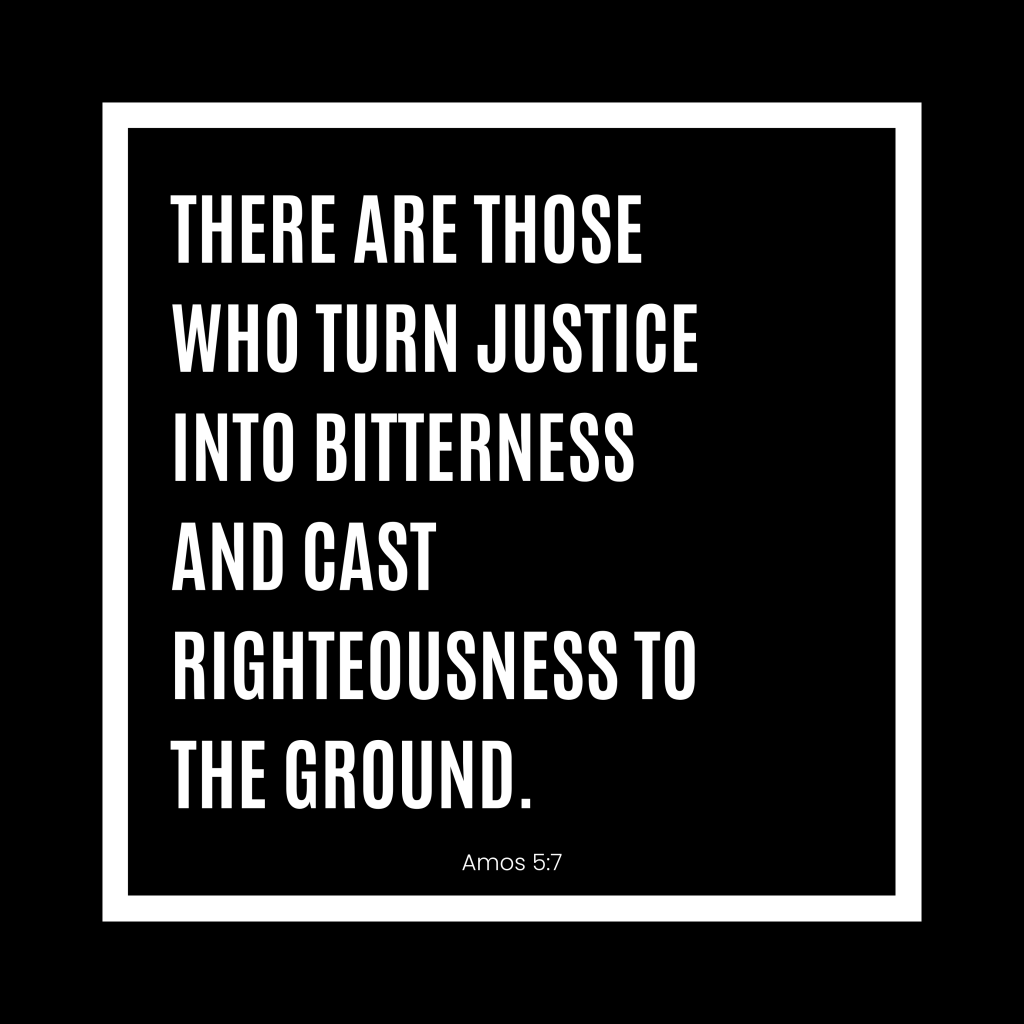
    So reading through Amos, seeing this massacre play out in real time over the past 18 months and all of it taking place in the region the prophet is talking about has brought a new flavor to the text. For about a week, Amos 5:7 (NIV) has had its claws in me, “There are those who turn justice into bitterness and cast righteousness to the ground.” I have been meditating on this, and it has like a stick in my craw, but I couldn’t figure out why.

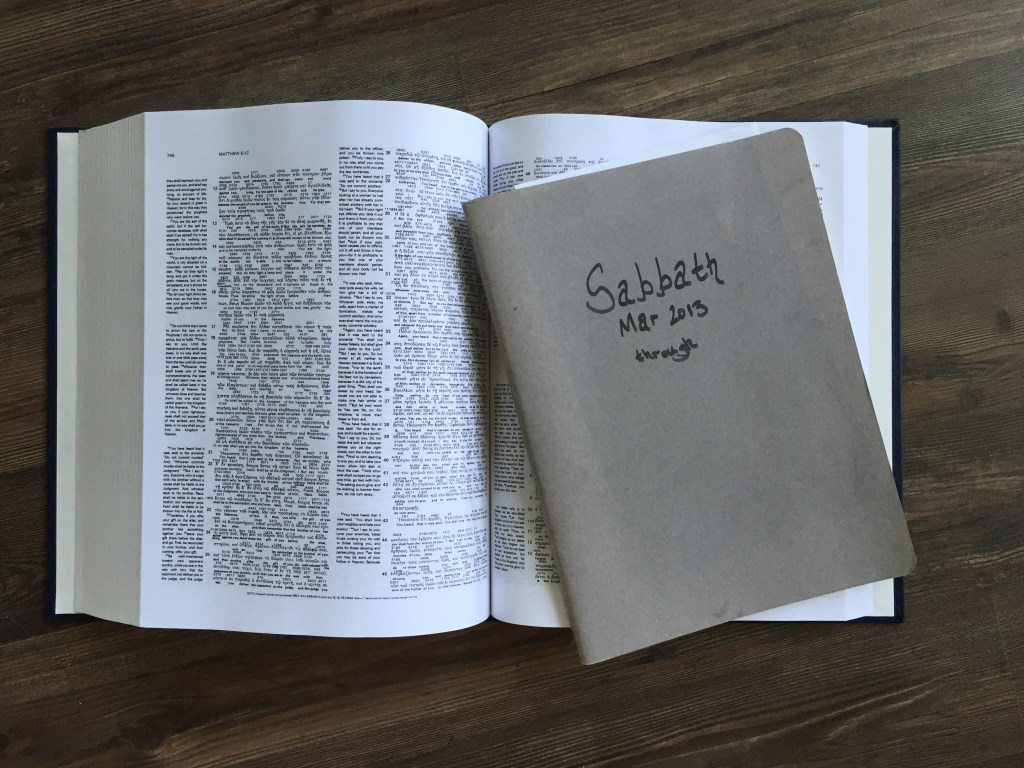
    There is the obvious tug at what Amos is saying on face value, but I decided to check out the Apostolic Polyglot, an interlinear literal Greek-English of the Christian Bible. When I read it, and it made no sense, I looked to the New Oxford Annotated Bible. It is just a fancier version of the New Revised Standard Version, which reads:

    “Ah, you that turn justice to wormwood, and bring righteousness to the ground!”

    There it is, the stick in my craw.

    The verse in the New International Version was too nice for me. Bitterness can be a variety of things. I love lemons, and they can be bitter as hell. But you know what, wormwood will make almost anyone gag!

    Every time we read or see what has been happening in Palestine, Sudan, and to the Uyghurs, we should taste wormwood in our mouths.

    Every time we read about those fighting against releasing the Epstein client list, we should taste wormwood in our mouths.

    Every time we see another mass shooting in the news, we should taste wormwood in our mouths.

    Every time we see or hear reports of ICE agents snatching people off of the streets, we should taste wormwood in our mouths.

    Every time we see military personnel being mobilized against citizens, we should taste wormwood in our mouths.

    In fascism, there is no peace. There is no peace without reconciliation. There is no reconciliation without justice. There is no justice in attempting to control others. Control is void of love, and without love, God can be incredibly difficult to find.

    It may seem like nothing, but speaking about what is going on may help wake people up. Going on the record and contacting your representatives is called slow activism for a reason, but it is worth doing. If you have not tried 5 Calls yet, follow the link, and use it for good.

    Everyone has to start somewhere, and I hope the bitter taste in your mouth that the Trump administration has helped bring about in the past eight months spurs you into action.

    Grace and peace.

  • “KKK flyers found in Norwalk…”

    “KKK flyers found in Norwalk…”

    This week flyers for the knights of the klu klux klan was found scattered around in Norwalk Ohio, and according to the news story from 13ABC Toledo (which you can watch by clicking here), this is the second time in a few months this has happened.

    I have been relatively quiet on the writing front even though there has been much to say. There is so much shit going on, I haven’t known where to start, so here are four things that have happened since I posted my last sermon:

    • President Trump has occupied Washington DC with armed National Guard personnel, including those from my own state of Ohio. (Click here)
    • President Trump decided to comb through the Smithsonian and remake history in his image. (Click here)
    • The concentration camp Alligator Alcatraz has opened up, and is on its third attempt to stay open. (Click here)
    • Don’t get me started on the Epstein list. Everyone on it needs to be arrested.
    • Israel continues to commit war crimes against Palestinians killing journalists, people trying to get food, and mass amounts of children. (Click here)

    And now, I pull open the news to see KKK flyers in my neck of the woods, while having sifted through conservative hate messages and comments targeted at my place of worship for our incredible presence at Toledo Pride. In addition to that, a friend of mine shared a first hand account with me of racists trying to instigate a fight at a baby shower.

    This year the state of Ohio passed our version of the Parents Bill of Rights, and kids are being introduced to Lifewise Academy during their school hours at their parents permission. Lifewise is a christian nationalist curriculum and should have no place in public schools. The flyer found in Norwalk has a line written on it that says, “stop attacking our christian values.” Any religion that puts national values first, and upholds whiteness is void of Jesus’ love.

    Full stop.

    I’d say it is not that hard, but it is because following the call of Jesus costs us, it costs everyone.

    Jesus’ love is not found in exclusion, but inclusion.

    Jesus’ love is nowhere near white power, because Jesus remains with the powerless.

    Jesus’ love casts out hate, and emboldens righteous indignation surrounding those on the margins (see table flipping, sermon on the mount, etc.).

    To paraphrase Matthew 6:24 you cannot love and seek power, you cannot love and seek money, you cannot love and uphold whiteness, and serve Jesus at the same time.

    Keep an eye on each other, it’s not dark yet, but it’s getting there.

  • Spirit, hope, and conviction.

    Spirit, hope, and conviction.

    This past Sunday I had the honor to preach at my home church. Below is the sermon, but if you feel like watching it you can start the above link at 27:20 and enjoy all the little jokes I put in.

    I’d like to open with a quote that I couldn’t find a home for, but it has latched onto me. It is from one of my favorite theologians, Ben Witherington. “It would appear that Mary’s announcement of the good news was insufficient to transform the mood of these male disciples.”[1]

    I doubt, at times, there is any disciple more relatable than Thomas. I mean, you miss one hangout with the crew and suddenly, you’re supposed to believe your teacher is alive. It makes no sense. It sounds like a giant practical joke if you’re Thomas. It would be difficult not to respond with the, “I won’t believe anything until I put a finger through his hand!”

    After all, it wasn’t like people came back from the dead all the time. But when Jesus comes back, and Thomas sees him, and while we are not told Thomas touches the wounds, we know for Thomas, the world is turned upside down.

    Jesus has pulled one over on humanity, and the rest of the world because here was someone who has moved from death to life, from cursed to redeemed.

    When Jesus asks Thomas, “have you believed because you have seen me?” what answer could be expected other than yes?

    When I read this section of John’s Gospel, the space between the crucifixion wound, the time it took for Thomas to hear of Jesus’ resurrection and seeing him really stood out.

    How many times do you think the Spirit tried to make contact with Thomas that week?

    Where their times when Thomas was sitting alone at night, awake wondering if this was true that Jesus was back, and was he pushing the door shut while the Spirit was trying to break it open?

    What makes the Apostle Thomas so relatable for me, is there is space for his doubt. Space for his thoughts. And space for him to allow God to enter his midst and partner with him.

    It is that doubt that drives Thomas back to meet with the other disciples, and it is that doubt that shatters in the face of hope.

    There is no way we get to our first reading from Acts without doubt. Everyone one in that group was Thomas, except for the people the entire history of the church owes its allegiance to, and that is the women.

    Now, this newfound hope in the future of the world changes the disciples in a way that is still echoed almost two thousand years later into this very room. I say this because there is no way we go from doubts of resurrection to the hope of the holes in Jesus’ palms and not end up in the position Peter and the apostles find themselves in, in Acts 5.

    So, this council that Peter and the others find themselves in front of, what the heck is it? Well, according to the Oxford Annotated Mishnah, we can be certain of a few things.

    When we ask, who was this council we can say:[2]

    • It is the judicial and deliberative body that was presided over by the high priest
    • This was the justice system for ancient Palestinian Jews
    • This group covered civil and penal law
    • There were two courts of judges depending on the severity of what was being decided, 23 judges or 71 judges
    • It was made up of the elders, sages, and various priestly factions of the day
    • Because it was controlled by the high priest, this group the apostles find themselves in front of, the same group that fought for the condemnation of Jesus, are the Sadducees

    What did this council do?[3]

    • Yes, they deliberated over civil and penal law, but that meant a few things
    • They oversaw when civil procedure and criminal procedure acted as a fulcrum, depending on how the case went it would be a fulcrum for criminal proceedings
    • They also were in charge of the criminal execution and capital crimes, along with the liability for each one

    Finally, who ran this council:[4]

    • At this time, the Sadducees. The Chief Priest Caiaphas that we heard from taking Jesus to Pilate during Holy Week was in charge of this group
    • According to Rabbi Jacob Neusner the Sadducees their name means “righteous one” so that’s hard to argue with
    • But they also, at the time in first century Palestine, rejected the “recent belief” of the afterlife and resurrection. Resurrection and afterlife theology belonged to the Pharisees.

    The Sadducees are only spoken of a few times, as we see Jesus mostly go toe-to-toe against the Pharisees in the Gospels.

    So why does all of this matter?

    The Apostles are standing in front of people that have the ability to kill them. The Mishnah I quoted from earlier also says that there are, “…four execution methods—stoning, burning, decapitation, and strangulation—and, while it lists almost thirty capital crimes, it gives greatest attention to blasphemy…[5]

    Now, something I want to be clear about is, this is not a bloodthirsty group, and if not careful, they can be portrayed as one. The Mishnah says, A Sanhedrin that executes a transgressor once in seven years is characterized as a destructive tribunal. Since the Sanhedrin would subject the testimony to exacting scrutiny, it was extremely rare for a defendant to be executed.[6] The care for the life of a person was extremely important to this council.

    But, if you are a person preaching of the resurrection of a perceived blaspheming rabbi, it is easy to see why the high priest would want that locked down. Not only do the Sadducees in charge not believe in resurrection or an afterlife, they had just had Jesus killed.

    Peter says, “we must obey God rather than human authority.” The God of our ancestors raised up Jesus, whom you had killed by hanging him on a tree.” Part of the culture in first century Palestine with members of ancient Judaism is calling out scripture in conversation.

    Everyone sitting in that room knew that Peter was connecting what happened with Jesus to Deuteronomy 21:22-23 which reads, When someone is convicted of a crime punishable by death and is executed, and you hung him on a tree, his corpse must not remain all night upon the tree; you shall bury him that same day, for anyone hung on a tree is under God’s curse.

    Scholar Ben Witherington writes that Josephus, a Jewish historian who was alive during the first century in Palestine, “indicates that such a public hanging of the body followed stoning and was the punishment for the crime of blasphemy”[7] So if someone blasphemed, and they were stoned for it, their body was hung on a tree as a deterrent. If you know your American history, it should be no surprise that the incredible Dr. James Cone connected this in his book The Cross and The Lynching Tree.

    When Jesus died, he was taken off the tree branches fastened into a cross and buried the same day. What Thomas is feeling in today’s gospel is the same thing the disciples felt walking on the road to Emmaus. It is the same thing Judas felt when he killed himself in the same way his friend died. Despair because the person they loved, the person they thought was going to overthrow power, empire, Rome, etc. was killed and cursed.

    For the disciples before easter, there is no coming back from death, and to be cursed by God in the manner of your death must mean it was all a waste.

    Every blister, every hungry night, every thirsty morning, the family and business you left behind to follow this Jesus around for three years amounted to nothing, because in the end he is cursed.

    That is, until God turns that doubt and despair into hope and conviction.

    This conviction and hope that the spirit burns into Peter and the rest of the Apostles, is the same hope and conviction the spirit burns into us today.

    This is the same Spirit, hope, and conviction that pushes us to say that while some may not recognize our non-binary siblings, we are emboldened to say we see you, we name you, and we love you.

    This is the same Spirit, hope, and conviction that pushes us to say that what is happening in Middle East right now breaks God’s heart, and Palestinian children deserve to grow old.

    This is the same Spirit, hope, and conviction that pushes us to say that Black lives still and always will matter.

    This is the same Spirit, hope, and conviction that pushes us to say that we love all our queer siblings.

    This is the same Spirit, hope, and conviction that pushes us to say that we must protect trans kids at all costs.

    This is the same Spirit, hope, and conviction that pushes us to say that we, know no person is illegal, and we must care and watch out for our neighbors.

    This is the same Spirit, hope, and conviction that pushes us to say that pushes us to wake up every Sunday morning and make breakfast.

    This is the same Spirit, hope, and conviction that pushes us to say that we, like Father Greg Boyle, see and know the unshakeable good in all people.

    This is the same Spirit, hope, and conviction that pushes us to say that at Trinity Episcopal Church, in downtown Toledo, you are welcome, wanted, and safe.

    This is the same Spirit, hope, and conviction that pushes us to say thanks be to God, and amen.


    [1] Witherington, John’s Wisdom, pg. 342

    [2] Cohen, Oxford Annotated Mishnah vol 2., pg. 490

    [3] Cohen, Oxford Annotated Mishnah vol 2, pg. 490

    [4] Cohen, Oxford Annotated Mishnah vol 2, pg. 490

    [5] Cohen, Oxford Annotated Mishnah vol 2 Pg. 491

    [6] https://www.sefaria.org/Mishnah_Makkot.1.10?lang=bi&with=all&lang2=en

    [7] Witherington, Acts, pg. 232

  • Prayer Meeting Reflection

    Trinity Chapel

    The following is my reflection from the prayer meeting held at Trinity’s 12 Noon service on 3/25.

    Matthew 5:17–19 (NRSV)

    Jesus said, “Do not think that I have come to abolish the law or the prophets; I have come not to abolish but to fulfill. For truly I tell you, until heaven and earth pass away, not one letter, not one stroke of a letter, will pass from the law until all is accomplished. Therefore, whoever breaks one of the least of these commandments, and teaches others to do the same, will be called least in the kingdom of heaven; but whoever does them and teaches them will be called great in the kingdom of heaven.”

    The sermon on the mount is a teaching I have been spending a lot of time with as of late. I cannot speak for everyone, but this part of the sermon always gave me pause. As a young Christian I was taught that the Old Testament no longer applied to my life because Jesus came and liberated us not just from sin, but from all that “legalism.” Whenever this passage came up in church or wherever, this part always tugged at me, and the best explanation I could get from anyone was that it no longer applied. Paul had written about the law and how it did not apply to us, so we were free from it because of grace.

    As I have grown older, I have personally come to realize that I cannot take that view because of how short sighted it is. To determine that something in the text no longer applies to you gives you permission not to take it seriously. It gives permission to be permissive about it, and when we become permissive, we are no longer curious. I find for myself, when curiosity is gone, what was fresh and vibrant become stale. I do not want to personally live in a world where the Sermon on the Mount becomes stale. So, what does it mean for this part of Matthew to continue to breathe new life?

    Taking place on a mountain side, Jesus sits down and teaches his twelve disciples while others crowd around him and listen in. This image of Jesus is, I would argue, is what we would recognize today as Jesus at his most rabbinic. Rabbi and scholar Jacob Neusner in his book, A Rabbi talks with Jesus, writes: 

    …the sage sets for himself a worthy challenge, one that every sage in every generation does well to meet: receive a tradition whole and perfect, hand it on never intact but always unimpaired, so taking a rightful place in the chain of tradition from Sinai.

    What Rabbi Neusner writes about, is how traditionally new teachers of the law would be raised up. Those who were picked and went through the training to become a teacher of Torah would be taught the commandments by heart. Then, their teacher would put their spin on it by providing some new perspective. This is what it means when a teacher passes on the law, not intact but always unimpaired. What Jesus is building on in his Sermon on the Mount, is the Torah, the law given at Siani to Moses and the ancient Israelites.

    When we talk about no longer being subject to the law of the Old Testament and say that we must follow teachings like the sermon on the mount, something important is left out. What Jesus does with the Sermon on the Mount is what rabbis would call, “building a hedge around Torah.” Imagine that this law is so precious to you, not because of sin or persecution, but because you believe it is the best and you want to live it, that you put a buffer between yourself and it. Like a house with a hedge surrounding, it for protection, is what Jesus is doing in this sermon. The hedge, as Rabbi Neusner puts it, the hedge is important because it allows us to, “…conduct yourself in such a way you will avoid even the things that cause you to sin, not only the sin itself.”

    There is a famous teaching associated with the Hillel the Elder where a gentile comes up to him and asks to be taught the Torah while standing on one foot. Hillel responds with something like, “that which is bad for you, do not to your neighbor, that is the Torah, the rest is commentary.” 

    For Jesus to give this teaching, encouraging us that not murdering is not enough, and we must not even have hate in our hearts. It is not just about not cheating on your spouse, but to not even to look at someone lustfully, and if you do, cut your eye out (because it is not the person’s fault you are looking at them like that). When I sit with this part of Matthew, as I have for the past year, I am reminded that for me, if all of Torah is about caring for my neighbor, and as Rabbi Neusner confirms, Torah is all about teaching us how to show mercy, then I am proud to teach others to show it. 

    I am excited to invite others along the path to teach and show mercy and love in ways that may not be new but are still worth doing. Especially in the climate we find ourselves in, this yoke, this teaching, must be passed on. When you hear it, it may not be intact, but it will at least be unimpaired.

    Grace and peace.

  • Why the Silence?

    I haven’t posted since the first week of February, and that has not been an intentional choice. Since January, I have been working on the manuscript of my new book tentatively titled, Peacemaking in the Way of Jesus.

    The work I have been doing for that, and another project, have taken the time I normally would have been writing for this blog. By the time I am done with both of those for the week, there is little left to give.

    And let me tell you, writing about being a peacemaker, or waging peace instead of violence in the climate we find ourselves in, is exhausting.

    If you are like me, and were raised by boomers, we can confuse peace for silence. Peacemaking is not the absence of conflict, but entering into it, and working to bring about justice and reconciliation. Peacemaking is advocating for the world you want to live in, not the one that exists.

    So, what I plan on doing for this little blog over the next few months, will be publishing the prayer service reflections that I am responsible for. There may be more updates in between, reposts, or something else. Thank you for sticking around and keeping up.

    Grace and peace to you my friends.

  • Holocaust Remembrance Day

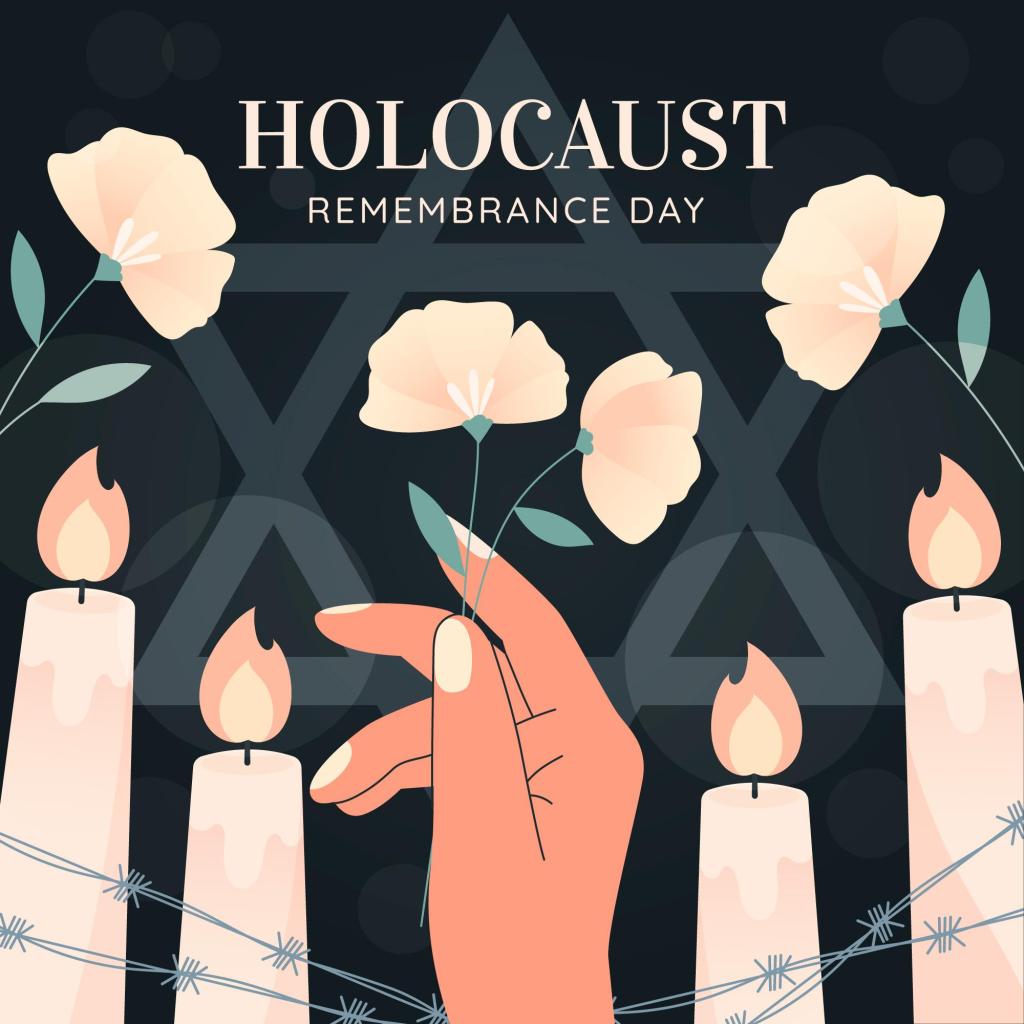
    Image by pikisuperstar on Freepik

    *This was written before the cease fire in Palestine*

    Today is Holocaust Remembrance Day.

    Every year, I spend quite a lot of my time in January studying the Holocaust. This comes about in different ways: reading books, watching documentaries, or listening to podcasts. With my love of Jewish roots in Christianity, and seeing how Christians have perpetuated anti-Semitic theology over the past two thousand years, I work very hard not to. Often, because I work in a church in the United States, there are a lot of assumptions I support what is happening currently in nation-state of Israel.

    I do not support ethnic cleansing or genocide in any form. Especially those that my tax dollars are helping to fund.

    This year, instead of focusing on the Shoah (usually what is refereed to as the Jewish peoples experienced during the Holocaust), I’ve branched out to wider accounts of murder and ethnic cleansing.

    One book I finished this month was, The Ethnic Cleansing of Palestine, written by Ilan Pappé. Born in Haifa Israel to parents that fled n*zi persecution in the 1930’s, he is a historian and author. If I had not read a few books on what happened in the 1940’s to the Jewish peoples of Europe, personally, Pappé’s book would not have been as devastating. The tactics described in the book between the Israeli and British forces against the Palestinians will make you sick. There is a lot of similarity to what persecuted European Jews experienced in the mid 20th century.

    Something that really stood out toward the beginning of the book was when Pappé speaks about the history of occupation of Palestine. How, this was something Palestinians were used to. However, for the first time, Palestinians experienced being displaced from land and homes their families had worked and lived on for generations.

    What is happening right now to the Palestinians is unacceptable.

    What happened to European Jews in the 1930’s and 1940’s (as well as pogroms throughout history against them) is also unacceptable.

    What is happening to the Uyghurs in China right now is unacceptable.

    The persecution or mass deaths of any group of people because of their ethnicity or religious affiliation is unacceptable.

    May our prayers and actions remember that today of all days, and those that follow. Be sure to read the prayer by Rabbi David Katz at the end of this.

    If you are interested in learning more about the Shoah, or other instances of genocide, I highly recommend the following (in no particular order):

    The Holocaust: A New History by Laurence Rees

    Shoah: A Documentary by Claude Lanzmann

    Night by Elie Weisel

    Man in Search of Meaning by Viktor Frankl

    A Shortest History of Israel and Palestine by Michael Scott-Baumann

    The Ethnic Cleansing of Palestine by Ilan Pappé

    Auschwitz: A Doctor’s Eyewitness Account by Dr. Richard Seaver

    On Palestine by Noam Chomsky and Ilan Pappé

    The War on Uyghurs: China’s Internal Campaign against a Muslim Minority by Sean Roberts

    The Uyghurs: Strangers in their Own Land by Gardner Bovingdon

    We Uyghurs Have No Voice: An Imprisoned Writer Speaks by Ilham Tohti

    A Prayer for Yom Hashoah / Holocaust Remembrance Day
    By Rabbi David Katz

    Ribbono shel Olam – Master of the Universe:

    On this most solemn of occasions, we open our hearts, minds, and souls to you.

    As we remember the six million, the eleven million, the indifference, and the evil;

    As we honor the heroes, the martyrs, the survivors, and the victims;

    We ask you to soothe our souls, to amplify our memories, to strengthen our resolve, and to hear our prayers.

    We ask for your presence in our midst; for healing, light, and love to soothe and ease our pain, as we commemorate the horrors that were committed not long ago. Please, oh Holy One, be gentle with our souls.

    We ask that you help us to forever remember the stories we hear. As tales of the atrocities are shared, as we re-encounter the unthinkable, we ask that these memories be strengthened and never fade, in the hope that those who remember the mistakes of the past will not repeat them. Please, oh Holy One, amplify our ability to remember.

    We ask that you strengthen our will, that you help us to ensure that the world does not again see such monstrosities. We say “never again” and we dedicate ourselves to this principle, to the idea that justice does not allow persecution, that genocide shall not be repeated, and that vigilance is the responsibility of freedom, at all costs. Please, oh Holy One, make manifest our resolve that these horrors remain but memories.

    We ask that you answer our prayers. We pray that the call of evil falls on deaf ears, that those who fight for freedom and justice always prevail, that those who need protection do not become victims. We pray that the lessons we learn from this darkest hour allow all humankind to better itself, and to truly and nobly embody the idea that we are each made in Your image. We pray for the souls of the millions and millions of victims of this brutality; we pray that we honor their lives and their memories by observing this day, and by doing everything in our power and beyond to make sure that no such shadow again darkens our world.

    Above all, we pray for shalom—for wholeness and peace—to be in our midst, now and forever. Please, oh Holy One, answer our prayers and bring us a world devoid of hatred, filled instead with peace.

    Ken yehi ratzon – may this be God’s will. And may we all say together, Amen.

  • Lemon, it’s Wednesday

    There is a good chance that if you’re reading this, you’re aware of the Tina Fey and Alec Baldwin meme from 30 Rock. If you don’t, look it up, I don’t want to ruin the fun.

    It has been a long week, and the year is just getting started.

    Over a decade ago, I was given the book, The Sabbath, by Abraham Joshua Heschel because I was leaving paid ministry. The person who gave it to me had the unfortunate position of letting me go due to financial problems created by the previous senior pastor. There was no longer any room for my position in the budget, and as one of her first acts as the new senior pastor, she had to let me know.

    In the twelve years since that conversation, there have been a lot of ups and downs. Many dark nights of the soul, and bright shining mornings. But one thing I will always be grateful for, is her gift of that book. The Sabbath changed my life in ways I had never imagined. But something else that I have come back to time and again, is the blessing she copied and placed in the book as well. This is a week that we all need encouragement, and I’d like to share this blessing as it has continued to help me down the path:

    May you listen to your longing to be free.

    May the frames of your belonging be large enough for the dreams of your soul.

    May you arise each day with a voice of blessing whispering in your heart that something good is going to happen to you.

    May you find a harmony between your soul and your life.

    May the mansion of your soul never become a haunted place.

    May you know the eternal longing which lives at the heart of time.

    May there be a kindness in your gaze when you look within.

    May you never place walls between the light and yourself.

    May your angel free you from the prisons of guilt, fear, disappointment, and despair.

    May you allow the wild beauty of the invisible world to gather you, mind you, and embrace you in belonging.

    Right now it is easy to be cynical. It is easy to look around and see the abuse, violence, and greed that rule and get lost in the natural response of despair. But like Mr. Rogers always said, look for the helpers, you’ll always find people who helping.

    Be the helpers, we need you now more than ever.

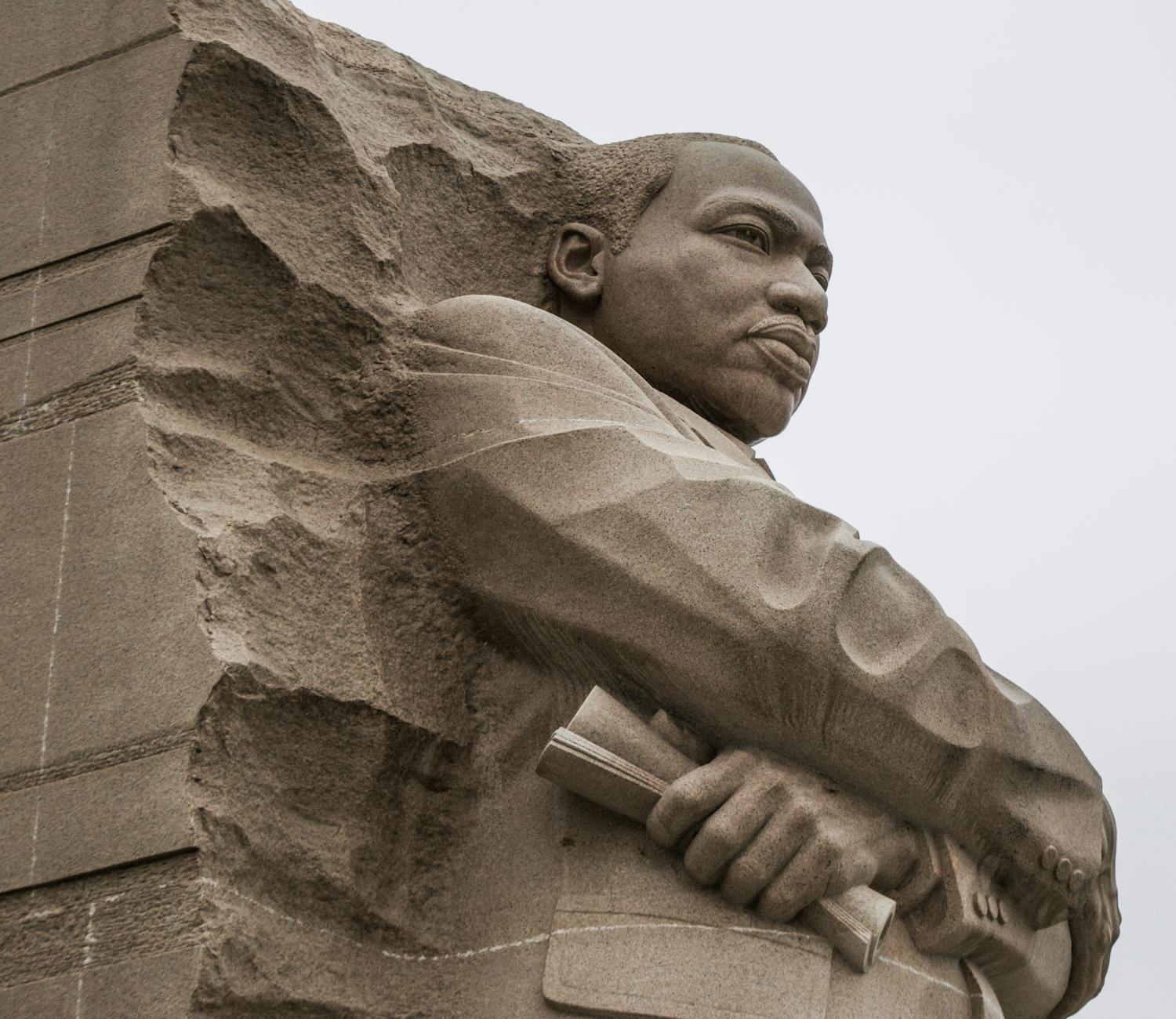
  • MLK Day 2025

    Photo by Gotta Be Worth It on Pexels.com

    It is an irregular day for a post, but considering all that is happening, I thought I’d write a little something. An attempt to put a little good in the world.

    A few years ago, I was asked to preach on MLK observance Sunday, and it was my first time preaching at the new church I was on staff at. To say it was a little intimidating would be correct. But, a few good things came from it, and as far as sermons go, not the worst I’ve preached. This is a bit of an updated excerpt from it waking toward the idea of how we can move forward.

    How can we fight for a world that is aligned with our kin-dom ideals while making room for those who may not like or agree with us? We advocate. In his letter from Birmingham Jail, Dr. King lays out the four basic steps to nonviolent protesting, to paraphrase they are:

    1. Collect the facts and determine from those facts whether injustice is alive and well in the community you’re focusing on.
    2. Negotiation. Engage in conversation with the gate holders and see if there is a way to work within the law to change what is going on.
    3. Self-purification. The attempt to purge the injustice from oneself, so that their eyes can no longer be shut to them.
    4. Non-violent direct action. Showing up and protesting whether it is a sit in, letter writing, or some other form.

    When I was a student at the University of Toledo, I minored in Peace Studies and Education, and through those courses, these four markers came up in class almost every other week. It’s tempting, when preaching to draw upon the model that Dr. King left behind, at least, the perceived model he left. For a very long time, evangelicals and other white people have used the likeness and words of Dr. King in a way that has almost made him a caricature of who he was. 2018 marked the 50th anniversary of his cold-blooded murder, and Michael Harriot wrote an article for The Root labeled, From Most hated to American Hero: The Whitewashing of Martin Luther King Jr. Harriot does not beat around the bush when he states:

    Contrary to popular belief, when King Died, he was not an icon of freedom and equality. In fact, most of the country disliked him. Sadly, on April 4, 1968, a bullet splattered bits of Martin Luther king Jr.’s brains and blood across the balcony of Memphis, Tenn.’s Lorraine Motel. Then, and only then, was white America ready to make him a hero. [1]


    In part, it was Dr. King’s approach to injustice through non-violent direct action that led to his unpopularity. However, there is another way to put it, a way that I prefer, and it was said by one of his contemporaries, Rabbi Abraham Joshua Heschel. To quote Rabbi Laurie Green:

    Upon marching with Dr. King in Selma, Rabbi Abraham Joshua Heschel famously said: ‘I felt my legs were praying.’ Heschel was as passionate about social justice as he was about the Sabbath and prayer. He taught that prayer must be revolutionary…[2]

    Growing up, I was often taught that prayer was a direct communication from myself to God, and that was about it. When I was introduced to concept of praying with one’s feet by my former mentor Don, it kind of broke my brain open about the possibilities of prayer.

    • So, when I say something like, advocate for the world we want, not the one we live in, that to me is an act of prayer.
    • Going after systems of oppression through non-violent direct action is a type of prayer.
    • Realizing that our liberation isn’t just wrapped up in Christ, but the breaking of chains of oppression for all peoples is an act of prayer.
    • Working hard for justice in an unjust is an act of prayer.

    So, on this Dr. Martin Luther King Jr. Day, 57 years since his assassination, may we remember that the work Dr. King stood for is still on going, and that in the work, we are called to be merciful, just as our God is merciful. We have a lot of work to do, and a ton of dirt to get under our nails.

    Grace and peace.

  • Welp… it isn’t much

    I took that picture on my way into work Monday. What a nice view.

    This week, I do not have much to say. The writers block has been very present these past few weeks, and it is what it is. It doesn’t help we said so long to the interim priest we have been working with for over a year, and everyone’s favorite staff member is on tour for the North American production of Dirty Dancing.

    So what is blocking the ideas from flowing? Well, we are less than a week away from another nightmare of a presidential term, and I am nervous for friends and loved ones. And if the confirmation hearing of Hegseth that occurred yesterday is a taste of what is to come…

    Speaking of cabinet picks, I will never forget when my wife and I lived in West Michigan, and the first Tr*mp administration had been going for a little while. The church we had attended the majority of the time we lived there was Mars Hill Bible Church, founded by Rob Bell. Bell had been long gone by the time we had gotten there, and the place was changing under the newly called pastor. Things started off well, but the moment Betsy DeVos, who had been the Secretary of Education for a few months, came over to me during the passing of the peace. She gave me the most uncomfortable hug I have ever had in my life, and while she was trying to make small talk, I just kept reminding myself that the person standing in front of me was a child of God. We left the church pretty soon after.

    The look on my wife’s face though, seared into my memory. One of shock, horror, and concern about what was going to come out of my mouth. I was in such shock at what was unfolding before me that I was pretty much frozen.

    Scraping the barrel but still showing up is strength in its self, and that is what I wanted to remind everyone of today. So, to close today, I want to offer up the closing prayer I lead every other week during the Wednesday intercessory prayer services. It was introduced to me by a dear friend who passed away almost a year ago called, The Coventry Litany of Reconciliation. Because it is me however, I tweaked a few things to make it more inclusive.

    The Lord be with you my friends, never forget you all are loved, and not alone during this dark time to come.

    An updated version of the Coventry Litany of Reconciliation:

    All have sinned and fallen short of the glory of God.

    The hatred which divides nation from nation, race from race, class from class,
    Lord, forgive.

    The covetous desires of people and nations to poses what is not their own,
    Lord, forgive.

    The greed which exploits the work of human hands and lays waste the earth,
    Lord, forgive.

    Our envy of the welfare and happiness of others,
    Lord, forgive.

    Our indifference to the plight of the imprisoned, the unhoused, the refugee,
    Lord, forgive.

    The lust which dishonors the bodies of men, women, non-binary, and children,
    Lord, forgive.

    The pride which leads us to trust ourselves and not in God,
    Lord, forgive.

    Be kind to one another, tender hearted, forgiving one another as God in Christ forgave you.

    In peace, we pray to you, Lord God.

  • Top books/series: 2020-2024

    Photo by Element5 Digital on Pexels.com

    I love books.

    Reading them, listening to them, or even collecting, it doesn’t matter. My office is filled with them, and so is our house. It has become a joke among some of the staff, and I have even been at bottom of a few jokes because of it. And you know what? I do not care. By nature, I am dyslexic, and I learned to read via comic books. In fact, I can tell you the first time I remember reading a word by myself.

    For Christmas in 1993 my parents bought me a box of comic books, and my life changed forever. I was already a fan of Batman thanks to the 1966 TV show reruns, but I did not know he was from another media. In that box was Batman 493, aka Red Slash, where serial killer Victor Zsasz take a few hostages and Batman has to rescue them. Well, one of the Gotham Police Officers that Zsasz… does… away… with… had my last name. That week before in kindergarten I was working with someone on spelling it out, and BAM! Right before my eyes, I see the name, I recognize what it is, and it was all downhill from there (except for reading, it took a long time for me to become comfortable with that).

    Over the years, I have spent many hours pouring over books of varying genres, mainly theological and non-fiction. However, in 2021 my wife urged me to pick up some fiction books, and I started to consume more of them. And since I’m one of the people that believes a decade starts in the year that ends in zero, we’re half way through the 20’s. With the over 300 books I’ve read so far this decade, here are my top ten books/series in no particular order:

    1. Operation Hail Mary by Mark Weir
      – Just read it. Incredible science based fiction. 10/10 no notes.
    2. The Alchemist by Paulo Coelho
      – There is a reason why people love this book. I thought it was going to be overrated, but it just really hit with me.
    3. Jesus and John Wayne: How White Evangelicals Corrupted a faith and Fracture a Nation by Kristin Kobes Du Mez
      – If like me you have some evangelicalism in your background, have gone through deconstruction/reconstruction and want to know some history pick it up. Also highly recommend The Making of Biblical Womanhood by Beth Alison Barr
    4. Black Against Empire: The History and Politics of the Black Panther Party by Joshua Bloom and Waldo E. Martin Jr.
      – I grew up conservative and heard about the Black Panthers. Nothing about them I learned about was true unsurprisingly! This book will learning you something you need.
    5. The Inspector Gamaché series by Louise Penny
      – Look, no one should trust the police… unless they’re fictional and written by Louise Penny.
    6. River of the Gods: Genius, Courage, and Betrayal in the Search for the Source of the Nile by Candice Millard
      – Do you like Indiana Jones and want a true story? This one floats to the top of all those style books I’ve read recently.
    7. Entitled: How Male Privilege Hurts Women by Kate Manne
      – Required reading if you identify as male. Don’t argue, just read the damn book.
    8. The Holocaust: A New History by Laurence Rees
      – I was going to put The Ethnic Cleansing of Palestine by Israeli author Ilan Pappé but I read it this year. This is neck and neck with that book. Dives into the prehistory of n*zi Germany and is as impactful, plus a nice precursor to Pappé’s book.
    9. We Used to Live Here by Marcus Kliewer
      – Incredible horror/mind melt of a book. I read this twice last year, and am still decoding the hidden messages in the book. Highly recommend if that’s your bag.
    10. Empire of Pain: The Secret History of the Sackler Dynasty AND Say Nothing: A True Story of Murder and Memory in Northern Ireland by Patrick Radden Keefe
      – Patrick Radden Keefe is an incredible writer/journalist. These two subject couldn’t be more different, and he makes them attainable in such engaging ways.

    Bonus book series: The Exorcist House/Anathema by Nick Roberts; if you like The Exorcist, you’ll enjoy these. Roberts is quickly becoming my Stephen King.