• Thomas: The Relatable Disciple

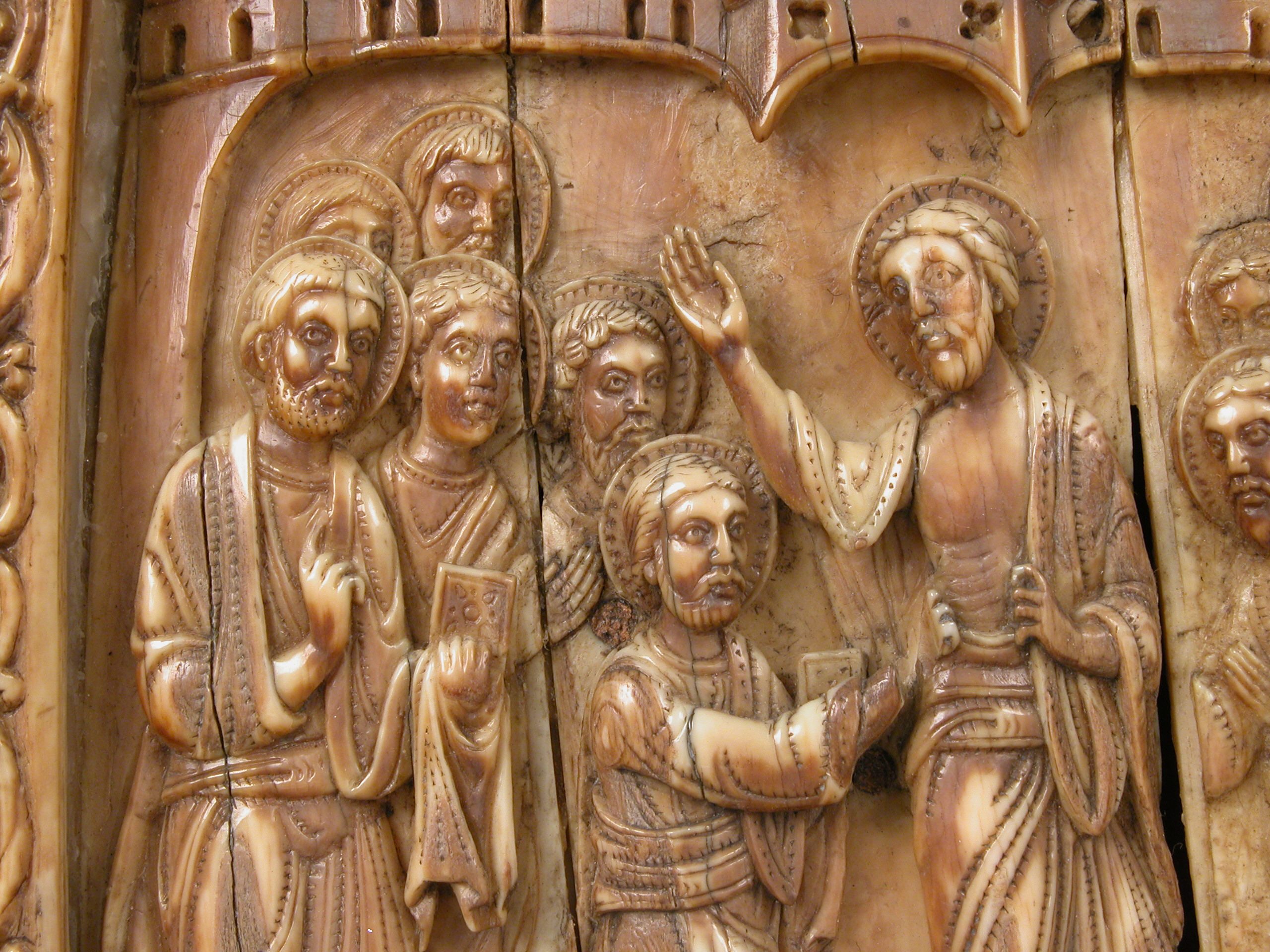
    Doubting Thomas and Jesus.

    I wrote this back in April for the Noon Day Prayer Meeting reflection for work.

    "But Thomas (who was called the Twin), one of the twelve, was not with them when Jesus came. So the other disciples told him, "We have seen the Lord." But he said to them, "Unless I see the mark of the nails in his hands, and put my finger in the mark of the nails and my hand in his side, I will not believe."
    A week later his disciples were again in the house, and Thomas was with them. Although the doors were shut, Jesus came and stood among them and said, "Peace be with you." Then he said to Thomas, "Put your finger here and see my hands. Reach out your hand and put it in my side. Do not doubt but believe." Thomas answered him, "My Lord and my God!" Jesus said to him, "Have you believed because you have seen me? Blessed are those who have not seen and yet have come to believe."
    - John 20:24-29 (NRSV)

    I doubt there is anyone more relatable in the Gospels than the Apostle Thomas.

    I mean, you miss one hangout with the crew and all of a sudden, you’re supposed to believe your teacher is alive. It sounds like a giant practical joke if you’re Thomas. It would be difficult not to respond with the, “I won’t believe anything until I put a finger through his hand!” After all, it was not like people came back from the dead all the time then. But when Jesus comes back, Thomas sees him, and while we are not told he touches the wounds, we know for Thomas, the world is turned upside down. Jesus has pulled one over on humanity, and the rest of the world because he has moved from death to life. When he asks Thomas, “have you believed because you have seen me?” what answer could be expected other than yes?

    While Hebrews tells us that faith is being sure of what we hope for and certain of what we do not see. I for one cannot imagine how it was expected of Thomas to believe without seeing. It reminds me of Exodus when Moses is tending Jethro’s flock and he walks by Mount Herob and sees the burning bush. Something that is on fire but not being consumed by it. If Moses had told me he’d seen a burning bush I would have believed him. After all, I have three in my yard. If he had told me he’d seen a bush that was on fire but not being consumed by it, it would take me a little time to let that sink in.

    But both of these interactions have something in common. It is the space between Jesus showing Thomas the marks, and Moses absorbing what God had to say that action comes forth. The Apostle Thomas eventually goes on to take Christianity to India and is eventually martyred for it. Moses, as we all know, after some convincing by God, goes on to free the ancient Israelite’s from slavery. Both of these actions have humanity partnering with God to bring about sharing the love of God.

    It is easy to ignore the holiness of space, and for that matter the time that takes place in the space. In his book The Sabbath, rabbi, and philosopher Dr. Abraham Joshua Heschel states:

    “we know what do with space but do not know what to do about time, except make it subservient to space. Most of us seem to labor for the sake of things of space. As a result we suffer from a deeply rooted dread of time and stand aghast when compelled to look into its face. Time to us is sarcasm, a slick treacherous monster with a jaw like a furnace incinerating every moment of our lives.”

    When I read this section of John’s Gospel this week, the space of the crucifixion wound and the time between Thomas hearing of Jesus’ resurrection, and seeing him really stood out. How many times do you think the Spirit tried to make contact with Thomas that week? Where there times when Thomas was sitting alone at night? Did he lay awake wondering if this was true that Jesus was back? Was he pushing the door shut while the Spirit was trying to break it open? What makes the Apostle Thomas so relatable for me, is there is space for his doubt. Space for his thoughts. And space for him to allow God to enter his midst and partner with him.

    I’d like to end with a meditation from Dr. Heschel’s book Between God and Man. Just so we are all aware, “man” in the title refers to humanity:

    “The presence of God is a majestic expectation, to be sensed and retained and, when lost, to be regained and resumed. Time is the presence of God in the world. Every moment is His subtle arrival, and man’s task is to be present. His presence is retained in moments in which God is not alone, in which we try to be present in His presence, to let Him enter our daily deeds, in which we coin our thoughts in the mint of eternity. The presence is not one realm and the sacred deed another; the sacred deed is the divine in disguise. The destiny of man is to be a partner of God and a mitzvah is an act in which man is present, an act of participation; while sin is an act in which God is alone; an act of alienation. Such acts of man’s revelations of the divine are acts of redemption. The meaning of redemption is to reveal the holy that is concealed, to disclose the divine that is suppressed. Every man is called upon to be a redeemer, and redemption takes place every moment, every day.” (pg. 80)
  • Ignorance isn’t Bliss, it’s Dangerous

    Trigger warning: this post addresses bigotry against the LGBTQIA+ community.

    Something I have learned as I have aged is my opinion is not needed on most things. Especially as someone who society has catered to for a very long time. It has been almost a month since the opening ceremony for the 2024 Olympic Games in Paris, and I am still upset about some of the backlash. The weird moral outrage thinking it was aimed as an attack on the Last Supper is laughable. But one post in particular still gets under my skin, and it came from a family member’s blog.

    A few weeks ago, a friend of mine messaged me asking if I had read their newest post, and to be honest, I try hard not to. It is usually filled with bad grammar, and rambling thoughts one would expect from a conservative religious boomer who lives in an echo chamber. The title itself was a redflag, I had a feeling this one would be different than normal. Looking back, it took me somewhere around 10 minutes to click on the link because I had to try and prepare what was about to unfold.

    Truely, I wish I were surprised but, there was a lot of anti-LGBTQIA+ rhetoric, though the author I am sure would never see it that way. From comparing the film, The Dallas Buyers Club, all but stating that is how “real” marginalized Drag Queens live, to reminding readers that the world has always been this way and that’s why God destroyed it during Noah’s time. Stating that there has been “queer” behavior all over the pagan world, until the rise of Christendom, in which it went underground.

    The ignorance displayed in this post, is the same we see all over social media when it comes to the LGBTQIA+ community. It reminds me of a story my dad told me about he and his dad. My father was born and raised in Dayton Ohio. During the 1960’s, he was in elementary school, and one day my grandfather and he were walking into the library. When my dad looked down the street he saw something he didn’t understand. So, he asked, “dad, what are all those people doing wearing their bedsheets out?” Not knowing he was witnessing a Klu Klux Klan demonstration, my grandfather responded with, “son, that is ignorance personified.”

    This, without a doubt in my mind, is ignorance personified.

    This type of ignorance is a choice, and people use it as a crutch. It is not on anyone but themselves to learn about what they do not know after they have become aware of it. I have had a lot of conversations with family, friends, and others about the LGBTQIA+ community, and what it means to be an ally. It is always clear who engages, those who are afraid to give up social or societal standing, and those who know they’re “right.” Continued intentional ignorance about the LGBTQIA+ has cost a lot of lives. Especially in the trans community most recently, for example, stated in the medical journal, Innovation in Clinical Neuroscience, “Gender-affirming care has consistently been shown to improve quality of life, improve health outcomes” yet religious conservatives continue to try and block it.

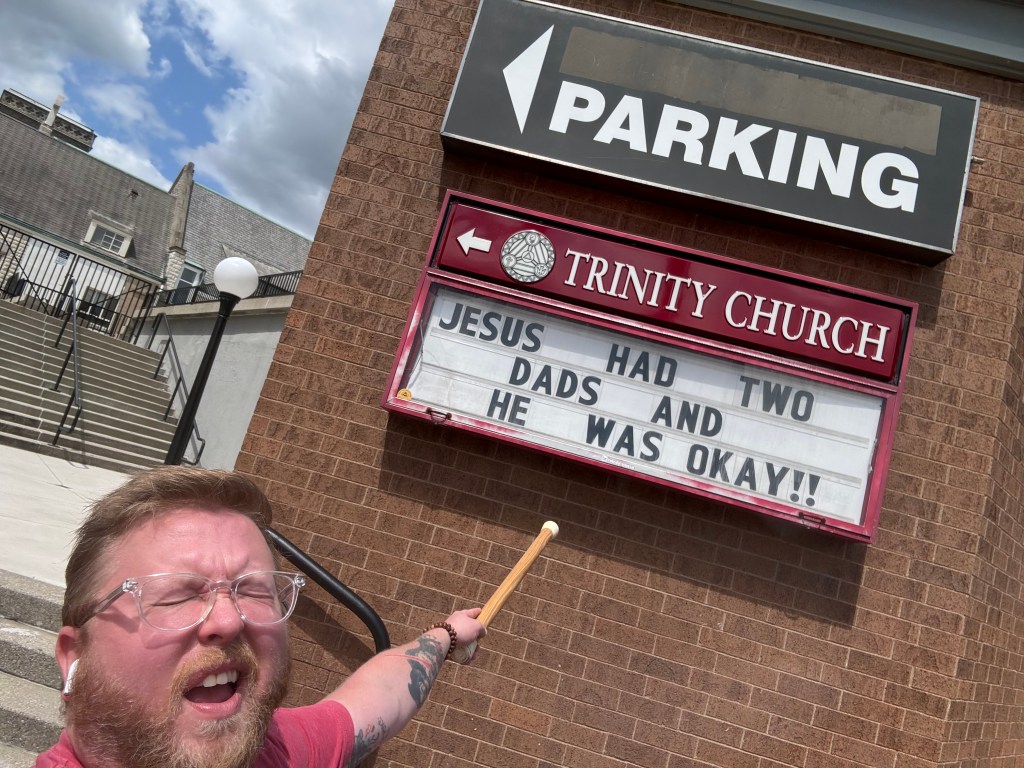
    This week is Pride in exotic Toledo Ohio, and the church I work for has been planning our involvement for most of the year. Pride, being radically welcoming, and actively being a safe space is who our big queer church is. It is how we show others we can be the hands and feet of God. It is how we express the love of Jesus to the stranger, and those millions of sheep that have left the flock. It is how we reach out and say, I see you, and I love you. And I am so honored to belong to this house of worship.

  • Concerning Judas

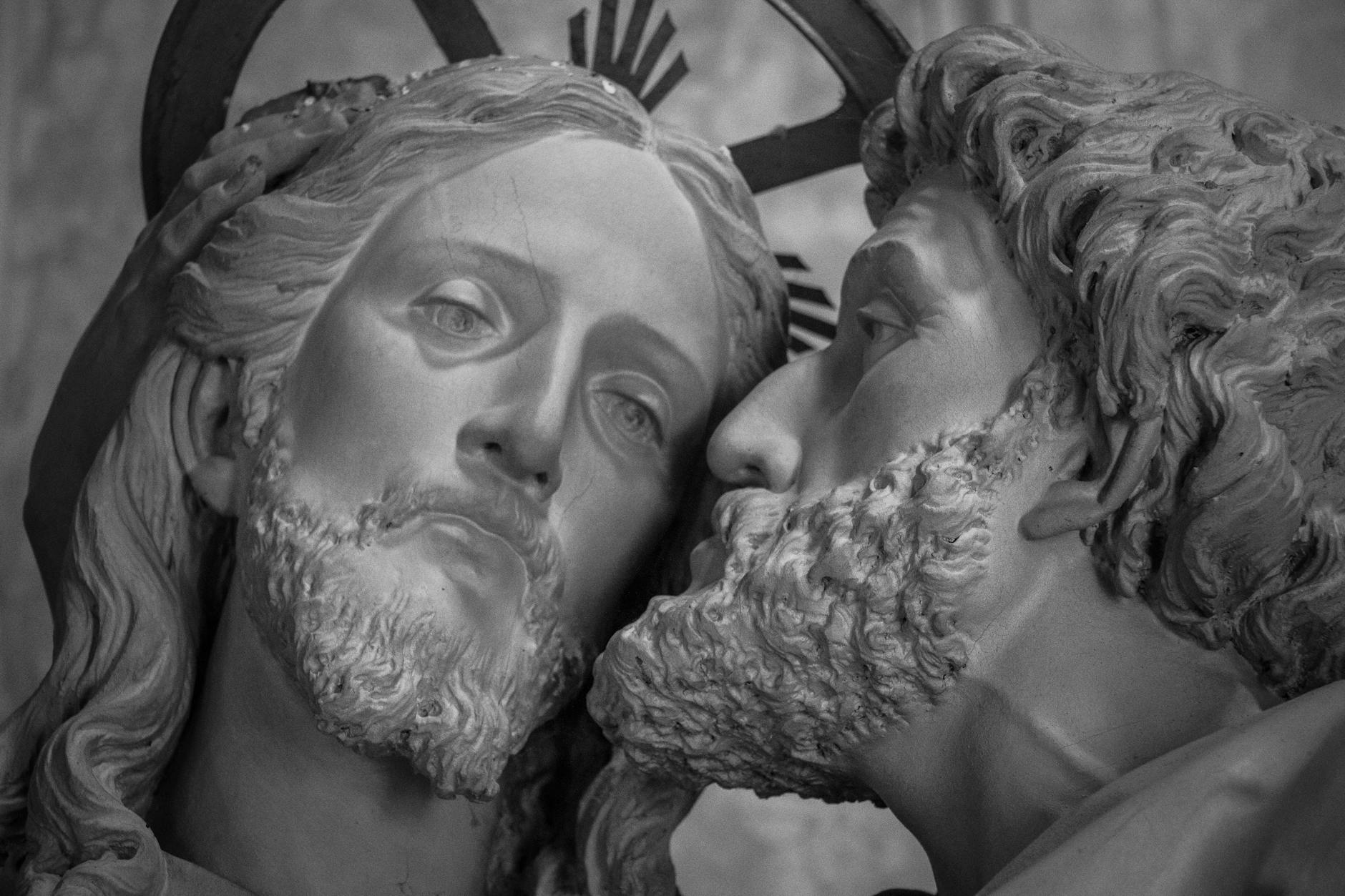
    Photo by MAURO FOSSATI on Pexels.com

    Acts 1:15-17, 21-26

    In those days Peter stood up among the believers (together the crowd numbered about one hundred twenty persons) and said, “Friends, the scripture had to be fulfilled, which the Holy Spirit through David foretold concerning Judas, who became a guide for those who arrested Jesus– for he was numbered among us and was allotted his share in this ministry. So one of the men who have accompanied us during all the time that the Lord Jesus went in and out among us, beginning from the baptism of John until the day when he was taken up from us– one of these must become a witness with us to his resurrection.” So they proposed two, Joseph called Barsabbas, who was also known as Justus, and Matthias. Then they prayed and said, “Lord, you know everyone’s heart. Show us which one of these two you have chosen to take the place in this ministry and apostleship from which Judas turned aside to go to his own place.” And they cast lots for them, and the lot fell on Matthias; and he was added to the eleven apostles.

    In this passage we see Peter standing up and speaking to the crowd of believers. He states that scripture foretold his betrayal. Someone that was counted among the twelve, and was “allotted his share of ministry.” Because they have to replace Judas, they decided to elect the next leader in a way that I’m sure most vestry would not do. They cast lots to see who gets picked.

    Matthias is elected to the office of disciple and apostle and is seldom heard about again in the scriptures. What happened to him remains a bit of an official mystery. There are reports of him being stoned to death and then beheaded in Judea, while other sources say he died of old age in Jerusalem. It is also believed that Matthias went and preached the Gospel to cannibals. Now this is a disciple I’d like to see a movie about. Just imagine being elevated to that level of leadership. It’d be terrifying! I mean, considering the shoes you have to fill from the person that left it vacant, maybe there was some relief. I mean, it’s not like you can lead Jesus to his death twice, right? But today, I don’t want to spend a lot of time writing about Matthias. There is a disciple mentioned in this story that rarely gets his day in the sun, outside of maybe one week a year. That disciple, as I am sure we’ve all guessed by now is Judas Iscariot.

    Judas is someone I like to bring up because he isn’t someone we usually spend time thinking deeply about. We read about him betraying Jesus for thirty pieces of silver, typically zoom over his repentance, and then he surrenders himself to the same fate Jesus had. Death on a tree. Now, whenever we see someone who is killed and hanging on a tree, the writers may be trying to spark our memory.

    Deuteronomy 21:22-23 ,

    If someone is guilty of a capital offense is put to death and their body is exposed on a pole, you must not leave that body hanging overnight. Be sure to bury it that same day, because anyone who is hung on a pole is under God’s curse. You must not desecrate the land the LORD your God is giving you as an inheritance.

    In Matthew’s account of the betrayal of Jesus, Jesus say to Judas, “do what you came for friend.” We also see Judas toss the silver at the chief prints, repent, and then goes out to hang himself from a tree. Judas is guilty of a capital crime, betraying the innocent, and he takes the Torah into his own hands. Judas condemns himself to the same fate that befell Jesus, death on a pole. Cursed under the eyes of God according to Deuteronomy 21. But let’s think about this for a moment, the overriding guilt and repentance that Judas has for what he did to Jesus takes him to this awful act. However unlike Jesus who broke the curse of death, Judas was left on the tree.

    If he had held out for three days, he would have known all would be well. It is no wonder that Judas is so easy to scapegoat because there is no reconciliation between him, Jesus, and the disciples. It’s easy to imagine ourselves in the roll of Peter who denied Jesus three times but then had the ability to reconcile with him. The denial didn’t matter anymore because of the grace Jesus had for Peter. This is something I think scares us if we spend time thinking about it. It is scary because I imagine that Jesus would have had the same warmth for Judas as he did Peter.

    Judas couldn’t lay down his life for his friend because, he sent him to unknowingly be killed. At least, according to Matthew’s Gospel he did.

    Asking people what they think about Judas is, I think the ultimate litmus test for how we respond to loving our enemy and praying for those that persecute us. Jesus, knowing what was going to happen still washed Judas’ feet and invited him into the new covenant of his body and blood. Judas accepted, then realized the depth of his betrayal. He then repents. I like to think that Judas is a model for showing us that there is no path we can walk down too far, that Jesus’ grace can’t reach us. 

    May we remember that in our times of despair.

  • Toledo Area Gay and Lesbian Affiliation’s Digital Exhibit

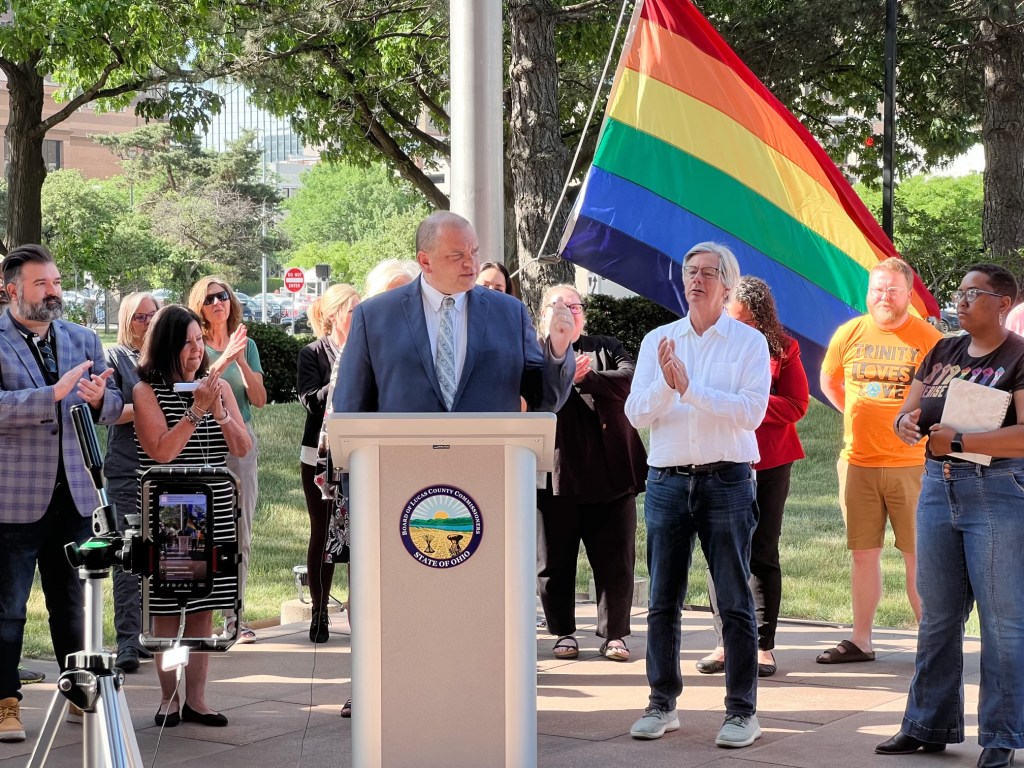
    Mayor Wade and the raising of the 2023 Pride Flag at One Government Center

    This week I was reading our local paper, The Toledo Blade, when I came across an article by Andrew Cramer (which you can read here). It is about the Toledo Area Gay and Lesbian Affiliation newsletter which ran from 1983 to 2019. The Toledo Lucas County Public Library has released a digital exhibition, housing all of the 442 issues released. As we are planning our August Pride festivities for our church it is nice to know this exhibition exists.

    According to Cramer, TAGALA’s newsletter stood out as a, “single publication for a wide range of LGBTQ+ groups, including those focused on political activism, religion, community service, and more.” My uncle Ricky and his partner Ken were staples at big family parties when I was growing up in the 90’s and 00’s, and I couldn’t help but think of them while reading. They both passed away from cancer in the late 00’s, and I was very fond of them, especially Ken.

    I work at one of the oldest churches in downtown Toledo, and everywhere you walk there is a sense of history passing through its doors. The history this church has with the LGBTQIA+ community in Toledo is long lasting, and firm. Long before the days of Obergefell, people were safe and welcomed here. In the 90’s we hosted the Toledo Gay Men’s Chorus, and I can’t help but think of the newsletters from TAGALA that came through these halls.

    One of the things that jumped out to me from Cramer’s article was how different the coverage in the newsletter is versus national press:

    “TAGALA’s more private dialogues stand in stark contrast to the mainstream storytelling. First-person opinion pieces offer genuine response to the events of the day, not as an observer, but as someone who has lived the relevant experiences.”

    The first person narrative in a time of great oppression, discrimination, and harassment (which unfortunately continues today), is crucial. This resource that the library is hosting is such an important part of history, and as an ally, I am excited to share the news about it. Last year I had the honor and privilege of attending the raising of the Pride Flag outside of One Government Center (as seen above). During this time I heard tales of the way Toledo has grown over the decades to become such an open and affirming place.

  • Welcome

    This is my personal website. The thoughts here reflect my own, and not those of my employers, unless they overlap.

    The title of the blog came from Sister Joanne Frania, a spiritual director I saw for a short time. During one of our sessions, I was lamenting about identity in ministry. During it, she blurted out, “what do you expect, you’re just George, George of Sylvania.” At some point I knew I’d restart a blog and I had found the perfect title.

    This is a space where I’ll drop ideas about religion, poetry, or whatever thing I’m writing about. Mostly religion though, as I work in a professional religious setting.

    A little about me, best I am infrequent blogger, and it’s been that way for years. It will most likely stay that way. I’m a suburban dad that lives in an affluent part of Northwest Ohio, with his family and three cats. Privilege is something I recognize and try to use mine to support others.

    Black lives matter.

    Trans lives matter.

    LGBTQIA+ support is not a negotiation.

    Abortion is healthcare.

    God loves everyone, no exceptions.

    I’m George of Sylvania and this is my dumping ground, welcome.