Author: georgembenson

  • Darts

    There are few scenes from television that I can re-watch like the dart scene from Ted Lasso. I’m sure most of those reading will have seen it but if not, let me set the scene. Two men are playing darts in a crowded English pub, and there is a bet on the line. The bet is that if the former owner of the team Ted works for wins, he can pick the lineup for the rest of the season. If Ted wins, the former owner can’t come near the owners box while Rebecca (his ex-wife) owns the team.

    Ted is down in points, and needs to triple twenties and a bullseye to win the game. Before he takes his turn, he begins to speak to his opponent about how he has been underestimated by guys like him his entire life. Ted points out how those people aren’t curious, and their assumptions of him, had nothing to do with who he actually is. Ted comes to this because, curious people ask questions, they don’t make assumptions.

    It is a such a simple observation by Ted, but personally, it really packs a blow at the same time.

    The ability to be curious in a world we know is such a rare thing found in adulthood. This is why I think Ted Lasso stands out compared to other positive characters written for TV. It is also something I think tends to be lost in the Church, an observation pointed out to me by a former mentor. One of the things I had found most helpful during the major deconstruction phase of my faith were good questions. It took a little while for me to want to be curious about reconstructing my faith, but curiosity is what helped it grow.

    Reading rabbinic materials did a great job in re-cultivating the curiosity that evangelicalism killed. Knowing that there is space in faith traditions to play with the text, imagine what it was like, and disagree was such a foreign concept. Rabbi Dr. Tzvi Weinreb in his article, Korack: Two Jews, Three Opinions, writes:

    It is noteworthy in this regard that every single chapter of the work known as the Mishnah, which is the core around which the Talmud developed, contains a dispute between the rabbis on one point or another.

    With the heaviness of the world to come, and the rhetoric that will continue to ramp up (we saw last week at the capitol over bathrooms), it is good to remember that curiosity and questions belong. Not only do they belong, but it curiosity is how we grow and become humans deeper in the image of God. Only those who are afraid (toxic people, christian nationalists, homophobes, transphobes, etc.) will tell you otherwise. The way the writers of Ted Lasso nail this point home in such a disarming way lends to the longevity of the show.

    Stay curious my friends, it will only strengthen our resolve as we march forward. I needed a somewhat uplifting post because I have been stressed, worried, and even a little scared. I hope this gives you room to jump into something new to help balance the way things are going. You can’t fight fascism without remembering the beauty that exists and is worth maintaining. Try Ted Lasso if you haven’t seen it, or Gardner’s World with Monty Don, two sources that allow you to unplug and be filled for an hour.

    Barbecue sauce.
  • Transgender Day of Remembrance

    Image sourced here.

    Two weeks ago today the election results were announced, and things continue to look dire. Today, as the title gives away, is Transgender Day of Remembrance; while I am not a member of the trans community, I am a staunch ally. Now, I know there are going to be a few people who read this, that do not recognize trans people’s right to exist. There will also be those who read, that also think supporting queer people, and, specifically trans people is heresy. Nothing I say to you will change your mind. To borrow a phrase from someone I respect, I do not make nice with oppressors, and I hope you hear God. For those of you who are here that none of this applies to, welcome.

    Our LGBTQIA+ siblings have been here from the very beginning and to not recognize that, to me, is the same as ignoring Christ on the cross. Those who know their church history, they should be aware of this, and also know they have always had a place in the family of God. If this is news to you, I highly recommend these two books to get started:

    Transforming by Austin Hartke
    Sex Difference in Christian Theology by Megan K. DeFranza

    For Christians, to believe that we are made in the image of God, is to (hopefully) accept one of the Jewish concepts in the Talmud that says:

    Rabbi Yirmeya ben Elazar: In the hour when the Holy One created the first human, He created him as an androgynos (one having both male and female sexual characteristics), as it is said, “male and female He created them.1

    Dr. Rachel Scheinerman wrote an incredible article, The Eight Genders of the Talmud, that you can read right here. The reason why I am posting about this article, is because the Talmud is a compendium of rabbinic commentary, laws, and other writings that has been around for over a millennia. Outside of the Torah, it is the most impactful pieces of Jewish writing. To know that Christianity was a religion born out of ancient Judaism, reading ancient Jewish writings can be very helpful. Of these eight genders, four of them are applicable to our trans siblings.

    Less than 1.5% of trans people make up the total population in the United States according to a June 2022 article by the UCLA school of law.2

    350 trans siblings have been murdered globally so far in 2024.3

    321 trans siblings were murdered globally in 2023.4

    391 anti-trans bills have been proposed in the United States in 2024.5

    In 1933, one of the life centers of LGBT+ culture and community was in Germany; and when Hitler came to power, his government targeted our trans siblings.6

    The incoming presidential administration is terrifying for almost anyone who is not a straight, white, cis, republican male.

    Today is a somber day, and unfortunately there is a lot of ground still to cover for our siblings. But I believe it is possible to build a world where they are not only safe, but can be the person God made them to be. And that they will have the support to do so.

    May we remember our lost siblings not just today, but every day.

    May we remember that our trans siblings need us, not just today, but every day.

    May we see the image of God reflected in them, as we do ourselves.

    May we stand for them, even if our friends and family do not.

    And may we take a moment to recite these words from Rev. Marie A. Trato, the Canon for Community Justice Ministry in the Diocese of Long Island:

    Gracious and loving God, you made all of humankind in your image and redeemed us through Jesus your Son: On this International Transgender Day of Remembrance, we remember those who were killed because of their all-encompassing humanity; help us to overcome our anger and our fear of those whose lives move beyond our binary definitions; draw us closer to the mystery and complexity of your infinite creativity and creation; teach us to look upon all of God’s children with love and compassion, that we may all live in safety and in peace; through Jesus Christ our Lord, who lives and reigns with you, in the unity of the Holy Spirit, one God, now and for ever. Amen.7


    Sources:

    1. https://www.myjewishlearning.com/article/the-eight-genders-in-the-talmud/ ↩︎
    2. https://williamsinstitute.law.ucla.edu/publications/trans-adults-united-states/
      ↩︎
    3. https://www.forbes.com/sites/jamiewareham/2024/11/16/350-transgender-people-murdered-in-2024-will-the-violence-ever-end/ ↩︎
    4. https://www.forbes.com/sites/jamiewareham/2024/11/16/350-transgender-people-murdered-in-2024-will-the-violence-ever-end/ ↩︎
    5. https://translegislation.com/
      ↩︎
    6. https://mjhnyc.org/events/transgender-experiences-in-weimar-and-nazi-germany/ ↩︎
    7. https://allsaints-pas.org/a-prayer-for-transgender-day-of-remembrance-november-20th/ ↩︎

  • “There’s a moment you know you’re f*cked”

    I am sure a few of my fellow musical theater millennial’s will recognize the title of this post. It comes from the 2006 musical, Spring Awakening. This show launched the careers of Jonathan Groff and Lea Michele, and is based on the 1891 German play Spring Awakening by Frank Wedekind. Set in late 19th-century Germany, the musical tells the story of teenagers discovering the inner and outer tumult of teenage sexuality.1 It came on the scene pretty hard, and the music and message still holds up. Now, unfortunately, more than ever.

    So Wednesday morning has come and gone, and what are we left to do?

    Work.

    Work harder than ever.

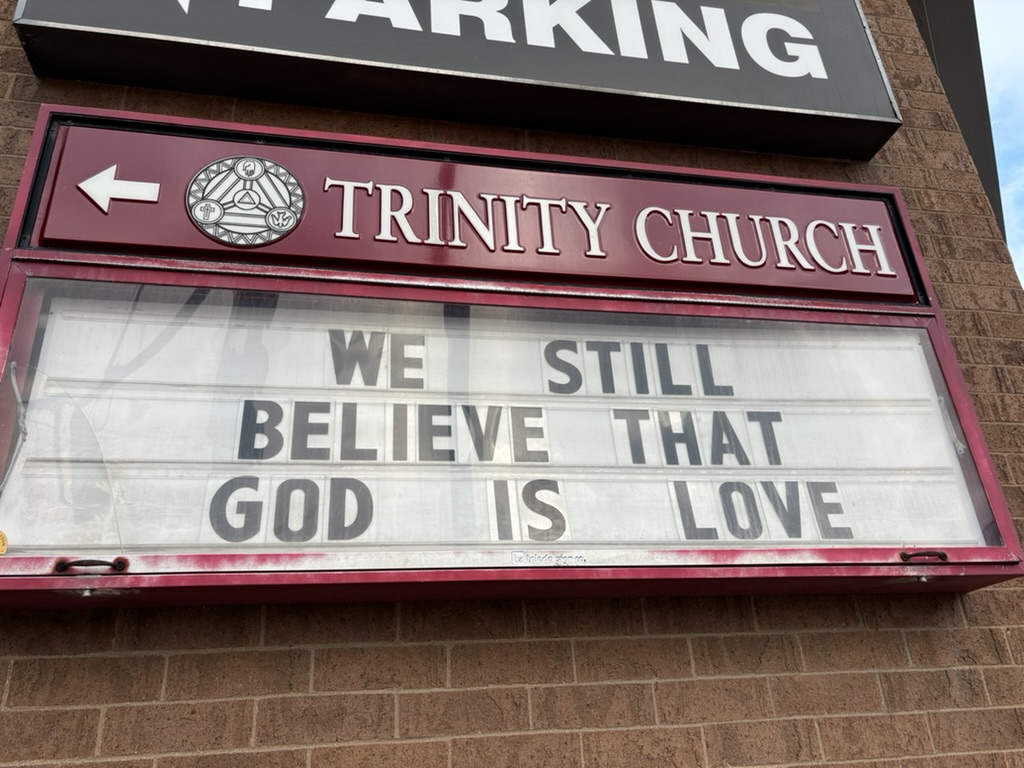
    Last week my co-worker and I asked our interim pastor what we should put on our marquee. “You know, I want the Gospel on it” is what he said. So we spitballed, and landed on “We Still Believe God is Love.”

    The future is dark, uncertain, and we need to hold true to who we are. Eventually there will be more of us that will rally around love. Because at the heart of the Gospel, that is all that’s left.

    God is love.

    And love, in the end, always wins.

    1. https://greenvalleytheatre.com/spring-awakening
      ↩︎
  • Super Tuesday

    I just left the line to vote. This is the first time since moving here that I had seen a line that will last more than 5 minutes.

    The picture above is one I took while dropping something off to a friend back in August. The heart your neighbor sign came from a group trying to reach out to neighbors. Their mission is, “during a year where neighborly love and values are tested through voting, we strive to bring neighbors together in love and harmony.

    On the surface, it’s a great idea. But I, for the life of me, cannot understand how someone can put a sign like that their yard and vote for hate. Maybe in 2016 I could have understood.

    Maybe.

    But we know better now, and I’m only speaking for myself.

    To love your neighbor is to do what is best for everyone with the privilege you hold. Former Presiding Bishop Michael Curry wrote during the 2016 election:

    Go and vote.  Vote your conscience.  Your conscience informed by what it means to love your neighbor.  To participate in the process of seeking the common good.  To participate in the process of making this a better world.  However you vote, go and vote.  And do that as a follower of Jesus. 


    I would amend that to say, if you are a follower of Jesus;

    If you are someone who seeks justice, cares about the poor, widow, and orphan;

    If you strive to till the soil of this world to usher in the kin-dom of heaven;

    Do not vote for him. Lives are on the line.

    Women’s lives are on the line.

    LGBTQIA+ lives are on the line.

    People of Color lives are in the line.

    Those who rely on social security lives are on the line.

    Those who live on the margins lives are on the line.

    I support Palestinians, and she took too long to talk about Gaza in any “meaningful” way. And I’m not sure I trust the outcome. But like uncle Bernie said, “he must be defeated.”

    I can go on, and on but I’ll end it with this:

    Christ have mercy,

    Lord have mercy,

    Christ have mercy.

  • Prayer Meeting Reflection

    The second, fourth, and fifth Wednesdays of the month I am responsible for the prayer meeting at work. Here is the reflection from today’s meeting:

    Romans 5:5
    The love of God has been poured into our hearts through the Holy Spirit that has been given to us.

    The word love is translated to agape. Agape love is often talked about in the big “C” church, and what it means, is a type of love that transcends feeling. It is about the outward pouring of caring for one another. The response from the person you’re doing this with should not matter. It is love that is perfectly modeled by Jesus.

    I have spent a lot of time working in food ministries, and often there is an attitude that, “people should be thankful for what they’re getting from us.” It is either on display in a way that people, who are going through the lines are not outwardly joyful or thankful for what is being received.

    There is a scene in Monty Python’s Life of Brian that does a great job displaying this. Michael Palin is begging for alms as a “poor ex leper.” Jesus had healed him when he was not asked, and now Palin’s character has no idea how to live his life being healthy.

    Something I have found in my personal, and from speaking to other people I have known journey is, this is where lust sets in. I am not talking about the sexual desires that it is often associated with, but the idea of figuring out what mountain to conquer next.

    I was re-listening to a sermon, that turned twenty years old a few days ago, from a former pastor I really enjoy. And he was speaking on how lust promises what it can never deliver. The idea of what is next. Or what more can we be doing?

    This is the type of lust that permeates through churches and people disguised at times of agape love. It isn’t bad to ask what more can be done; in fact, it can bring about really great change. But sometimes, what we are searching for is never enough.

    The Mandate, St. Thomas Aquinas – Love Poems from God: Twelve Sacred Voices from the East and West translated by Daniel Ladinsky

    Because of my compassion, the sun wanted to be near me all night,
    and the earth deeded her fields to me,
    and all in heaven said,

    “We have voted you our governor; tell us your divine mandate.”
    And I did, and God will never revoke it:
    Nothing in existence is turned
    away.

    More tender is my Lord’s heart than any heart
    has ever been.

    So, when the divine realm asked me to govern it
    with one simple
    rule,

    I looked into His eyes and then knew
    what to say to any angel
    who might serve as
    a sentry to
    God:

    No creature should be
    turned away.

    The monotony of good work can breed discontent without realizing it.

    As we go through this week, may we remember that the love we model in Jesus is about the people we are serving and engaging with, not just ourselves.

  • “Awaking” from our “Dullness”

    We shall awaken from our dullness and rise vigorously toward justice. If we fall in love with creation deeper and deeper, we will respond to its endangerment with passion.” – Hildegard of Bingen

    This morning in the Common Prayer: A Liturgy for Ordinary Radicals, I came across this quote. In one of the many iterations of a blog, I wrote a series on Hildegard. This included writing on her life and going through some of her works. As a recovering evangelical-received-Episcopal, I am still familiarizing myself with the saints and quite a bit of church history. Spiritual practices like reading the Daily Office, and others were okay to adapt to. But the idea of “awakening from our dullness” struck me this morning. And I think I know why.

    I have a two and a half year old who has been awake between, 3:30am and 5am, for two months. Some days he naps well, and others he does not. At times he’s fighting his two year molars. Other times, he just wants to get a jump start on the day. My wife and I take turns getting up with him. Depending on how the morning goes, it is a long day for everyone. At this time in our life, there is no awaking from our dullness.

    There is only dullness.

    Dullness, Ms. Rachel, Elmo, and the Toy Story saga.

    Without knowing it, in an attempt to break the dullness, I started decorating my yard for Halloween a month early. This year I decided that instead of spending one marathon day getting it all up, I’d take my time and enjoy it. This is something I look forward to every year. This has been a small way of awaking from the dullness for me. But it has done it in a different way that I awaken from the dullness with my kid. Right now, as we are in “second summer,” our kid’s favorite pastime is turning on the hose and watering our house and everything else he can. He will do this every day, and he will find joy in it. I, at times, find it monotonous.

    Dullness and monotony are synonyms, they are ways to describe mediocrity.

    I have one compact disk in my car, and it is the second half to the Mars Hill Bible Church worship album that came out in the early 2000s. Between songs, Aaron Niequist, former worship pastor (I think that’s the title), quoted a G.K. Chesterton book. In Orthodox, Chesterton writes:

    The thing I mean can be seen, for instance, in children, when they find some game or joke that they specially enjoy. A child kicks his legs rhythmically through excess, not absence, of life. Because children have abounding vitality, because they are in spirit fierce and free, therefore they want things repeated and unchanged. They always say, “Do it again”; and the grown-up person does it again until he is nearly dead. For grown-up people are not strong enough to exult in monotony. But perhaps God is strong enough to exult in monotony. It is possible that God says every morning, “Do it again” to the sun, and every evening, “Do it again” to the moon. It may not be automatic necessity that makes all daisies alike; it may be that God makes every daisy separately, but has never got tired of making them. It may be that He has the eternal appetite of infancy; for we have sinned and grown old, and our Father is younger than we.

    It is hard to awaken from the dullness of life without coffee and being sleep deprived. But this guy, God bless him, awakes every day saying, “do it again!” and I’ve been too old to hear him. Instead, I have been trying to re-enter practices, and trying to find different ways to awaken from the dullness, when one person right in front of me is showing me how to do it.

    Grace and peace.

  • Thomas: The Relatable Disciple

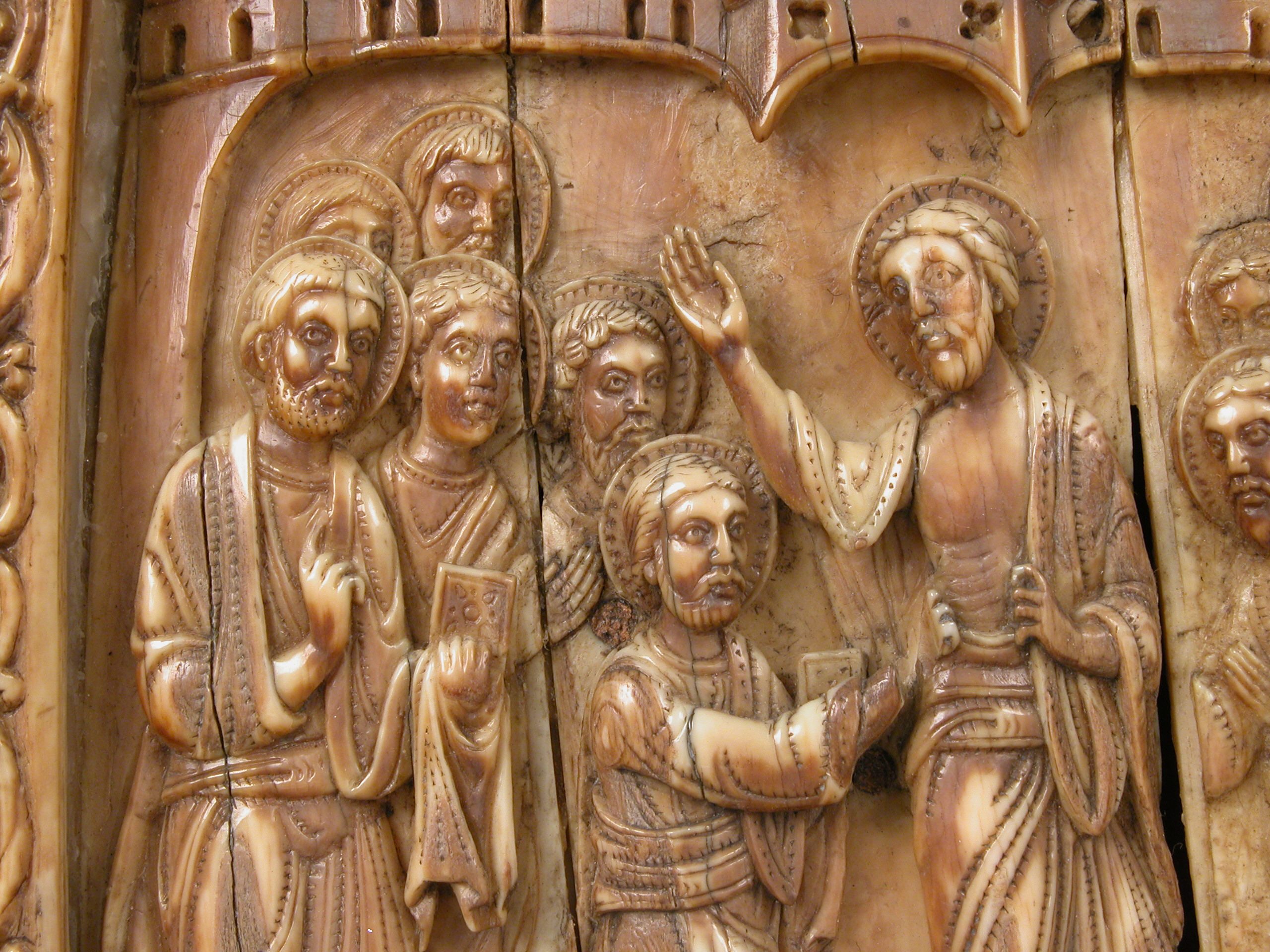
    Doubting Thomas and Jesus.

    I wrote this back in April for the Noon Day Prayer Meeting reflection for work.

    "But Thomas (who was called the Twin), one of the twelve, was not with them when Jesus came. So the other disciples told him, "We have seen the Lord." But he said to them, "Unless I see the mark of the nails in his hands, and put my finger in the mark of the nails and my hand in his side, I will not believe."
    A week later his disciples were again in the house, and Thomas was with them. Although the doors were shut, Jesus came and stood among them and said, "Peace be with you." Then he said to Thomas, "Put your finger here and see my hands. Reach out your hand and put it in my side. Do not doubt but believe." Thomas answered him, "My Lord and my God!" Jesus said to him, "Have you believed because you have seen me? Blessed are those who have not seen and yet have come to believe."
    - John 20:24-29 (NRSV)

    I doubt there is anyone more relatable in the Gospels than the Apostle Thomas.

    I mean, you miss one hangout with the crew and all of a sudden, you’re supposed to believe your teacher is alive. It sounds like a giant practical joke if you’re Thomas. It would be difficult not to respond with the, “I won’t believe anything until I put a finger through his hand!” After all, it was not like people came back from the dead all the time then. But when Jesus comes back, Thomas sees him, and while we are not told he touches the wounds, we know for Thomas, the world is turned upside down. Jesus has pulled one over on humanity, and the rest of the world because he has moved from death to life. When he asks Thomas, “have you believed because you have seen me?” what answer could be expected other than yes?

    While Hebrews tells us that faith is being sure of what we hope for and certain of what we do not see. I for one cannot imagine how it was expected of Thomas to believe without seeing. It reminds me of Exodus when Moses is tending Jethro’s flock and he walks by Mount Herob and sees the burning bush. Something that is on fire but not being consumed by it. If Moses had told me he’d seen a burning bush I would have believed him. After all, I have three in my yard. If he had told me he’d seen a bush that was on fire but not being consumed by it, it would take me a little time to let that sink in.

    But both of these interactions have something in common. It is the space between Jesus showing Thomas the marks, and Moses absorbing what God had to say that action comes forth. The Apostle Thomas eventually goes on to take Christianity to India and is eventually martyred for it. Moses, as we all know, after some convincing by God, goes on to free the ancient Israelite’s from slavery. Both of these actions have humanity partnering with God to bring about sharing the love of God.

    It is easy to ignore the holiness of space, and for that matter the time that takes place in the space. In his book The Sabbath, rabbi, and philosopher Dr. Abraham Joshua Heschel states:

    “we know what do with space but do not know what to do about time, except make it subservient to space. Most of us seem to labor for the sake of things of space. As a result we suffer from a deeply rooted dread of time and stand aghast when compelled to look into its face. Time to us is sarcasm, a slick treacherous monster with a jaw like a furnace incinerating every moment of our lives.”

    When I read this section of John’s Gospel this week, the space of the crucifixion wound and the time between Thomas hearing of Jesus’ resurrection, and seeing him really stood out. How many times do you think the Spirit tried to make contact with Thomas that week? Where there times when Thomas was sitting alone at night? Did he lay awake wondering if this was true that Jesus was back? Was he pushing the door shut while the Spirit was trying to break it open? What makes the Apostle Thomas so relatable for me, is there is space for his doubt. Space for his thoughts. And space for him to allow God to enter his midst and partner with him.

    I’d like to end with a meditation from Dr. Heschel’s book Between God and Man. Just so we are all aware, “man” in the title refers to humanity:

    “The presence of God is a majestic expectation, to be sensed and retained and, when lost, to be regained and resumed. Time is the presence of God in the world. Every moment is His subtle arrival, and man’s task is to be present. His presence is retained in moments in which God is not alone, in which we try to be present in His presence, to let Him enter our daily deeds, in which we coin our thoughts in the mint of eternity. The presence is not one realm and the sacred deed another; the sacred deed is the divine in disguise. The destiny of man is to be a partner of God and a mitzvah is an act in which man is present, an act of participation; while sin is an act in which God is alone; an act of alienation. Such acts of man’s revelations of the divine are acts of redemption. The meaning of redemption is to reveal the holy that is concealed, to disclose the divine that is suppressed. Every man is called upon to be a redeemer, and redemption takes place every moment, every day.” (pg. 80)

  • Ignorance isn’t Bliss, it’s Dangerous

    Trigger warning: this post addresses bigotry against the LGBTQIA+ community.

    Something I have learned as I have aged is my opinion is not needed on most things. Especially as someone who society has catered to for a very long time. It has been almost a month since the opening ceremony for the 2024 Olympic Games in Paris, and I am still upset about some of the backlash. The weird moral outrage thinking it was aimed as an attack on the Last Supper is laughable. But one post in particular still gets under my skin, and it came from a family member’s blog.

    A few weeks ago, a friend of mine messaged me asking if I had read their newest post, and to be honest, I try hard not to. It is usually filled with bad grammar, and rambling thoughts one would expect from a conservative religious boomer who lives in an echo chamber. The title itself was a redflag, I had a feeling this one would be different than normal. Looking back, it took me somewhere around 10 minutes to click on the link because I had to try and prepare what was about to unfold.

    Truely, I wish I were surprised but, there was a lot of anti-LGBTQIA+ rhetoric, though the author I am sure would never see it that way. From comparing the film, The Dallas Buyers Club, all but stating that is how “real” marginalized Drag Queens live, to reminding readers that the world has always been this way and that’s why God destroyed it during Noah’s time. Stating that there has been “queer” behavior all over the pagan world, until the rise of Christendom, in which it went underground.

    The ignorance displayed in this post, is the same we see all over social media when it comes to the LGBTQIA+ community. It reminds me of a story my dad told me about he and his dad. My father was born and raised in Dayton Ohio. During the 1960’s, he was in elementary school, and one day my grandfather and he were walking into the library. When my dad looked down the street he saw something he didn’t understand. So, he asked, “dad, what are all those people doing wearing their bedsheets out?” Not knowing he was witnessing a Klu Klux Klan demonstration, my grandfather responded with, “son, that is ignorance personified.”

    This, without a doubt in my mind, is ignorance personified.

    This type of ignorance is a choice, and people use it as a crutch. It is not on anyone but themselves to learn about what they do not know after they have become aware of it. I have had a lot of conversations with family, friends, and others about the LGBTQIA+ community, and what it means to be an ally. It is always clear who engages, those who are afraid to give up social or societal standing, and those who know they’re “right.” Continued intentional ignorance about the LGBTQIA+ has cost a lot of lives. Especially in the trans community most recently, for example, stated in the medical journal, Innovation in Clinical Neuroscience, “Gender-affirming care has consistently been shown to improve quality of life, improve health outcomes” yet religious conservatives continue to try and block it.

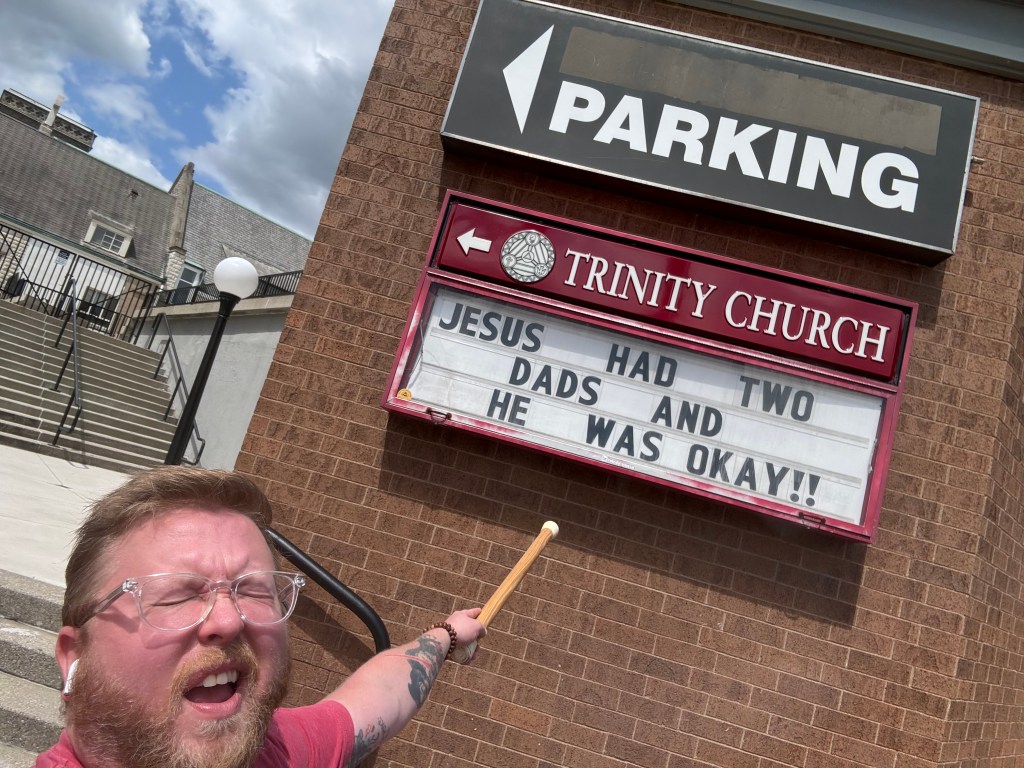
    This week is Pride in exotic Toledo Ohio, and the church I work for has been planning our involvement for most of the year. Pride, being radically welcoming, and actively being a safe space is who our big queer church is. It is how we show others we can be the hands and feet of God. It is how we express the love of Jesus to the stranger, and those millions of sheep that have left the flock. It is how we reach out and say, I see you, and I love you. And I am so honored to belong to this house of worship.

  • Concerning Judas

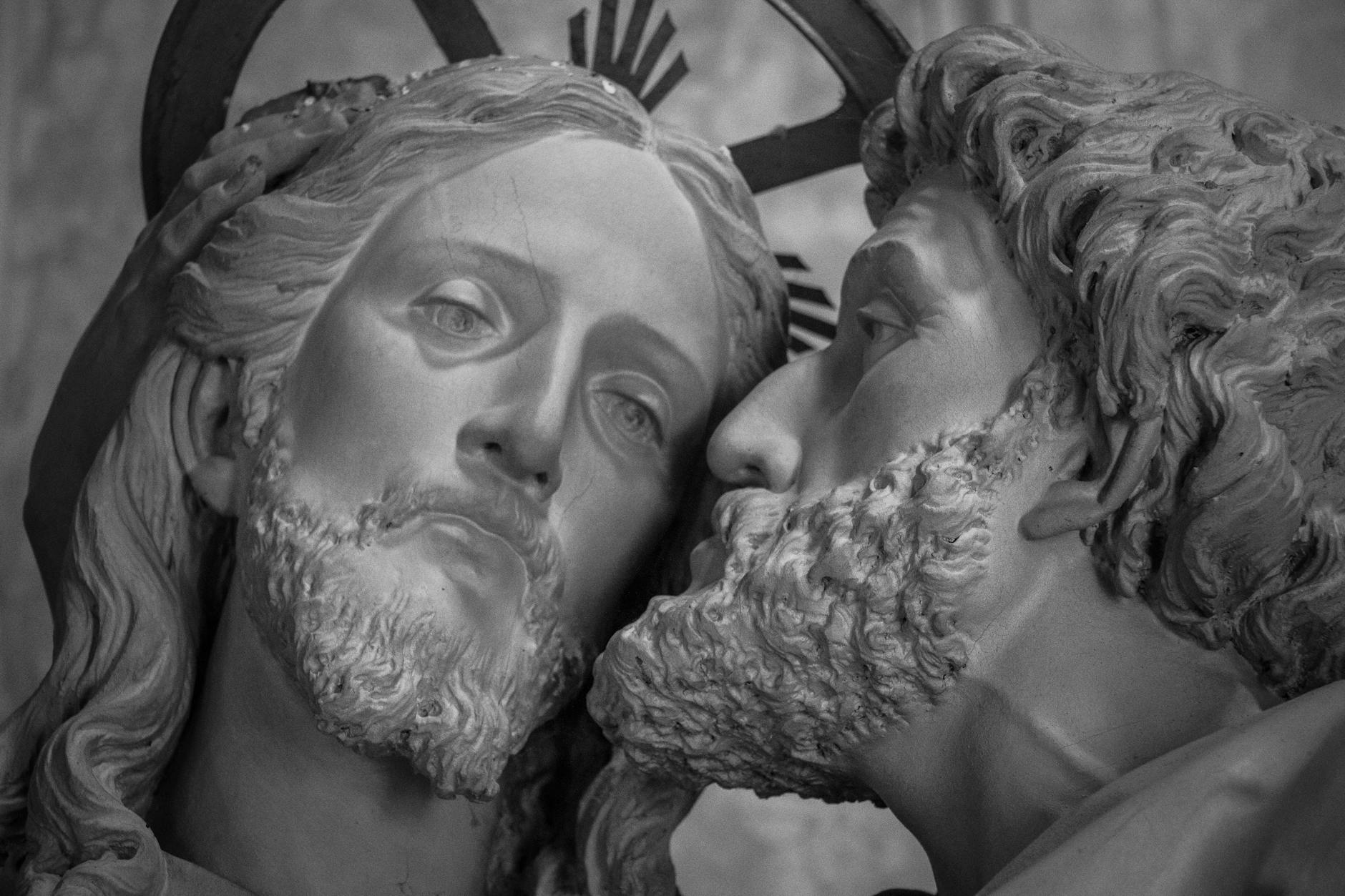
    Photo by MAURO FOSSATI on Pexels.com

    Acts 1:15-17, 21-26

    In those days Peter stood up among the believers (together the crowd numbered about one hundred twenty persons) and said, “Friends, the scripture had to be fulfilled, which the Holy Spirit through David foretold concerning Judas, who became a guide for those who arrested Jesus– for he was numbered among us and was allotted his share in this ministry. So one of the men who have accompanied us during all the time that the Lord Jesus went in and out among us, beginning from the baptism of John until the day when he was taken up from us– one of these must become a witness with us to his resurrection.” So they proposed two, Joseph called Barsabbas, who was also known as Justus, and Matthias. Then they prayed and said, “Lord, you know everyone’s heart. Show us which one of these two you have chosen to take the place in this ministry and apostleship from which Judas turned aside to go to his own place.” And they cast lots for them, and the lot fell on Matthias; and he was added to the eleven apostles.

    In this passage we see Peter standing up and speaking to the crowd of believers. He states that scripture foretold his betrayal. Someone that was counted among the twelve, and was “allotted his share of ministry.” Because they have to replace Judas, they decided to elect the next leader in a way that I’m sure most vestry would not do. They cast lots to see who gets picked.

    Matthias is elected to the office of disciple and apostle and is seldom heard about again in the scriptures. What happened to him remains a bit of an official mystery. There are reports of him being stoned to death and then beheaded in Judea, while other sources say he died of old age in Jerusalem. It is also believed that Matthias went and preached the Gospel to cannibals. Now this is a disciple I’d like to see a movie about. Just imagine being elevated to that level of leadership. It’d be terrifying! I mean, considering the shoes you have to fill from the person that left it vacant, maybe there was some relief. I mean, it’s not like you can lead Jesus to his death twice, right? But today, I don’t want to spend a lot of time writing about Matthias. There is a disciple mentioned in this story that rarely gets his day in the sun, outside of maybe one week a year. That disciple, as I am sure we’ve all guessed by now is Judas Iscariot.

    Judas is someone I like to bring up because he isn’t someone we usually spend time thinking deeply about. We read about him betraying Jesus for thirty pieces of silver, typically zoom over his repentance, and then he surrenders himself to the same fate Jesus had. Death on a tree. Now, whenever we see someone who is killed and hanging on a tree, the writers may be trying to spark our memory.

    Deuteronomy 21:22-23 ,

    If someone is guilty of a capital offense is put to death and their body is exposed on a pole, you must not leave that body hanging overnight. Be sure to bury it that same day, because anyone who is hung on a pole is under God’s curse. You must not desecrate the land the LORD your God is giving you as an inheritance.

    In Matthew’s account of the betrayal of Jesus, Jesus say to Judas, “do what you came for friend.” We also see Judas toss the silver at the chief prints, repent, and then goes out to hang himself from a tree. Judas is guilty of a capital crime, betraying the innocent, and he takes the Torah into his own hands. Judas condemns himself to the same fate that befell Jesus, death on a pole. Cursed under the eyes of God according to Deuteronomy 21. But let’s think about this for a moment, the overriding guilt and repentance that Judas has for what he did to Jesus takes him to this awful act. However unlike Jesus who broke the curse of death, Judas was left on the tree.

    If he had held out for three days, he would have known all would be well. It is no wonder that Judas is so easy to scapegoat because there is no reconciliation between him, Jesus, and the disciples. It’s easy to imagine ourselves in the roll of Peter who denied Jesus three times but then had the ability to reconcile with him. The denial didn’t matter anymore because of the grace Jesus had for Peter. This is something I think scares us if we spend time thinking about it. It is scary because I imagine that Jesus would have had the same warmth for Judas as he did Peter.

    Judas couldn’t lay down his life for his friend because, he sent him to unknowingly be killed. At least, according to Matthew’s Gospel he did.

    Asking people what they think about Judas is, I think the ultimate litmus test for how we respond to loving our enemy and praying for those that persecute us. Jesus, knowing what was going to happen still washed Judas’ feet and invited him into the new covenant of his body and blood. Judas accepted, then realized the depth of his betrayal. He then repents. I like to think that Judas is a model for showing us that there is no path we can walk down too far, that Jesus’ grace can’t reach us. 

    May we remember that in our times of despair.

  • Toledo Area Gay and Lesbian Affiliation’s Digital Exhibit

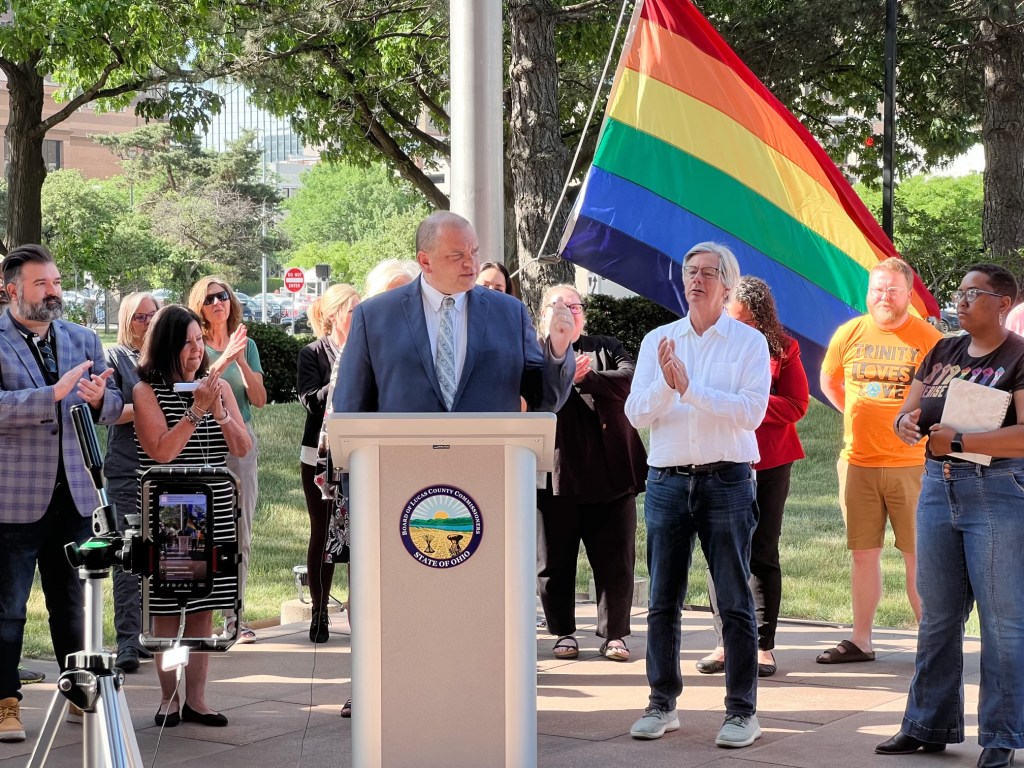
    Mayor Wade and the raising of the 2023 Pride Flag at One Government Center

    This week I was reading our local paper, The Toledo Blade, when I came across an article by Andrew Cramer (which you can read here). It is about the Toledo Area Gay and Lesbian Affiliation newsletter which ran from 1983 to 2019. The Toledo Lucas County Public Library has released a digital exhibition, housing all of the 442 issues released. As we are planning our August Pride festivities for our church it is nice to know this exhibition exists.

    According to Cramer, TAGALA’s newsletter stood out as a, “single publication for a wide range of LGBTQ+ groups, including those focused on political activism, religion, community service, and more.” My uncle Ricky and his partner Ken were staples at big family parties when I was growing up in the 90’s and 00’s, and I couldn’t help but think of them while reading. They both passed away from cancer in the late 00’s, and I was very fond of them, especially Ken.

    I work at one of the oldest churches in downtown Toledo, and everywhere you walk there is a sense of history passing through its doors. The history this church has with the LGBTQIA+ community in Toledo is long lasting, and firm. Long before the days of Obergefell, people were safe and welcomed here. In the 90’s we hosted the Toledo Gay Men’s Chorus, and I can’t help but think of the newsletters from TAGALA that came through these halls.

    One of the things that jumped out to me from Cramer’s article was how different the coverage in the newsletter is versus national press:

    “TAGALA’s more private dialogues stand in stark contrast to the mainstream storytelling. First-person opinion pieces offer genuine response to the events of the day, not as an observer, but as someone who has lived the relevant experiences.”

    The first person narrative in a time of great oppression, discrimination, and harassment (which unfortunately continues today), is crucial. This resource that the library is hosting is such an important part of history, and as an ally, I am excited to share the news about it. Last year I had the honor and privilege of attending the raising of the Pride Flag outside of One Government Center (as seen above). During this time I heard tales of the way Toledo has grown over the decades to become such an open and affirming place.