Author: georgembenson

  • The Weight of No

    The Weight of No

    One of the first books I finished this year In the Name of Jesus: Reflections on Christian Leadership by Henri Nouwen, and while it is a short book, it may be one of the most impactful I have read in years around leadership. This is something that should not have surprised me consider who Nouwen was, when he was still walking this world. A man born in the Netherlands, became a Roman Catholic priest, taught at Notre Dame, Harvard, and Yale for over twenty years, but walked away from the prestige to serve at L’Arche’s Daybreak Community in Ontario.

    In this book he writes about the shared life, humility, and importance of walking the downward path in leadership. Now, I am not a fan of leadership books, and I have been through my share of programs that seem to be a one size fits all. But this book, in the less than 120 pages, packs more moments where I have sat back in silence than all other leadership books I have read combined. His entire life was rewritten during his time at L’Arche, and this book is one of the the results of that transformation.

    What I consider the incredibly important parts of this book, are broken up into a three sections. I phrase it like that because of course there is a conclusion, and while it is helpful to read, you could stop there. The three sections are as follows:

    1. From Relevance to Prayer
    2. From Popularity to Ministry
    3. From Leading to Be Led

    All of these sections are obviously impacted by the previous one, but what is so interesting about how Nouwen sees the world and this type of leadership, is how it should be pulling us downward, and not in a bad way. My concept of leadership in the church has been tainted by the evangelical money making house of cards it has always been. So to say leadership can be a motion downwards, feels antithetical to what it means to be a good leader. But what Nouwen latches on to, is that relevance for the sake of relevance, and the idea of entrepreneurship or silo ministry, this chasing of saying yes to what is happening now could be pushing us further from the presence of God in our midst.

    The weight and power of saying no in ministry is not something that should be overlooked. We live in a society right now where the news cycle changes almost hour by hour, and the fears that are ratcheted up continue to find no ceiling. This can create an environment where we must say yes to everything, in order to not get lost in the shuffle, but Nouwen in this book invites us to a deeper sense of knowing. Not just knowing who we are in the family of God, but who God is calling us to be in our context and strength.

    It wasn’t until the end of this book where I felt Nouwen succinctly formed his argument about not going alone, and standing where your call is at in order to lead people into the next age. He writes:

    Christian leaders have the arduous task of responding to personal struggles, family conflicts, national calamities and international tensions with an articulate faith in God’s real presence.

    They have to say no to every form of fatalism, defeatism, accidentalism, or incidentalism that makes people believe that statistics are telling us the truth.

    They have to say no to every form of despair which human life is seen as pure matter of good or bad luck.

    They have to say no to sentimental attempts to make people develop a spirit of resignation, of stoic indifference in the face of the unavoidability of pain, suffering, and death.

    To say no in the face of fatalism, defeatism, accidentalism, incidentalism, despair, luck, resignation, indifference, pain, suffering, and even death pushes us to a radical limit.

    To say no to how the world would normally respond is to say yes to hope. What I am not saying is that we should ignore the pain, consequences, etc. that come from these instances. I am not saying that at all, recognize and hold it.

    To say no to it is to reject the acceptance of it, it is to say yes to the accountability of the people around you, and to seek justice for those who have been harmed.

    To say no is to hold fast to Jesus teaching of the Sermon on the Mount, and to elevate ourselves past what is popular, and plant ourselves into what is everlasting.

    To say no is to shake off the burden of societal expectations, and to say yes to a deeper way of being.

    Grace and peace my friends.

  • A Country of Their Own

    A Country of Their Own

    This post was originally scheduled for next week, but considering the climate, I thought I’d move it up a bit.

    In late fall of 2025 I decided during my quiet time in the mornings to start reading Hebrews. The truth is, I don’t think I have looked at it, or thought much of it since I preached on chapter 11 back in 2013, so it seemed like a good time to read it. I had been trying to find a part of the Christian Bible to check out after burning through Amos, James, Exodus, and some other random parts.

    When I was reading Amos, it was when there seemed to be a push by Isr**l to continue in committing war crimes by murdering journalists and medical workers in Gaza. A push that has been successful as I am sure most of us, unless we are intentionally looking, are unaware of the many times they have continued to murder innocent people in Gaza during this “ceasefire.” I bring this up because I have written in my margins how sitting with the words of Amos and the actions in that land made me want to vomit.

    This has happened a few times in the past few years, reading something in the text I hold central to my religious beliefs, and looking at the world around me, local and internationally. The Ending Crime and Disorder on American Streets executive order comes to mind, where the president criminalized being unhoused while evangelicals and christian nationalists defend something Jesus would have pushed back on.

    This week I was reading Hebrews 11 and I came upon this passage:

    All these people were still living by faith when they died. They did not receive the things promised; they only saw them and welcomed them from from a distance, admitting that they were foreigners and strangers on earth. People who say such things show that they are looking for a country of their own… they were longing for a better country–a heavenly one.

    — Hebrews 11:13-16ish (NIV)

    For so long, people have come to the United States looking for a country of their own. It is how my family got here, and I guarantee how yours did too. So far this year there have been six confirmed deaths in ICE detention centers, one of which was a homicide, and as of Saturday they murdered another innocent person:

    • Alex Jeffrey Pretti, 1/24, homicide
    • Heber Sanchaz Domínguez, 1/14
    • Victor Manuel Diaz, 1/14
    • Parady La, 1/9
    • Renee Good, 1/7, homicide
    • Luis Beltran Yanez–Cruz, 1/6
    • Luis Gustavo Nunez Caceres, 1/5
    • Geraldo Lunas Campos, 1/3, homicide

    What ICE has been doing in our streets to our neighbors, citizens or not, is nothing short of terrorism. Using fear, intimidation, and unlawful violence against citizens as a political means is almost literally the definition of terrorism in the Oxford Dictionary. Many people have pointed out this is how white people have acted against Black Americans throughout our history is exactly correct. This is masked terrorism supported by our countries love of white supremacy, and the inability to quit it.

    What is happening is not normal in America for white people, which is why this is so jarring for most of us. I saw an Instagram reel today of friend of mine, who is a Palestinian activist rightfully lamenting the people now wanting to show up. It is a similar thing I have seen time and again when white people start to realize that the systems of violence we have upheld because they’ve been good for us start to turn on us.

    It is never too late to show up for your neighbors, and I urge you to do it now.

    It is hard work, and it takes a toll. But there are many ways we can do it, what I beg you to do, is not turn your eyes away again. Do not harden your heart once ICE is abolished, because this is only the beginning of the work needing to be done. We have the opportunity to make our corners of the world a heavenly country for all, if we choose to do this long term hard work.

    Stay safe out there friends.

  • Are we the Baddies?

    Are we the Baddies?

    Operation Paperclip: The Secret Intelligence Program that Brought Nazi Scientists to America by Annie Jacobsen was one of my first books out the gate in 2025, and I still think about it. When I think of the detailed research of this book, what comes to mind is, The Holocaust: A New History by Laurence Rees, another one worth your time, because of the minutia Jacobsen goes into.

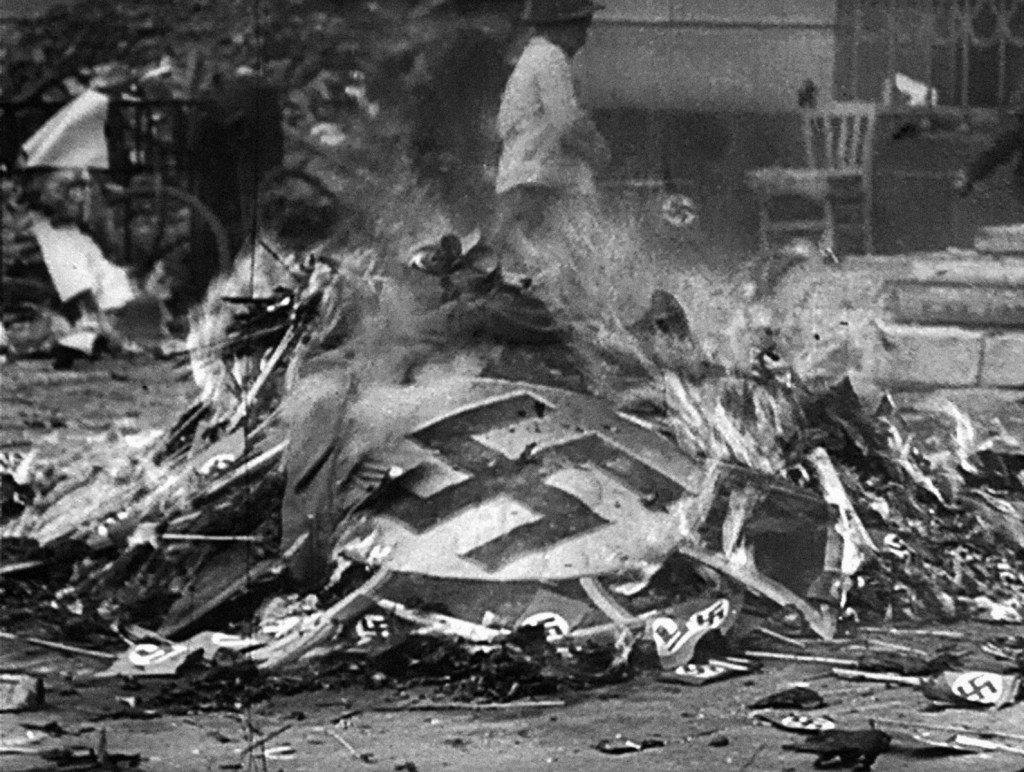
    If you are unaware of Operation Paperclip, it was the name given when the United States government brought n*zi scientists into the US to work on military projects, health and medicine, and the space race. The lengths of which the government forgave the acts of despicable men in the name of “fighting” communism made me almost physically sick while reading. One doctor who was working on hypothermia continued his work in the US that had been conducted on prisoners.

    Per the books description:

    In the chaos following World War II, the U.S. government faced many difficult decisions, including what to do with the Third Reich’s scientific minds. These were the brains behind the Nazis’ once-indomitable war machine. So began Operation Paperclip, a decades-long, covert project to bring Hitler’s scientists and their families to the United States.

    Many of these men were accused of war crimes, and others had stood trial at Nuremberg; one was convicted of mass murder and slavery. They were also directly responsible for major advances in rocketry, medical treatments, and the U.S. space program. Was Operation Paperclip a moral outrage, or did it help America win the Cold War?

    Drawing on exclusive interviews with dozens of Paperclip family members, colleagues, and interrogators, and with access to German archival documents (including previously unseen papers made available by direct descendants of the Third Reich’s ranking members), files obtained through the Freedom of Information Act, and dossiers discovered in government archives and at Harvard University, Annie Jacobsen follows more than a dozen German scientists through their postwar lives and into a startling, complex, nefarious, and jealously guarded government secret of the twentieth century.

    I enjoy a hard read, and this one was difficult. The complicity of our government to do horrible things is not a secret. After all H*tler was influenced by our treatment of Indigenous people and eugenics is a very American science. But to see how quickly people are willing to throw away morality in the name of power makes me physically sick.

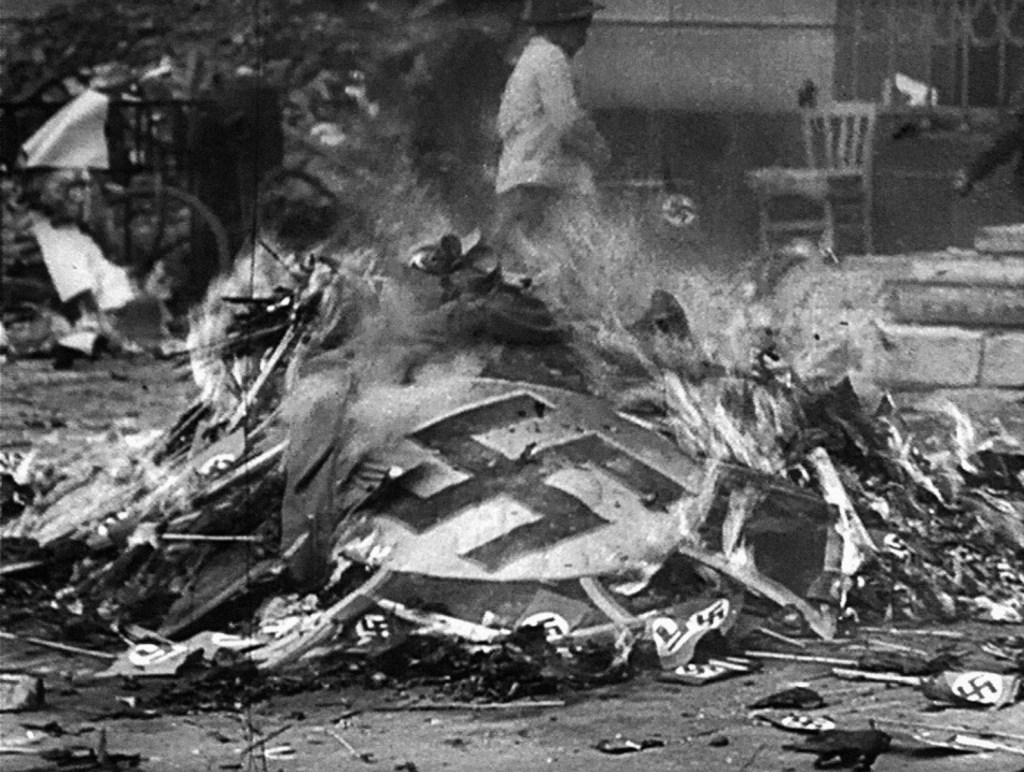
    This meme is still true, especially when we consider the cruel actions of our current administration.

    That said, 10/10 read, you should read this book. It will drop scales from your eyes in a very needed way. Some of it may be old hat, but even portions of that

    Grace and peace.

  • Prayer Meeting: The Decent Way

    Prayer Meeting: The Decent Way

    Jesus came from Galilee to John at the Jordan, to be baptized by him. John would have prevented him, saying, “I need to be baptized by you, and do you come to me?” But Jesus answered him, “Let it be so now; for it is proper for us in this way to fulfill all righteousness.” Then he consented. And when Jesus had been baptized, just as he came up from the water, suddenly the heavens were opened to him and he saw the Spirit of God descending like a dove and alighting on him. And a voice from heaven said, “This is my Son, the Beloved, with whom I am well pleased.” – Matthew 3:13-17(NRSV)

    This past Sunday, Episcopalians across the world reaffirmed our baptismal covenants as we celebrated the Baptism of Jesus. For me, it is always a special occasion when I get to stand with my fellow faith siblings to say out loud who we are, how we show up, and who we hope to be in God’s creation. However, there is something about this passage that has stuck in my crawl for years. In verse 6 it states, “and they were baptized by him in the river Jordan, confessing their sins.” At one point I wrote a series of blog posts I can no longer find about Jesus attending and participating in a baptism for the forgiveness of sins as it states in Mark 1:4 and implied here in Matthew. It is something I had never hear about in church, and I seemed to gloss over in my readings.

    Having grown up evangelical in America, there are some hooks that are still in you that you are unaware of, and for me this was one of them. I cannot imagine how many times I had heard that Jesus was a the only perfect human to live, sinless in every way, which is part of the reason why he “didn’t need training” to preach, teach, and make disciples. But after reading these passages and letting it sit I had a few questions.

    • If Jesus was sinless and perfect, then why participate in such a baptism?
    • If Jesus participated in this type of baptism in good faith and not needing it, wouldn’t that make him a bad person?
    • If Jesus didn’t need to be baptized because of his stance with God, then why did he do it?

    I drove myself around in circles with this, and argued about it whenever I got the opportunity because I wanted answers that were satisfying. In her book, The Immerser: John the Baptist within Second Temple Judaism, Joan E. Taylor writes on page 262:

    That Jesus was baptized by John has been a problem almost form the beginning of Christianity, and not only because his being baptized indicated that he might have been subordinate to John. Jesus apparently turned away from sin and, as Michael Grant notes, this “set the theologians of subsequent centuries a conundrum. For how could Jesus have been baptized for the forgiveness of his own sins, when according to the Christology which developed after his death, he was divine and therefore sinless?” Often the solution is given that he wished to humble himself by participating with the sinful in this important ritual. As A.M. Hunter has stated: “He [Jesus] discerned the hand of God in John’s mission, and by His acceptance of John’s baptism identified Himself with the people whom He came to Save.” Some scholars have sought to deny that John ever baptized Jesus…

    [In the Gospel of Matthew 3:14-15] Jesus comes forward to be immersed, but John tries to prevent him and says, “I need to be immersed by you, and you come to me? Jesus calmly reassures him, “let it be so for now, for it is right for us in this way to fulfill all righteousness.’ Jesus therefore does the decent thing, but he does not really need to do it.”

    When I read that for the first time I just sat and scratched my head. Then I read it again.

    And again.

    And again.

    And, yet, again.

    Finally, it started to sink in for me personally, that it does not really matter why Jesus was baptized, sin or no sin. What matters in the end is that Jesus did the decent thing. Following his call, Jesus did what was right. This argument that I had developed within myself, and thought so much rode on did not matter, because at the end of the day, it was an excuse to keep Jesus at arm’s length.

    It is the same argument we always make to get out of doing the decent thing, that we are sinners, or are prone to fail and mess up. When we do that, we keep the Jesus of the gospels at arm’s length.

    When we yell at our kids and don’t apologize, we keep Jesus at arm’s length.

    When we spend time bickering on social media about how we are right and “they” are wrong, we keep Jesus at arm’s length.

    When we standards that are supposed to be universal, but we make exceptions for people because we like what they stand for, we keep Jesus at arm’s length.

    When we see injustice in the world and wait for someone else to act or say something, we keep Jesus at arm’s length.

    When we ignore the plight of our fellow image bearers living in Palestine, Yemen, Congo, and Sudan, we keep Jesus at arm’s length.

    On Thursday and Sunday of last week, I attended two protests to abolish ICE. I am compelled by my faith to act in times of injustice when innocent people are killed. In the same way I am compelled every Sunday morning to wake up early and cook food for the unhoused and marginalized. It is the everyday act of doing the decent thing where we can be the hands, feet, and voice (at times) of God in a world where it is so easy to choose hatred, or as I have seen it lately, “intolerance.”

    By walking the path and getting covered in the dusty road of Jesus’ teachings, may we find the decent way to be in the times when others need to be served before ourselves.

    Amen

  • The Tears of Things

    The Tears of Things

    By Emil Nolde – Museum of Modern Art, New York, PD-US, https://en.wikipedia.org/w/index.php?curid=12197419

    There must be someone in every age who can tell the faith community, and society at large, Your first egoic glance at life–and God– is largely wrong! And it is largely engendered by fear.”

    – Fr. Richard Rohr

    I started reading Father Richard Rohr when I was still a reluctant evangelical. It was during the reconstructing of my faith phase where I picked up Falling Upward. If I remember correctly, I had either heard him on a Rob Bell Robcast, or a recommendation from my friend Adam. This book drove me to a place of openness not just about his work, but to my approach of God. While I laugh to myself now about being concerned reading a catholic priests book, the idea of approaching God and others at the time with love over dogma/theological treaties, coming from a Roman Catholic priest, was mind blowing.

    In October, I had just finished presiding over a memorial service for a friend when a woman I consider a prophet in our times approached me with a book. We had shared this bizarre end of life journey together with this mutual friend, and given she is a close to 90 year old spiritual director, I tend to listen when she has something to say. It was Richard Rohr’s new book, The Tears of Things: Prophetic Wisdom for an Age of Outrage. The book was accompanied by a card, and part of what she wrote inside said, “I think this may be of interest since Rohr’s contemplating and acting is much of who you are.”

    The amount that this card and her thoughts touched me, I cannot properly describe, however, I am still touched by it. Especially since I have now enjoyed Fr. Rohr’s work for well over a decade. Each one of his books build on one another, but for me this one takes the cake. The place of a modern prophet is something I have struggled with, especially considering how most of American Christianity treats the concept of one.

    This book is scratching that itch in a way I never thought possible. For quite a while, I have adopted a mantra a friend of mine introduced me to, which is, “the status quo is a bully.”As I am deep in editing my next book, which is a call for peacemaking, I spend time talking about standing against the status quo. So when I read this quote from Rohr’s new book, I had to sit in silence for a moment.

    “We have spent the centuries and millennia since constructing the same kinds of self-serving power centers that Jesus and the prophets denounced, and most of us are resigned to this status quo.” pg. 22

    Structures and systems exist for a reason, and some of these are good. Some continue to uphold the system for the sake of the system, because we have to keep the system in place to uphold the status quo.

    Any “normal” way of business that continues to keep people in states of marginalization and oppression are not “normal” or “moral.”

    The want or need to have power over another person is not a “normal” or “moral.”

    The federal level of government and how it has treated people in the United States may have been “normalized” over the centuries, it has never been “moral.”

    The kidnapping of American citizens is not “normal.”

    Abducting heads of foreign states is not “normal” especially when we are not at war is not “normal.”

    Friends, look for and listen to the prophets in your life who are calling for the liberation of the oppressed.

    Look for the ones who remind us that, as Rohr writes, “we like our illusions, we like having enemies, and we are quite accustomed to our wars and prejudices as much as we insist the contrary.”

    Look for the ones calling for leading with love, and accountability for those who have been wronged.

    We need them, and you, now more than ever.

    Grace and peace.

  • Top 25 of 25: Book Look Back

    Top 25 of 25: Book Look Back

    Books, not my actual home library
    Photo by Juan Pablo Serrano on Pexels.com

    I enjoy reading, a lot. I do not care if it is physical, digital, or audio, books are a constant companion in my life. To the point where I have averaged reading about 73 a year since I started tracking them in 2020.

    I just love the concept of them, how words can contain multitudes of worlds. The smell of them, the thrill of finding one you’ve been looking for. This is not always a relationship I have had with them. Growing up I also liked the idea of them, I would read almost any of the Great Illustrated Classics I could get a hold of. As someone with a reading disorder, that was incredibly embarrassing, those classics were perfect for me. Every other page was an illustration, and it helped immerse me in the story.

    The only books I remember reading that was required in high school were A Tale of Two Cities (which I love) and A Catcher in the Rye (which I hate). When I joined the navy, I spent time out to sea reading in the tower I worked in, and would get through maybe a book a month. Then I found out about audio books, which started my practice of purchasing two copies, one to listen to, one to mark up and use for rereading/bettering comprehension.

    As my interest in theology deepened so did my insistence on reading physical copies of books. This allowed me to destroy whatever book was in my path; underlining, writing in the margins, dog-earing, whatever. I still do this, then pull out whatever half filled moleskin I thought would fix me to start writing the ideas and thoughts that came with whatever I had just read.

    During the pandemic, my wife encouraged me to try out more fiction, which was something I did not really want to do. Do not get me wrong, I was not taking an elitist position, it was just that fiction wasn’t something I liked outside of my comic books or graphic novels. At the time I just preferred to read non-fiction or theology if I was going to dedicate the time to picking up a book. I wanted to learn something true about the universe/world/life/whatever, if I was giving up anywhere from 5-12 hours of my time. It was when I started back to school to finish my bachelors degree, and after we had our kid that I took her advice.

    I was so wrong for waiting so long.

    With all of that in mind, please enjoy the top 25 books I read in 2025. These are listed in no particular order, and over the next year I will be posting about each one individually. Some posts may be long, some will be short, but in the dark time we find ourselves in where Americans are being abducted by masked police, a white kid who has no business podcasting are trying to break into daycare’s, and abducting a leader of a foreign country, sometimes a book recommendation will help provide some balm to the soul.

    1. Operation Paperclip: The Secret Intelligence Program that Brought Nazi Scientists to America by Annie Jacobsen
    2. The Ethnic Cleansing of Palestine by Ilan Pappé
    3. We Uyghurs Have No Voice: An Imprisoned Writer Speaks by Ilham Tohti
    4. Katabasis by R.F. Kuang
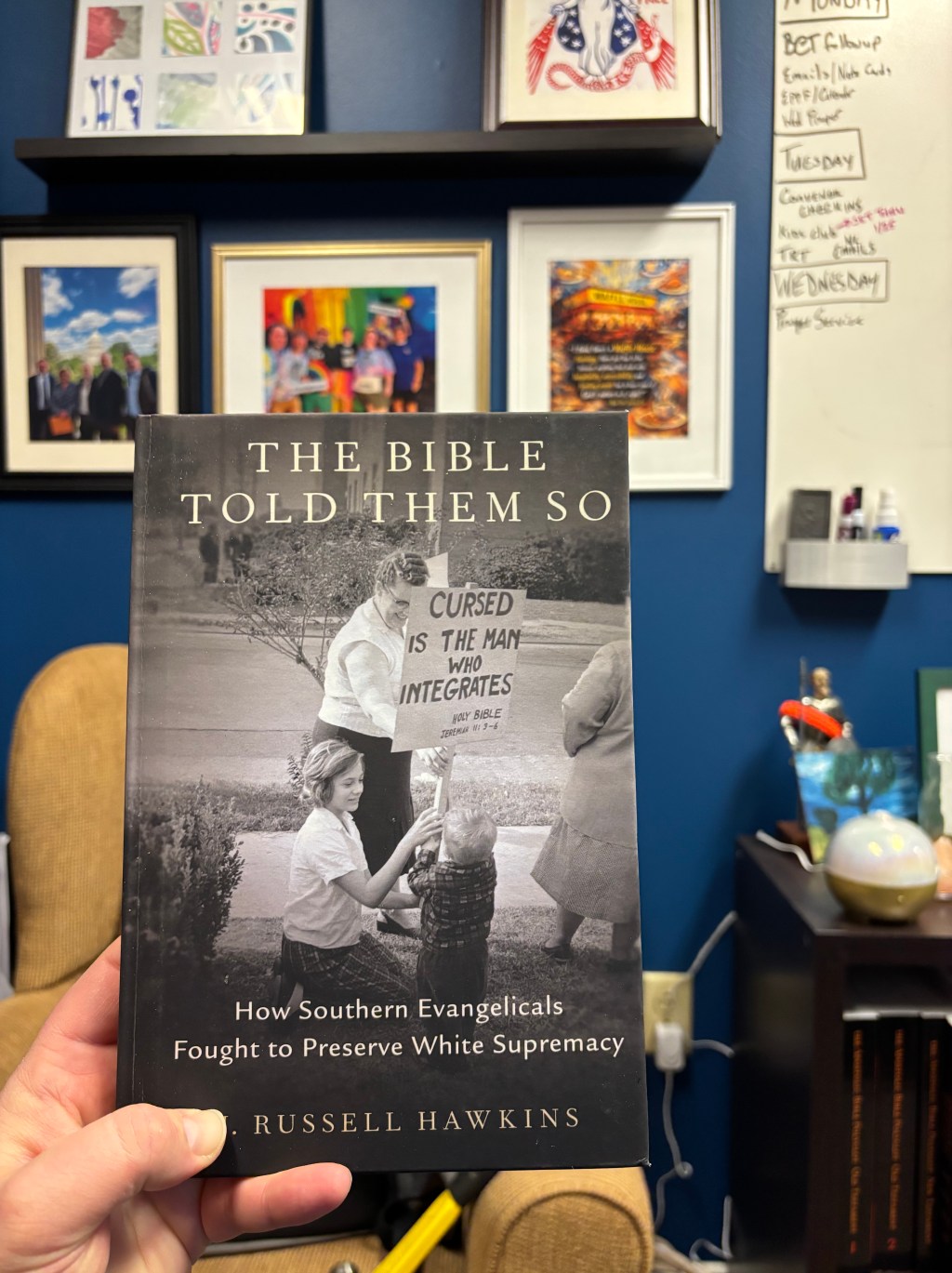
    5. The Bible Told Them So: How Southern Evangelicals Fought to Preserve White Supremacy by J. Russell Hawkins
    6. Tender is the Flesh by Agustina Bazterrica 
    7. Ordinary Men: Reserve Police Battalion 101 and the Final Solution in Poland by Christopher R. Browning
    8. Monk and Robot: A Psalm for the Wild Built and A Prayer for the Crown Shy by Becky Chambers
    9. One Day Everyone Will Have Always Been Against This
    10. Nuclear War: A Scenario by Annie Jacobs
    11. The Whole Language: The Power of Extravagant Tenderness by Gregory Boyle
    12. Between Two Fires by Christopher Buehlman
    13. Ring Shout by P. Djéli Clark
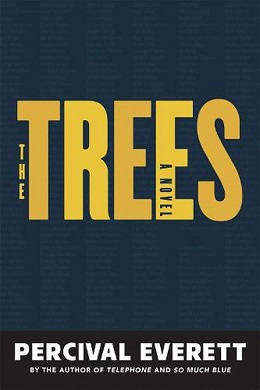
    14. The Trees by Percival Everette
    15. The Bone and Sinew of the Land: America’s Forgotten Black Pioneers & the Struggle for Equality by Anna-Lisa Cox
    16. The Burning: The Tulsa Race Massacre of 1921 by Tim Madigan
    17. The Color of Compromise: The Truth about the American Church’s Complicity in Racism by Jemar Tisby 
    18. The Black Wolf by Louise Penny
    19. Coming Up Short: A Memoir of My America by Robert B. Reich
    20. Slewfoot: A Tale of Bewitchery by BROM
    21. Erasing History: How Fascists Rewrite the Past to Control the Future by Jason Stanley  
    22. The Message by Ta-Nehisi Coates
    23. King of Ashes by S.A. Cosby
    24. Bringing the War Home: The White Power Movement and Paramilitary America by Kathleen Belew 
    25. Twilight of Democracy: The Seductive Lure of Authoritarianism by Anne Applebaum

    Grace and peace my friends, and happy new year.

  • Episcopal Church Statement on U.S. Intervention in Venezuela

    Hello friends, and happy new year! What a weird and interesting post for the first one, but here we are. As you may know, the United States decided to abduct the President and First Lady of Venezuela. President Trump also said that U.S. oil companies will be taking over Venezuela’s oil.

    As an Episcopalian, I thought I’d widely share the official statement on what has happened. You can read it more on the church’s stances here.

    The people of The Episcopal Church offer prayers for our beloved siblings in Christ in the Episcopal Diocese of Venezuela, and for people across the region following this morning’s U.S. military operation that removed President Nicolás Maduro.  

    Episcopalians in Venezuela carry out vital ministries in increasingly challenging conditions, and we fear for their well-being and their church community if these military interventions, and any form of U.S. occupation, lead to more instability and violence. Episcopal Church Center staff have spoken with and offered support to the Rt. Rev. Cristobal León Lozano, bishop of the Episcopal Diocese of Ecuador Litoral and bishop provisional of Venezuela; the Rt. Rev. Lloyd Allen, bishop of the Episcopal Diocese of Honduras and president of Province IX; and to standing committee leadership.  

    The Episcopal Church’s General Convention has long-standing policy that “condemn[s] in any nation the first use of armed force in the form of a preventive or pre-emptive strike that is aimed at disrupting a non-imminent, uncertain military threat.” Even as we recognize that intervention in sovereign states can sometimes be necessary to prevent atrocities, we discourage “the abuse of this norm to rationalize military actions in sovereign states for political ends.”   

    We urge Congress to call for an investigation and accountability for this most recent unauthorized operation, as well as the related military actions carried out in recent months. We urge all regional parties to support a peaceful transition that respects the rule of law and the will of the Venezuelan people. Join us in praying for our siblings in the Diocese of Venezuela and the Venezuelan people.

    Grace and peace friends.

  • Stand Against HB-486

    Stand Against HB-486

    I wrote and submitted this as an op-ed, but decided to release it here as well because it is important.

    The Ohio State House is attempting to pass House Bill 486, and it should cause us concern. If passed, this bill would allow for educators in state sponsored higher education and public schools to discuss Christianity’s positive influence on culture and history in America. This proposed act also includes examples talking points to be used classrooms, as historical examples and not alleged proselytization. However, the examples in this proposal read as a complete whitewash of American history which does a severe disservice not only to students and educators, but the accuracy of Christianity’s influence in the United States of America.

    The influence, whether positive or negative, that Christianity has had on American lives past and present, should be left to religious professionals to teach. To think that an educator can only talk about the positive influence and can willfully ignore the historical stance of white Americans using religion to maintain slavery, segregation, and anti-LGBTQIA+ stances is morally and ethically wrong. And, unfortunately, that is not the only moral issue in this act.

    The co-sponsors of this bill have an agenda with which we should be uncomfortable. On the surface, this bill unequivocally pushes the talking points of christian nationalism. A popular movement in this country that, at its core, is antithetical to the Gospel. If we want to talk about the impacts of Christianity in history, we must do so in an unbiased and truthful way, and these conversations should be led by those qualified to do so.  Not by someone that holds a degree from a bible college, which is one degree I hold, but from an unbiased institution.

    The miseducation of Christian influence on a country that refuses to reconcile its sin of slavery and the mistreatment of Indigenous peoples at best could only lead to prolonged ignorance, and at worse, political or religious based violence. I encourage everyone to call upon their reps and advise against voting for this bill, especially Rep. Josh Williams, who is a co-sponsor. Now is not a time to stay silent, and it is our job to let our representatives know we do not want HB-486 to pass.

    To contact OH D41 Rep Erika White, click here.
    To contact OH D42 Rep Elgin Rogers Jr., click here.
    To contact OH D43 Rep Michele Grim, click here.
    To contact OH D44 Rep Josh Williams, click here.

    Not sure who your rep in Ohio is? Follow this link.

  • Musk and Lazarus: Rich Man, Poor Man

    Musk and Lazarus: Rich Man, Poor Man

    Friends, this is my sermon from this past Sunday on a passage from Luke. If you prefer to watch, you can watch above, it starts at the 24 minute mark-ish. While I go off script in the video, you can read below my notes for the morning of.

    This is a good parable. Jesus is tossing out some, what I would call, weird for the day theological ideas, but it’s good. This is one of those passages I would really like to spend time digesting and getting pretty nerdy with you all. Starting with how the afterlife as a concept or belief was one held on to by the Pharisees, or how the rich guy is buried, and Lazarus died and is taken away by angels.

    This sermon has gone through many drafts, which is normal, but the content has changed quite a bit. In fact, in hindsight was a joke, I asked Father Jon if he wanted to read what I was confident my final draft on Tuesday. However, as I was working to finalize this, this week, I kept growing increasingly unsettled, not just by the content but by ridiculously relevant it is. In fact, I completely re-wrote it last night after 8pm. Through the Gospels, there are times when Jesus tells a parable and the disciples have no idea what he is talking about, but not here.

    There is an assumption I find with most Christians I speak to, and that is, speaking broadly, everything in the New Testament is applicable to them. While you can make the argument, what I would like you all to think about is, does. This parable apply to you or us? If it does not, how are we as readers and followers meant to hear it and interact with it? Hold onto those thoughts as we live out this week and let me know your thoughts.

    Lazarus is a man who is poor, a beggar, who lives most of his time outside of a very rich man’s house. Lazarus is so down, dogs lick his open sores, and he cannot do anything about it. There is a lot that we can know about this very rich man by the description, and I am going to nickname him now. Since Lazarus gets a name so does this guy, how about… Elon Musk? I originally had another in mind, but Jon+ threw this out this week, and I decided to run with it.

    So, Musk wears purple gowns, throws daily banquets, and most likely parties with his family. Musk also does not celebrate the sabbath, which means all who work for Musk do not get the time off required for their religious beliefs. Not only that, but they also get no rest, and I’m sure their pay isn’t great as well. Musk also does not care about Lazarus who is laying right outside his gate.

    In his book, Jesus Through Middle Eastern Eyes, theologian Kenneth E. Bailey points out just how rich Musk is according to this parable:

    “He also wore ‘fine linen.’ The word in Greek is busses, which transliterates the Hebrew word butz, which, in turn, refers to the quality Egyptian cotton used for the best underwear… This man not only had expensive outer robes, but in case anyone was interested, he also wore fine quality underwear.”[1]

    Musk, in this story, is committing the same sin that God destroyed the city of Sodom over in Genesis. Hording exuberant wealth and not caring for those in need, whether they are neighbors, or those outside of the gates of their property. But we see how it turns out for Musk and Lazarus, and for Lazarus, who is the only person ever named in a parable, and his name means, “one God helps” turns out okay.

    You could not get more opposite of the class hierarchy than these two, which is interesting because Baily offers another tidbit in his book. A sort of way to let the rich man off the hook, that I do not agree with. He writes:

    “…it is easy to survive by developing compassion fatigue. Beggars are ever present. There are so many of them. One’s resources are limited. Finally, one doesn’t notice anymore. Compassion fatigue becomes a way to cope and a strategy for survival. Perhaps this is what happened to the rich man.”[2]

    I completely agree that compassion fatigue is a real thing, and I have experienced it myself. Anyone who has worked in social justice efforts can I am sure relate. But compassion fatigue exists because our society, at almost all levels would rather uphold systems and structures that keep people oppressed then help liberate them. Those who vote for the budget cuts, and believe the lie that anyone, no matter what they are born into have the same chance of pulling themselves up by their bootstraps do not realize they are stuck in the same hole as us.

    It is not compassion fatigue that caused Musk to ignore Lazarus, but the status quo. When the world allows for, according to a Forbes article from February of this year, in the USA 71.2% of the wealth is held by the top 10% in the country. Musk doesn’t help the poor because he has compassion fatigue.

    Baily continues, “Lazarus was sick, hungry, and covered with sores. But his deepest suffering was psychic. Traditional Middle Eastern villages are geographically tightly compacted. The gate at which Lazarus lay was certainly within easy earshot of the daily sumptuous banquets of the rich man. Only a few feet from Lazarus a group of overfed men” in designer underwear… “while Lazarus lay hungry and in pain, listening to their conversation. Those same men passed him every day as they entered and left the rich man’s house. They didn’t need the food—he did. Help was always near at hand yet withheld from him.”[5]

    In this parable, like in life, there is no economic justice, and because of this beggars, the unhoused, will always be with us. When Jesus says that the poor will always be with us, this is what he is talking about. Because we do not live in a just society, we will always have those in need. Back in May, myself, and Trinity Response Team members Becky Koskienen, Mark Dubielak, and Phil Skeldon went to Washington DC to lobby our representatives into a more just world. This meant asking them to vote against the Big Beautiful Bill. Instead of chasing compassion and justice, our Ohio senators chose to support the status quo and give men in our parable more money.

    If you have been watching the news or have been on social media in the past few weeks, we have seen it in the coverage of Christian nationalist Charlie Kirk’s death, memorial service, and fallout. His fans are attempting to prop him up like a modern martyr for his faith, and how the gospel was shared in such an impactful way because of his death. But I’m sure I am not the only one that sees the lie in it all.

    When there is no room for Lazarus at the celebration, there is no room for the Gospel.

    The question I asked at the beginning of this was, does this parable apply to you, and if not, how are we as readers/listeners/followers of Jesus supposed to interact with this. If anyone here had the wealth gap between Lazarus and Musk, I would be surprised you’re still a member.

    This parable is supposed to shake us out of apathy and into advocacy.

    This parable is why Trinity works hard to develop ministries like Breakfast at Trinity. Sure, Lazarus needed the food, but he isn’t the focus of this story. Musk is the focus. This parable is the Christmas Carol without the three ghosts changing Scrooges mind!

    Breakfast at Trinity doesn’t exist solely for feeding the people, but we borrow from our forbears of that space to nourish body and soul. There are a number of people who can make their own food and have the means to, but they are all weary. Musk, in this parable, is weary, but he doesn’t know a better way exists.

    All Musk knows is the status quo, which are the systems that keep him in place to be that rich, and isolated.

    Like water dripping on a stone, the Gospel breaks through everything and everyone. But sometimes, we need to be like Jesus and point that out for people who are unaware of how bad it is out there.


    [1] Bailey, Jesus Through Middle Eastern Eyes, pg. 382

    [2] Bailey, Jesus Through Middle Eastern Eyes, pg. 382/383

    [5] Baily, pg 384

  • Unwanted Milestone

    A few weeks ago I passed a uniquely American parental milestone: I dropped my child off at preschool after a mass shooting where two children were murdered. This, of course, was the shooting in Minneapolis at Annunciation Catholic School where kids were murdered during their chapel service. Some of you may have seen the clip of the kid talking about his friend Victor that protected him from the shooting, and Victor was struck in the back. I have been an outspoken advocate for tighter gun laws for years, and the fear at drop off that something *could* happen was horrifying.

    Just another day in America.

    Of course last week there were two school shootings, one in Colorado where a few kids were injured. Then there was the one in Utah were a christian nationalist podcaster was killed in front of a group of people, that has set the country on fire, as he was a divisive person that had no problem perpetuating racist, misogynistic, and homophobic rhetoric. But considering that is the current brand of conservatism in this country, it is no surprise they are trying to make a martyr out of him. Finally, Trey Reed, a young black man, was found hung from a tree near his college in Mississippi with no fowl play suspected somehow.

    Just another week in America.

    Two mass shootings in an unhoused encampment, again, in Minneapolis where 13 people are injured which comes on the heels of f*x news anchor Brian Kilmeade suggested euthanizing the unhoused. Of course nothing is going to happen to Kilmeade, even though real news reporters have lost their jobs for pointing out the podcaster who was killed spoke hatefully.

    Another week in Ameri— wait, it’s only Wednesday.

    At times like this, I return to a book written by Krister Stendahl called, The Roots of Violence: Creating Peace through Spiritual Reconciliation. In this section, he wrote about the political assassinations of the 60’s, people trying to make political change for the good, not like the guy we’ve seen in the news lately. While I do not believe there is room for political violence in this world, I understand it is here. Unfortunately, pointing out the hypocrisy of those calling for it to end, that continue to actively oppress people of color, the LGBTQ+ community, women, you name it, will do nothing but fall on deaf ears or echo chambers. So instead, I leave you with the words of Stendhal:

    “We are surrounded by mass assassinations and executions, deeds that we call “terrorist” if others do them and “defense” if we do them. There is torture, which some people try to dress up by saying that it is not so bad if it is done by authoritarians, but it is bad when it is done by totalitarian. But the thumbscrews feel the same no matter who puts them on.”

    – pg. 15, Roots of Violence

    Stay safe, and watch out for one another.
    Grace and peace.