Tag: trans live matter

  • It is Never Too Late

    It is Never Too Late

    Tomorrow is Ash Wednesday, and thus begins the season of Lent. It is with this in mind, I’d like to share with you something I wrote last year. On January 29th of 2025, I riffed off of First They Came by Lutheran Pastor Martin Neimöller. It is probably something you are familiar with, whether your know it or not, it reads as follows:

    First they came for the socialists, and I did not speak out—because I was not a socialist.

    Then they came for the trade unionists, and I did not speak out—because I was not a trade unionist.

    Then they came for the Jews, and I did not speak out—because I was not a Jew.

    Then they came for me—and there was no one left to speak for me.

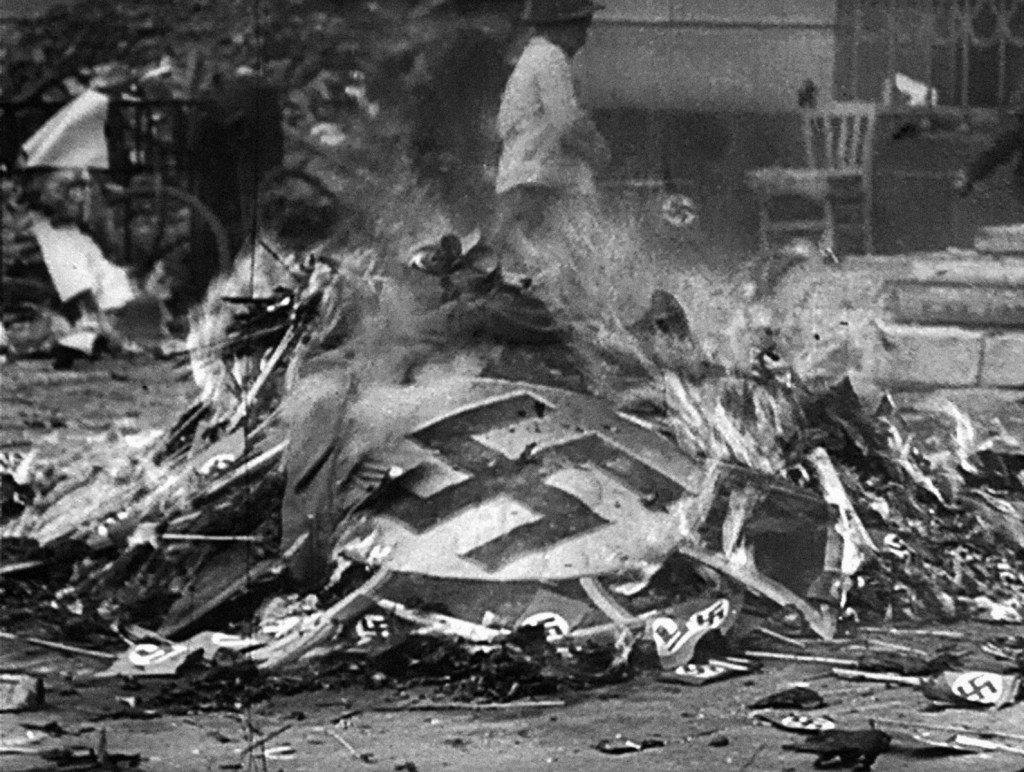
    Pastor Neimöller’s words have been echoed in many places since he wrote it. It is one of those quotes that I thought I knew the history of, but in reality applied my own ideologies to. I was surprised to find out when I was reading up on Pastor Neimöller that he was a supporter of the early n*zi party. Not only that, but, he had remained silent on how the party operated early on because they were going after the left and leftists. He didn’t feel the need to speak up about it because he did not agree with their politics.

    This may sound or feel familiar for some of you, if not now, perhaps in the future.

    It was not until Hitler came for the Lutheran Church in Germany did Neimöller start to wake up. He had helped formed a group called the, Emergency Pastor’s Group, to help confront some of these issues. Because of the state of Germany, it was believed by the group that the protestant faith could only be compromised that someone could be in the n*zi party. The two were not compatible.

    This may sound or feel familiar for some of you, if not now, perhaps in the future.

    As we stared down the start of a second Trump administration, and the ramp up of the familiar hatred that defined his first term, I sat and Neimöller’s words. It isn’t perfect but it captured my fear of the moment, a fear that has continued to be re-enforced.

    First they came for the undocumented and other immigrants. We didn’t speak out because we thought our privilege protected us.


    Then they came for those on the margins. We didn’t speak out because we thought our privilege protected us.

    Then they came for the LGBTQIA+ community. We didn’t speak out because we thought our privilege protected us.


    Then they came for the allies. WE didn’t speak out because we thought our privilege protected us.

    The last year has seen undocumented, legal, and American citizens who are immigrants disappeared by ICE.

    The last year has seen the criminalization of our unhoused and friends via the Ending Crime and Disorder on American Streets executive order.

    The last year has seen the almost complete dismantling of diversity, equity, and inclusion, not to mention the roll back of civil rights era legislation has been nothing short of monstrous.

    The last year has seen false information about our trans siblings being spoken from the highest ranks of government, the attempt to throw out Obergefell v. Hodges, and many more targeted acts of legislation state and nationwide.

    My friends, it is time, like Pastor Neimöller, it is time to find your voice. With tomorrow being Ash Wednesday, and the start of Lent, I pray you meditate on this.

    If you are interested you can read more about him here.

    Grace and peace.

  • The Salt and Light in Your Own Darkness

    The Salt and Light in Your Own Darkness

    The Gospel of Matthew’s recount of the infamous sermon that Jesus gives is my favorite. While it shows up most notably in Luke as well, it is in Matthew that I find my connection. It may be because when I first started reading the Christian Bible, I started at what I thought was the beginning, the New Testament, which starts with drum roll… the Gospel of Matthew.

    I only started referring to people as “salt of the earth” consistently a few years ago. One of my co-workers says it all the time about people she adores and has stuck through osmosis. These are the people that make me want to be a better, and more consistent presence in my life. It is such a weird tension to hold right now, trying to be the salt of the earth as the world is falling apart around us, and I mean that, almost quite literally.

    I am not just talking about the genocide still happening in Gaza, Palestine, Sudan, Myanmar, the Uyghurs in China, and the Democratic Republic of Congo. The political violence we have seen in America over the past 10 years continues to rise to a crescendo with ICE abducting people off the streets and disappearing them to what an Irish immigrant referred to as a modern-day concentration camp. Not to mention murders of Alex Pretti, Renee Nichole Good, Gerardo Lunas Campos, and Keith Porter.

    The fact that all of this has this has led into the newest 3.5 million documents of the Epstein files that have been released, with still millions of pages to go has been more than overwhelming. Jeffrey Epstein has had his hand in more things that have shaped the United States in the past decade than anyone outside of his circles could have imagined. And it is horrifying. Absolutely horrifying. The cache of information that has come out about what he, other celebrities, politicians, and wealthy people have done to children, if 5% is true, should be enough to make every decent person in this world cry out in terror. It has been so disturbing following this story, I almost took out the prayer in the Coventry Litany of Reconciliation that I updated which reads, “The lust which dishonors the bodies of men, women, non-binary, and children, God Forgive.

    So, when I sit and think about all of this, a very small portion of what is happening in our world right now, to think of being the salt is a bit overwhelming. Something that has helped recently I found few weeks ago, when I was reading the Essential Writings of Brother Roger of Taizé. On page 33, I came across this quote of his,

    “… always keep in mind that you are advancing with [God] toward the light, even in the midst of your own darkness.”

    The light that we shine forth, that we are not to hide in the bushel is helping light my way in my own darkness. It is helping me remember that salt we are supposed to be isn’t table salt, it is, for me supposed to be course, course and in your face. It is the kind that is brought out by the kitchen and given table side. It is what you see sitting on top of your meal that bring a blast of flavor. It is the people who continue to do their good works in a time of despair, as if it is water off their back.

    It is seeing the weight of the world, and saying to yourself, I think I can bring some flavor to this bland story that keeps being repeated throughout history.

    It is the same example of Jesus bringing liberation, and hope to the masses of people who are being held in oppression by the state.

    It is the story we find ourselves in the midst of now.

    It is who we are called to be in this world, now more than ever.

    My friends, may you find the salt around you, and if you can’t, please remember that the salt may be you.

  • The Cooperation Package

    The Cooperation Package

    This is an Ohio specific post.

    Yesterday Ohio Republicans in the State House unveiled what is called the, Cooperation Package, a list of bills that would create wider support for ICE and dole out harsher penalties for those helping or who are immigrants, which you can read about here. Rep. Josh Williams, who reps district 44, is the lead co-sponsor of the package. 

    Even if he is not your representative, you can still call and leave a message with his office about how you feel on these bills. Here is his number, I encourage you to call, because these bills go against our baptismal covenant as we continue to strive for justice and peace among all people, and respect the dignity of every human being. Here is a script you can use if you have never left a voicemail:

    Hello, my name is [your name here].

    I am calling to voice my opposition to the Cooperation Package, specifically HB 26, 200, 281, and 554 introduced on February 9th. As an Ohioan I ask that you withdraw your support from these bills as they go against any sense of decency. These bills are intentionally cruel and is not what Ohio stands for.

    Thank you for your time.

     [your name, phone number, and zip code]

    His office number is 614-466-1418, and to call and leave a message, it takes about 60 seconds. If you would like to call your reps to let them know how you feel about this bill, you can do so by scrolling to the bottom of this website, putting your address in, and pressing enter.

    Below is a list of the bill numbers and summary provided by Channel 6 of Columbus:

    • House Bill 26: Mandatory Police Cooperation. It would prohibit local governments from enacting “sanctuary” policies that limit cooperation with federal immigration officials. The legislation mandates that all law enforcement agencies in Ohio comply with detainer requests from U.S. Immigration and Customs Enforcement (ICE). It explicitly removes the discretion local departments currently have to prioritize other public safety issues over federal civil immigration violations. The bill includes an emergency clause, meaning it would take effect immediately upon the governor’s signature, bypassing the standard 90-day waiting period. Municipalities that fail to comply could face significant reductions in state funding.
    • House Bill 200State Felony for Presence Modeled after similar efforts in Texas. House Bill 200 would make unauthorized presence in Ohio a state crime. 
      Under the proposal, an individual found to be in the state without legal documentation would be guilty of a fifth-degree felony. This provision would grant local and state police the authority to arrest individuals solely on the basis of their immigration status, a power traditionally reserved for federal agents.
    • House Bill 281: Hospital Access Perhaps the most contentious measure in the package. House Bill 281 Would require hospitals and mental health centers to grant federal immigration agents access to their premises for enforcement operations. Healthcare providers who refuse entry to agents could face penalties, including the revocation of state grants or Medicaid funding. 
      Opponents, including the Ohio Hospital Association, have previously warned that such measures could create a public health risk by discouraging undocumented residents from seeking care during emergencies.
    • House Bill 554: Obstruction of Justice. House Bill 554, expands the definition of obstructing justice under Ohio law. 
      The bill would make it a felony to physically impede or interfere with federal immigration agents during the performance of their duties. This could include actions such as blocking doorways or intervening in an arrest, elevating what might currently be a minor offense to a serious state-level crime.

    Our neighbors are relying on us to stand up and do what is right. I urge you to take a minute your of your day and call.

    Grace and peace.

  • Jude, the Saint of Despair

    Jude, the Saint of Despair

    John 15:17-27:

    Jesus said to his disciples, “I am giving you these commands so that you may love one another.

    “If the world hates you, be aware that it hated me before it hated you. If you belonged to the world, the world would love you as its own. Because you do not belong to the world, but I have chosen you out of the world– therefore the world hates you. Remember the word that I said to you, ‘Servants are not greater than their master.’ If they persecuted me, they will persecute you; if they kept my word, they will keep yours also. But they will do all these things to you on account of my name, because they do not know him who sent me. If I had not come and spoken to them, they would not have sin; but now they have no excuse for their sin. Whoever hates me hates my Father also. If I had not done among them the works that no one else did, they would not have sin. But now they have seen and hated both me and my Father. It was to fulfill the word that is written in their law, ‘They hated me without a cause.’

    “When the Advocate comes, whom I will send to you from the Father, the Spirit of truth who comes from the Father, he will testify on my behalf. You also are to testify because you have been with me from the beginning.”

    Saint Jude is the patron saint for lost causes, impossible situations and despair. It is a hard time for those of us who don’t believe empathy is a sin. When holding all that has happened in Minneapolis, thinking about Keith Porter Jr being murdered by immigration customs and enforcement, the horrific details in the newly released Epstein files, I needed to think about, and create space for despair for a bit.

    When I read this Gospel passage, which is specific in the lectionary to St. Simon and St. Jude (who both share the martyrdom on 10/28), it really had my mind going. See, when I read of Jesus in this passage talking about not being of this world my context, historically, of this passage is much different than what I believe now.

    For a long time I feared the idea of the day of judgment, specifically because of the language around it. I grew up around the apocalyptic concept of fire, brimstone, etc., but then I found out that apocalypse literally means uncovering in Greek, as in, learning something new. When I found this out, I dove deeper into the Jewish roots of Christianity. Because of this new information, I was deeply curious about what this day of judgment would mean. After some time, I became much more comfortable.

    The idea of the day of judgement, is the work of God setting things right, the way they were supposed to be.

    It is creating justice in an unjust world, and for those of us who seek justice, who seek the safety of others, who seek after the words of Jesus, it really isn’t a scary thing. Sure, there are aspects of our lives where we are continuing to hone and align the way we believe with how we live our daily life, but on the whole, the setting of things in their correct manner shouldn’t be that scary.

    When we strip down the concept of wanting to live in a world where everyone is safe, no one has to worry about food, healthcare, being othered, bombs, and genocide as seen in Sudan and Gaza to name a few. These things that make us feel fear in our daily lives, these systematic issues that cause us to live into despair. As I sit with this, I feel connected to the despair that St. Jude is the patron saint of. It’s not hard right now to let those feelings consume us, but cynicism is easy.

    Then I remember, despair is easy.

    Hope, love, and taking care of one another in community is hard.

    It takes bravery to love someone.

    It takes bravery to stand up for someone.

    It takes almost nothing to cast someone aside, and not only deny their humanity, but the image of God that is interwoven through their very being.

    So when I read and sit with the part in Luke where Jesus says, if the world hates you, be aware that it hated me before it hated you, my mind goes to the lie that is christian nationalism. Those I have heard prosecution stories loudest, come from those that uphold white Jesus. And we know that they cannot be the people Jesus is talking about here.

    May you find some hope in these words my friends.

    Grace and peace.

  • St Thomas Aquinas and Reason

    St Thomas Aquinas and Reason

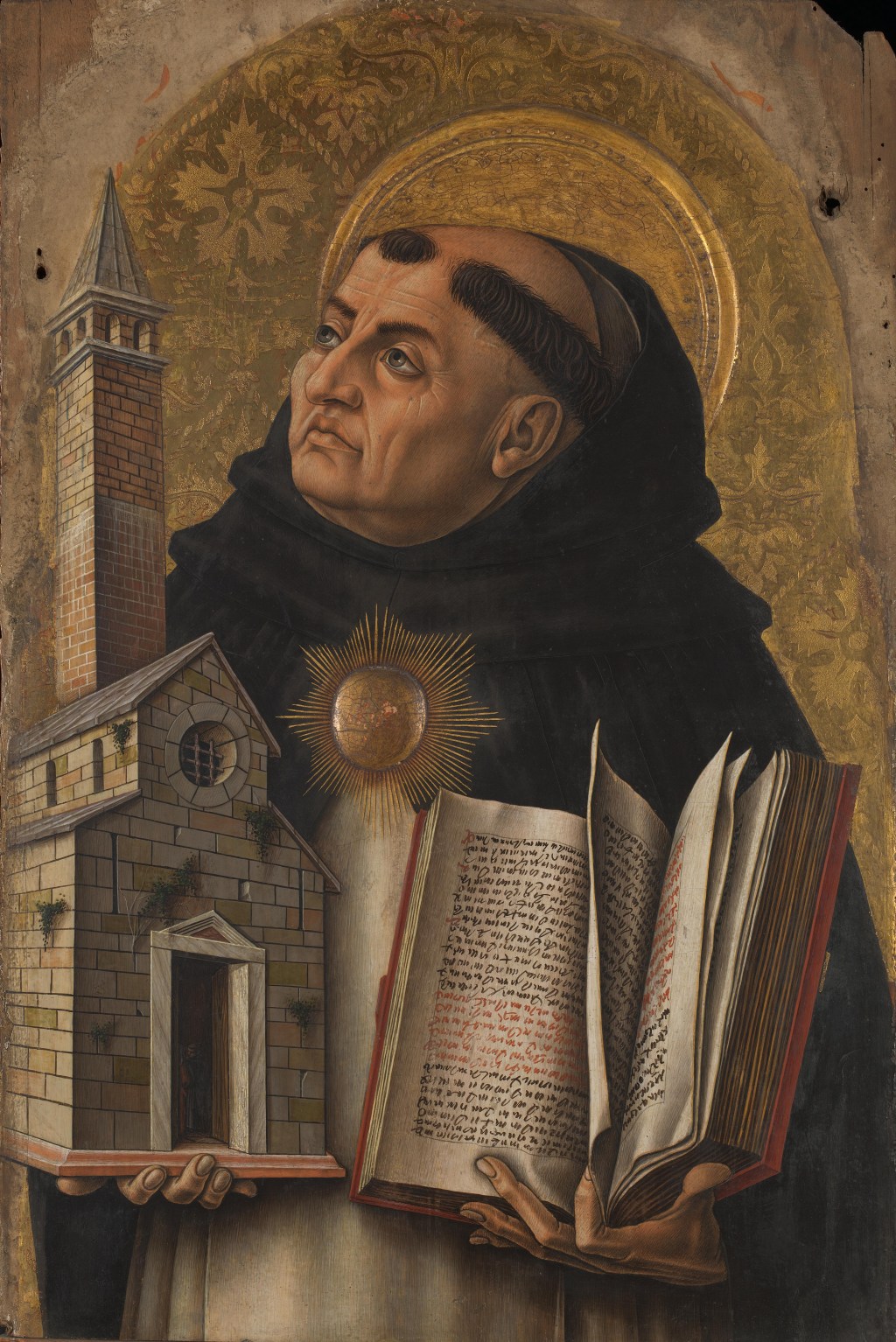
    Yesterday was the feast day for Saint Thomas Aquinas, who died in 1274. A Dominican priest, he came from a rich family and was the youngest of four boys. It was not uncommon for rich families to send their “expendable” children into religious orders at the time, and those same families gave heavily to the Roman Catholic Church. They supported monasteries where their kids lived, and it was also expected that they would rise to high points of leadership within the church.

    Thomas’s family had hoped he would also move up the ranks of the catholic church, and when he told them he was going to join the Dominicans, they were surprised. Well, surprised may be an understatement, because they kidnapped him and held him hostage in their family castle for a year. Even after that time, he still wanted to join so they let him go, and their dreams of an important child in the catholic church went with them… not. It’s a joke, get it, because today he is a saint!

    The reason why his family responded this way, was because the Dominicans were a newly formed group, barely 15 years older than Thomas was at the time. However, it was during the 13th century when Dominicans would start to be hand picked to replace judges and others, and the inquisition would be up and running. While Thomas wouldn’t be picked to find them, he started making a name for himself within the order because of how smart he was.

    What Thomas clung to during his studies, was reason, and he began to show his aptitude for reading various “heretical” works and working out how they fit within his religion. The greatest example of this, is Aquinas’ work Summa Theologiae, a large work he had started after he had a mystical vision but then died three months later leaving the work uncompleted. I have not spent a lot of time reading about the saints, after all, I’m a retired evangelical, saints weren’t our thing, they were idols. The irony of that, and the rise of the celebrity preacher is not lost on me.

    Since being received into the Episcopal church, I have made this a practice of mine, as we celebrate the saints and their lives of faith who came before us. Personally, it has been a fruitful endeavor as it has helped me feel more connected to the story of God. But what I enjoyed reading about St. Thomas Aquinas was the importance of reason to him. For those who do not know, the Anglican/Episcopal church rests on a three leg stool, one leg is scripture, one is tradition, and the final is reason.

    Using our brains to wrestle with the world in front of us is crucial, especially in the days we find ourselves. It is because of this that I personally struggle with understanding how self professing Christians can support the policies being acted out. What the Trump administration is doing is monstrous, and there is no way we can reason ourselves into supporting it while reading Jesus’ words. The federal funding for USAID being cut, to the violence enacted by the immigration and customs enforcement agency, and everything in between is cruel and monstrous. Reason forces us to confront the parts of us that seek power over one another, and give it over to God.

    There are so many things my soul cries to scream about, but instead of that, I will leave you with a poem from the hand of St. Thomas Aquinas. Found on page 127 in, Love Poems from God, by Daniel Ladinsky:


    The Mandate

    Because of my compassion, the sun wanted to be near me all night,
    and the earth deeded her fields to me,
    and all in heaven said,

    “We have voted you our governor; tell us your divine mandate.”
    And I did, and God will never revoke it:

    Nothing in existence is turned away.

    More tender is my Lord’s heart than any heart has ever been.

    So, when the divine realm asked me to govern it
    with one simple
    rule,

    I looked into His eyes and then knew
    what to say to any angel
    who might serve as
    a sentry to
    God:

    No creature should be
    turned away

    Grace and peace my friends.

  • The Weight of No

    The Weight of No

    One of the first books I finished this year In the Name of Jesus: Reflections on Christian Leadership by Henri Nouwen, and while it is a short book, it may be one of the most impactful I have read in years around leadership. This is something that should not have surprised me consider who Nouwen was, when he was still walking this world. A man born in the Netherlands, became a Roman Catholic priest, taught at Notre Dame, Harvard, and Yale for over twenty years, but walked away from the prestige to serve at L’Arche’s Daybreak Community in Ontario.

    In this book he writes about the shared life, humility, and importance of walking the downward path in leadership. Now, I am not a fan of leadership books, and I have been through my share of programs that seem to be a one size fits all. But this book, in the less than 120 pages, packs more moments where I have sat back in silence than all other leadership books I have read combined. His entire life was rewritten during his time at L’Arche, and this book is one of the the results of that transformation.

    What I consider the incredibly important parts of this book, are broken up into a three sections. I phrase it like that because of course there is a conclusion, and while it is helpful to read, you could stop there. The three sections are as follows:

    1. From Relevance to Prayer
    2. From Popularity to Ministry
    3. From Leading to Be Led

    All of these sections are obviously impacted by the previous one, but what is so interesting about how Nouwen sees the world and this type of leadership, is how it should be pulling us downward, and not in a bad way. My concept of leadership in the church has been tainted by the evangelical money making house of cards it has always been. So to say leadership can be a motion downwards, feels antithetical to what it means to be a good leader. But what Nouwen latches on to, is that relevance for the sake of relevance, and the idea of entrepreneurship or silo ministry, this chasing of saying yes to what is happening now could be pushing us further from the presence of God in our midst.

    The weight and power of saying no in ministry is not something that should be overlooked. We live in a society right now where the news cycle changes almost hour by hour, and the fears that are ratcheted up continue to find no ceiling. This can create an environment where we must say yes to everything, in order to not get lost in the shuffle, but Nouwen in this book invites us to a deeper sense of knowing. Not just knowing who we are in the family of God, but who God is calling us to be in our context and strength.

    It wasn’t until the end of this book where I felt Nouwen succinctly formed his argument about not going alone, and standing where your call is at in order to lead people into the next age. He writes:

    Christian leaders have the arduous task of responding to personal struggles, family conflicts, national calamities and international tensions with an articulate faith in God’s real presence.

    They have to say no to every form of fatalism, defeatism, accidentalism, or incidentalism that makes people believe that statistics are telling us the truth.

    They have to say no to every form of despair which human life is seen as pure matter of good or bad luck.

    They have to say no to sentimental attempts to make people develop a spirit of resignation, of stoic indifference in the face of the unavoidability of pain, suffering, and death.

    To say no in the face of fatalism, defeatism, accidentalism, incidentalism, despair, luck, resignation, indifference, pain, suffering, and even death pushes us to a radical limit.

    To say no to how the world would normally respond is to say yes to hope. What I am not saying is that we should ignore the pain, consequences, etc. that come from these instances. I am not saying that at all, recognize and hold it.

    To say no to it is to reject the acceptance of it, it is to say yes to the accountability of the people around you, and to seek justice for those who have been harmed.

    To say no is to hold fast to Jesus teaching of the Sermon on the Mount, and to elevate ourselves past what is popular, and plant ourselves into what is everlasting.

    To say no is to shake off the burden of societal expectations, and to say yes to a deeper way of being.

    Grace and peace my friends.

  • A Country of Their Own

    A Country of Their Own

    This post was originally scheduled for next week, but considering the climate, I thought I’d move it up a bit.

    In late fall of 2025 I decided during my quiet time in the mornings to start reading Hebrews. The truth is, I don’t think I have looked at it, or thought much of it since I preached on chapter 11 back in 2013, so it seemed like a good time to read it. I had been trying to find a part of the Christian Bible to check out after burning through Amos, James, Exodus, and some other random parts.

    When I was reading Amos, it was when there seemed to be a push by Isr**l to continue in committing war crimes by murdering journalists and medical workers in Gaza. A push that has been successful as I am sure most of us, unless we are intentionally looking, are unaware of the many times they have continued to murder innocent people in Gaza during this “ceasefire.” I bring this up because I have written in my margins how sitting with the words of Amos and the actions in that land made me want to vomit.

    This has happened a few times in the past few years, reading something in the text I hold central to my religious beliefs, and looking at the world around me, local and internationally. The Ending Crime and Disorder on American Streets executive order comes to mind, where the president criminalized being unhoused while evangelicals and christian nationalists defend something Jesus would have pushed back on.

    This week I was reading Hebrews 11 and I came upon this passage:

    All these people were still living by faith when they died. They did not receive the things promised; they only saw them and welcomed them from from a distance, admitting that they were foreigners and strangers on earth. People who say such things show that they are looking for a country of their own… they were longing for a better country–a heavenly one.

    — Hebrews 11:13-16ish (NIV)

    For so long, people have come to the United States looking for a country of their own. It is how my family got here, and I guarantee how yours did too. So far this year there have been six confirmed deaths in ICE detention centers, one of which was a homicide, and as of Saturday they murdered another innocent person:

    • Alex Jeffrey Pretti, 1/24, homicide
    • Heber Sanchaz Domínguez, 1/14
    • Victor Manuel Diaz, 1/14
    • Parady La, 1/9
    • Renee Good, 1/7, homicide
    • Luis Beltran Yanez–Cruz, 1/6
    • Luis Gustavo Nunez Caceres, 1/5
    • Geraldo Lunas Campos, 1/3, homicide

    What ICE has been doing in our streets to our neighbors, citizens or not, is nothing short of terrorism. Using fear, intimidation, and unlawful violence against citizens as a political means is almost literally the definition of terrorism in the Oxford Dictionary. Many people have pointed out this is how white people have acted against Black Americans throughout our history is exactly correct. This is masked terrorism supported by our countries love of white supremacy, and the inability to quit it.

    What is happening is not normal in America for white people, which is why this is so jarring for most of us. I saw an Instagram reel today of friend of mine, who is a Palestinian activist rightfully lamenting the people now wanting to show up. It is a similar thing I have seen time and again when white people start to realize that the systems of violence we have upheld because they’ve been good for us start to turn on us.

    It is never too late to show up for your neighbors, and I urge you to do it now.

    It is hard work, and it takes a toll. But there are many ways we can do it, what I beg you to do, is not turn your eyes away again. Do not harden your heart once ICE is abolished, because this is only the beginning of the work needing to be done. We have the opportunity to make our corners of the world a heavenly country for all, if we choose to do this long term hard work.

    Stay safe out there friends.

  • Prayer Meeting: The Decent Way

    Prayer Meeting: The Decent Way

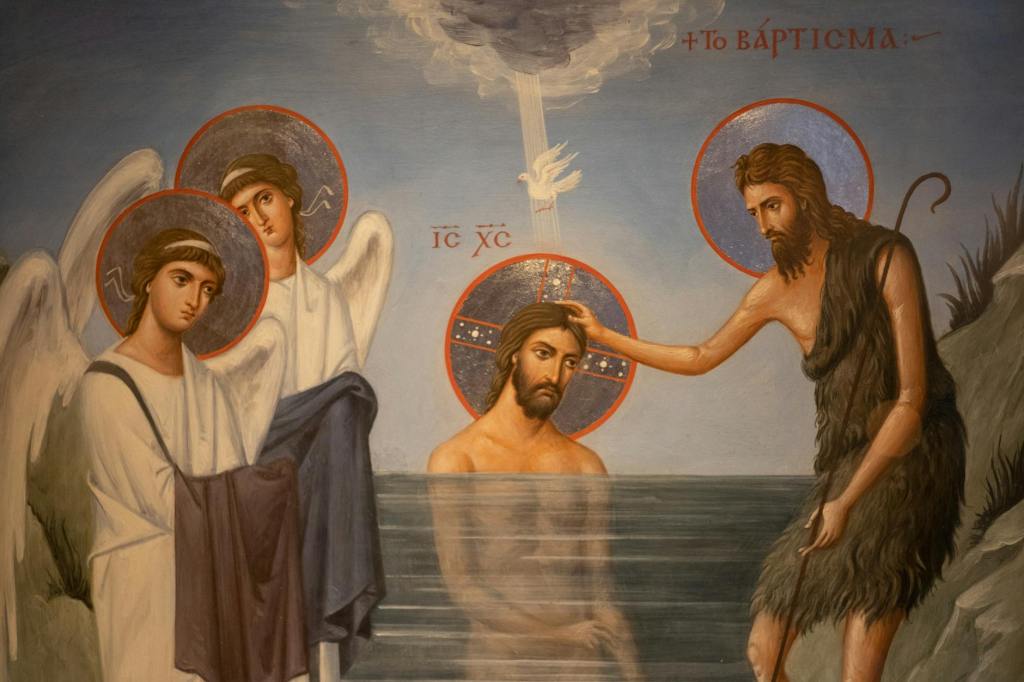
    Jesus came from Galilee to John at the Jordan, to be baptized by him. John would have prevented him, saying, “I need to be baptized by you, and do you come to me?” But Jesus answered him, “Let it be so now; for it is proper for us in this way to fulfill all righteousness.” Then he consented. And when Jesus had been baptized, just as he came up from the water, suddenly the heavens were opened to him and he saw the Spirit of God descending like a dove and alighting on him. And a voice from heaven said, “This is my Son, the Beloved, with whom I am well pleased.” – Matthew 3:13-17(NRSV)

    This past Sunday, Episcopalians across the world reaffirmed our baptismal covenants as we celebrated the Baptism of Jesus. For me, it is always a special occasion when I get to stand with my fellow faith siblings to say out loud who we are, how we show up, and who we hope to be in God’s creation. However, there is something about this passage that has stuck in my crawl for years. In verse 6 it states, “and they were baptized by him in the river Jordan, confessing their sins.” At one point I wrote a series of blog posts I can no longer find about Jesus attending and participating in a baptism for the forgiveness of sins as it states in Mark 1:4 and implied here in Matthew. It is something I had never hear about in church, and I seemed to gloss over in my readings.

    Having grown up evangelical in America, there are some hooks that are still in you that you are unaware of, and for me this was one of them. I cannot imagine how many times I had heard that Jesus was a the only perfect human to live, sinless in every way, which is part of the reason why he “didn’t need training” to preach, teach, and make disciples. But after reading these passages and letting it sit I had a few questions.

    • If Jesus was sinless and perfect, then why participate in such a baptism?
    • If Jesus participated in this type of baptism in good faith and not needing it, wouldn’t that make him a bad person?
    • If Jesus didn’t need to be baptized because of his stance with God, then why did he do it?

    I drove myself around in circles with this, and argued about it whenever I got the opportunity because I wanted answers that were satisfying. In her book, The Immerser: John the Baptist within Second Temple Judaism, Joan E. Taylor writes on page 262:

    That Jesus was baptized by John has been a problem almost form the beginning of Christianity, and not only because his being baptized indicated that he might have been subordinate to John. Jesus apparently turned away from sin and, as Michael Grant notes, this “set the theologians of subsequent centuries a conundrum. For how could Jesus have been baptized for the forgiveness of his own sins, when according to the Christology which developed after his death, he was divine and therefore sinless?” Often the solution is given that he wished to humble himself by participating with the sinful in this important ritual. As A.M. Hunter has stated: “He [Jesus] discerned the hand of God in John’s mission, and by His acceptance of John’s baptism identified Himself with the people whom He came to Save.” Some scholars have sought to deny that John ever baptized Jesus…

    [In the Gospel of Matthew 3:14-15] Jesus comes forward to be immersed, but John tries to prevent him and says, “I need to be immersed by you, and you come to me? Jesus calmly reassures him, “let it be so for now, for it is right for us in this way to fulfill all righteousness.’ Jesus therefore does the decent thing, but he does not really need to do it.”

    When I read that for the first time I just sat and scratched my head. Then I read it again.

    And again.

    And again.

    And, yet, again.

    Finally, it started to sink in for me personally, that it does not really matter why Jesus was baptized, sin or no sin. What matters in the end is that Jesus did the decent thing. Following his call, Jesus did what was right. This argument that I had developed within myself, and thought so much rode on did not matter, because at the end of the day, it was an excuse to keep Jesus at arm’s length.

    It is the same argument we always make to get out of doing the decent thing, that we are sinners, or are prone to fail and mess up. When we do that, we keep the Jesus of the gospels at arm’s length.

    When we yell at our kids and don’t apologize, we keep Jesus at arm’s length.

    When we spend time bickering on social media about how we are right and “they” are wrong, we keep Jesus at arm’s length.

    When we standards that are supposed to be universal, but we make exceptions for people because we like what they stand for, we keep Jesus at arm’s length.

    When we see injustice in the world and wait for someone else to act or say something, we keep Jesus at arm’s length.

    When we ignore the plight of our fellow image bearers living in Palestine, Yemen, Congo, and Sudan, we keep Jesus at arm’s length.

    On Thursday and Sunday of last week, I attended two protests to abolish ICE. I am compelled by my faith to act in times of injustice when innocent people are killed. In the same way I am compelled every Sunday morning to wake up early and cook food for the unhoused and marginalized. It is the everyday act of doing the decent thing where we can be the hands, feet, and voice (at times) of God in a world where it is so easy to choose hatred, or as I have seen it lately, “intolerance.”

    By walking the path and getting covered in the dusty road of Jesus’ teachings, may we find the decent way to be in the times when others need to be served before ourselves.

    Amen

  • The Tears of Things

    The Tears of Things

    By Emil Nolde – Museum of Modern Art, New York, PD-US, https://en.wikipedia.org/w/index.php?curid=12197419

    There must be someone in every age who can tell the faith community, and society at large, Your first egoic glance at life–and God– is largely wrong! And it is largely engendered by fear.”

    – Fr. Richard Rohr

    I started reading Father Richard Rohr when I was still a reluctant evangelical. It was during the reconstructing of my faith phase where I picked up Falling Upward. If I remember correctly, I had either heard him on a Rob Bell Robcast, or a recommendation from my friend Adam. This book drove me to a place of openness not just about his work, but to my approach of God. While I laugh to myself now about being concerned reading a catholic priests book, the idea of approaching God and others at the time with love over dogma/theological treaties, coming from a Roman Catholic priest, was mind blowing.

    In October, I had just finished presiding over a memorial service for a friend when a woman I consider a prophet in our times approached me with a book. We had shared this bizarre end of life journey together with this mutual friend, and given she is a close to 90 year old spiritual director, I tend to listen when she has something to say. It was Richard Rohr’s new book, The Tears of Things: Prophetic Wisdom for an Age of Outrage. The book was accompanied by a card, and part of what she wrote inside said, “I think this may be of interest since Rohr’s contemplating and acting is much of who you are.”

    The amount that this card and her thoughts touched me, I cannot properly describe, however, I am still touched by it. Especially since I have now enjoyed Fr. Rohr’s work for well over a decade. Each one of his books build on one another, but for me this one takes the cake. The place of a modern prophet is something I have struggled with, especially considering how most of American Christianity treats the concept of one.

    This book is scratching that itch in a way I never thought possible. For quite a while, I have adopted a mantra a friend of mine introduced me to, which is, “the status quo is a bully.”As I am deep in editing my next book, which is a call for peacemaking, I spend time talking about standing against the status quo. So when I read this quote from Rohr’s new book, I had to sit in silence for a moment.

    “We have spent the centuries and millennia since constructing the same kinds of self-serving power centers that Jesus and the prophets denounced, and most of us are resigned to this status quo.” pg. 22

    Structures and systems exist for a reason, and some of these are good. Some continue to uphold the system for the sake of the system, because we have to keep the system in place to uphold the status quo.

    Any “normal” way of business that continues to keep people in states of marginalization and oppression are not “normal” or “moral.”

    The want or need to have power over another person is not a “normal” or “moral.”

    The federal level of government and how it has treated people in the United States may have been “normalized” over the centuries, it has never been “moral.”

    The kidnapping of American citizens is not “normal.”

    Abducting heads of foreign states is not “normal” especially when we are not at war is not “normal.”

    Friends, look for and listen to the prophets in your life who are calling for the liberation of the oppressed.

    Look for the ones who remind us that, as Rohr writes, “we like our illusions, we like having enemies, and we are quite accustomed to our wars and prejudices as much as we insist the contrary.”

    Look for the ones calling for leading with love, and accountability for those who have been wronged.

    We need them, and you, now more than ever.

    Grace and peace.

  • Stand Against HB-486

    Stand Against HB-486

    I wrote and submitted this as an op-ed, but decided to release it here as well because it is important.

    The Ohio State House is attempting to pass House Bill 486, and it should cause us concern. If passed, this bill would allow for educators in state sponsored higher education and public schools to discuss Christianity’s positive influence on culture and history in America. This proposed act also includes examples talking points to be used classrooms, as historical examples and not alleged proselytization. However, the examples in this proposal read as a complete whitewash of American history which does a severe disservice not only to students and educators, but the accuracy of Christianity’s influence in the United States of America.

    The influence, whether positive or negative, that Christianity has had on American lives past and present, should be left to religious professionals to teach. To think that an educator can only talk about the positive influence and can willfully ignore the historical stance of white Americans using religion to maintain slavery, segregation, and anti-LGBTQIA+ stances is morally and ethically wrong. And, unfortunately, that is not the only moral issue in this act.

    The co-sponsors of this bill have an agenda with which we should be uncomfortable. On the surface, this bill unequivocally pushes the talking points of christian nationalism. A popular movement in this country that, at its core, is antithetical to the Gospel. If we want to talk about the impacts of Christianity in history, we must do so in an unbiased and truthful way, and these conversations should be led by those qualified to do so.  Not by someone that holds a degree from a bible college, which is one degree I hold, but from an unbiased institution.

    The miseducation of Christian influence on a country that refuses to reconcile its sin of slavery and the mistreatment of Indigenous peoples at best could only lead to prolonged ignorance, and at worse, political or religious based violence. I encourage everyone to call upon their reps and advise against voting for this bill, especially Rep. Josh Williams, who is a co-sponsor. Now is not a time to stay silent, and it is our job to let our representatives know we do not want HB-486 to pass.

    To contact OH D41 Rep Erika White, click here.
    To contact OH D42 Rep Elgin Rogers Jr., click here.
    To contact OH D43 Rep Michele Grim, click here.
    To contact OH D44 Rep Josh Williams, click here.

    Not sure who your rep in Ohio is? Follow this link.