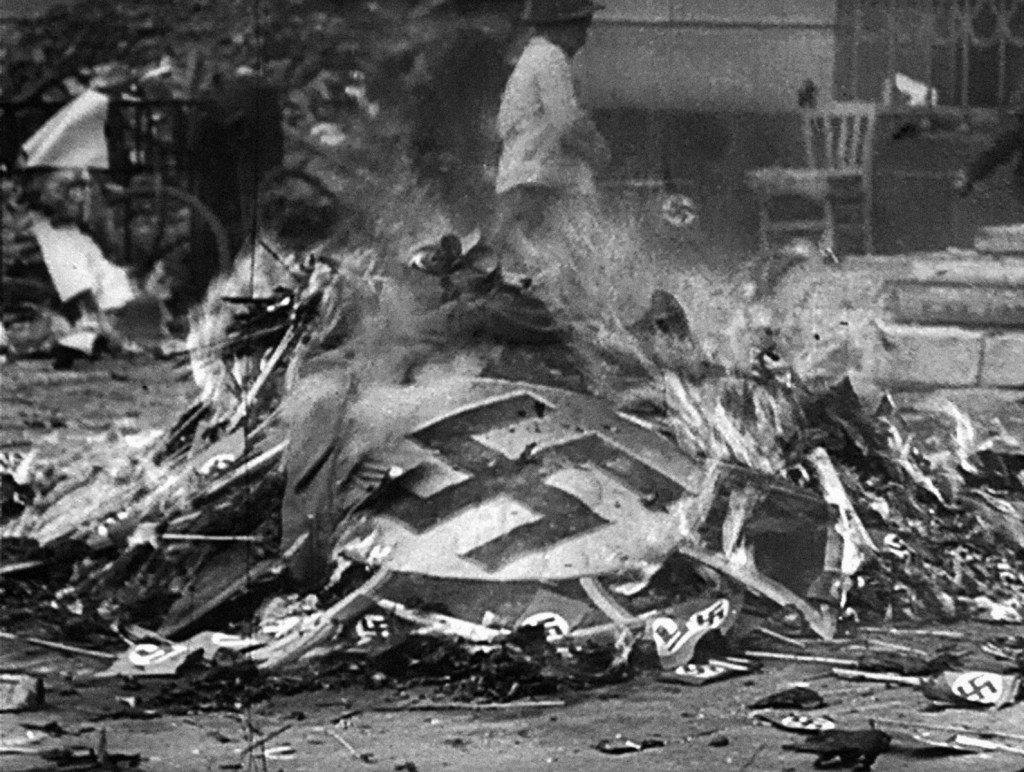
Tomorrow is Ash Wednesday, and thus begins the season of Lent. It is with this in mind, I’d like to share with you something I wrote last year. On January 29th of 2025, I riffed off of First They Came by Lutheran Pastor Martin Neimöller. It is probably something you are familiar with, whether your know it or not, it reads as follows:
First they came for the socialists, and I did not speak out—because I was not a socialist.
Then they came for the trade unionists, and I did not speak out—because I was not a trade unionist.
Then they came for the Jews, and I did not speak out—because I was not a Jew.
Then they came for me—and there was no one left to speak for me.
Pastor Neimöller’s words have been echoed in many places since he wrote it. It is one of those quotes that I thought I knew the history of, but in reality applied my own ideologies to. I was surprised to find out when I was reading up on Pastor Neimöller that he was a supporter of the early n*zi party. Not only that, but, he had remained silent on how the party operated early on because they were going after the left and leftists. He didn’t feel the need to speak up about it because he did not agree with their politics.
This may sound or feel familiar for some of you, if not now, perhaps in the future.
It was not until Hitler came for the Lutheran Church in Germany did Neimöller start to wake up. He had helped formed a group called the, Emergency Pastor’s Group, to help confront some of these issues. Because of the state of Germany, it was believed by the group that the protestant faith could only be compromised that someone could be in the n*zi party. The two were not compatible.
This may sound or feel familiar for some of you, if not now, perhaps in the future.
As we stared down the start of a second Trump administration, and the ramp up of the familiar hatred that defined his first term, I sat and Neimöller’s words. It isn’t perfect but it captured my fear of the moment, a fear that has continued to be re-enforced.
First they came for the undocumented and other immigrants. We didn’t speak out because we thought our privilege protected us.
Then they came for those on the margins. We didn’t speak out because we thought our privilege protected us.
Then they came for the LGBTQIA+ community. We didn’t speak out because we thought our privilege protected us.
Then they came for the allies. WE didn’t speak out because we thought our privilege protected us.
The last year has seen undocumented, legal, and American citizens who are immigrants disappeared by ICE.
The last year has seen the criminalization of our unhoused and friends via the Ending Crime and Disorder on American Streets executive order.
The last year has seen the almost complete dismantling of diversity, equity, and inclusion, not to mention the roll back of civil rights era legislation has been nothing short of monstrous.
The last year has seen false information about our trans siblings being spoken from the highest ranks of government, the attempt to throw out Obergefell v. Hodges, and many more targeted acts of legislation state and nationwide.
My friends, it is time, like Pastor Neimöller, it is time to find your voice. With tomorrow being Ash Wednesday, and the start of Lent, I pray you meditate on this.
The Gospel of Matthew’s recount of the infamous sermon that Jesus gives is my favorite. While it shows up most notably in Luke as well, it is in Matthew that I find my connection. It may be because when I first started reading the Christian Bible, I started at what I thought was the beginning, the New Testament, which starts with drum roll… the Gospel of Matthew.
I only started referring to people as “salt of the earth” consistently a few years ago. One of my co-workers says it all the time about people she adores and has stuck through osmosis. These are the people that make me want to be a better, and more consistent presence in my life. It is such a weird tension to hold right now, trying to be the salt of the earth as the world is falling apart around us, and I mean that, almost quite literally.
I am not just talking about the genocide still happening in Gaza, Palestine, Sudan, Myanmar, the Uyghurs in China, and the Democratic Republic of Congo. The political violence we have seen in America over the past 10 years continues to rise to a crescendo with ICE abducting people off the streets and disappearing them to what an Irish immigrant referred to as a modern-day concentration camp. Not to mention murders of Alex Pretti, Renee Nichole Good, Gerardo Lunas Campos, and Keith Porter.
The fact that all of this has this has led into the newest 3.5 million documents of the Epstein files that have been released, with still millions of pages to go has been more than overwhelming. Jeffrey Epstein has had his hand in more things that have shaped the United States in the past decade than anyone outside of his circles could have imagined. And it is horrifying. Absolutely horrifying. The cache of information that has come out about what he, other celebrities, politicians, and wealthy people have done to children, if 5% is true, should be enough to make every decent person in this world cry out in terror. It has been so disturbing following this story, I almost took out the prayer in the Coventry Litany of Reconciliation that I updated which reads, “The lust which dishonors the bodies of men, women, non-binary, and children, God Forgive.”
So, when I sit and think about all of this, a very small portion of what is happening in our world right now, to think of being the salt is a bit overwhelming. Something that has helped recently I found few weeks ago, when I was reading the Essential Writings of Brother Roger of Taizé. On page 33, I came across this quote of his,
“… always keep in mind that you are advancing with [God] toward the light, even in the midst of your own darkness.”
The light that we shine forth, that we are not to hide in the bushel is helping light my way in my own darkness. It is helping me remember that salt we are supposed to be isn’t table salt, it is, for me supposed to be course, course and in your face. It is the kind that is brought out by the kitchen and given table side. It is what you see sitting on top of your meal that bring a blast of flavor. It is the people who continue to do their good works in a time of despair, as if it is water off their back.
It is seeing the weight of the world, and saying to yourself, I think I can bring some flavor to this bland story that keeps being repeated throughout history.
It is the same example of Jesus bringing liberation, and hope to the masses of people who are being held in oppression by the state.
It is the story we find ourselves in the midst of now.
It is who we are called to be in this world, now more than ever.
My friends, may you find the salt around you, and if you can’t, please remember that the salt may be you.
Jesus said to his disciples, “I am giving you these commands so that you may love one another.
“If the world hates you, be aware that it hated me before it hated you. If you belonged to the world, the world would love you as its own. Because you do not belong to the world, but I have chosen you out of the world– therefore the world hates you. Remember the word that I said to you, ‘Servants are not greater than their master.’ If they persecuted me, they will persecute you; if they kept my word, they will keep yours also. But they will do all these things to you on account of my name, because they do not know him who sent me. If I had not come and spoken to them, they would not have sin; but now they have no excuse for their sin. Whoever hates me hates my Father also. If I had not done among them the works that no one else did, they would not have sin. But now they have seen and hated both me and my Father. It was to fulfill the word that is written in their law, ‘They hated me without a cause.’
“When the Advocate comes, whom I will send to you from the Father, the Spirit of truth who comes from the Father, he will testify on my behalf. You also are to testify because you have been with me from the beginning.”
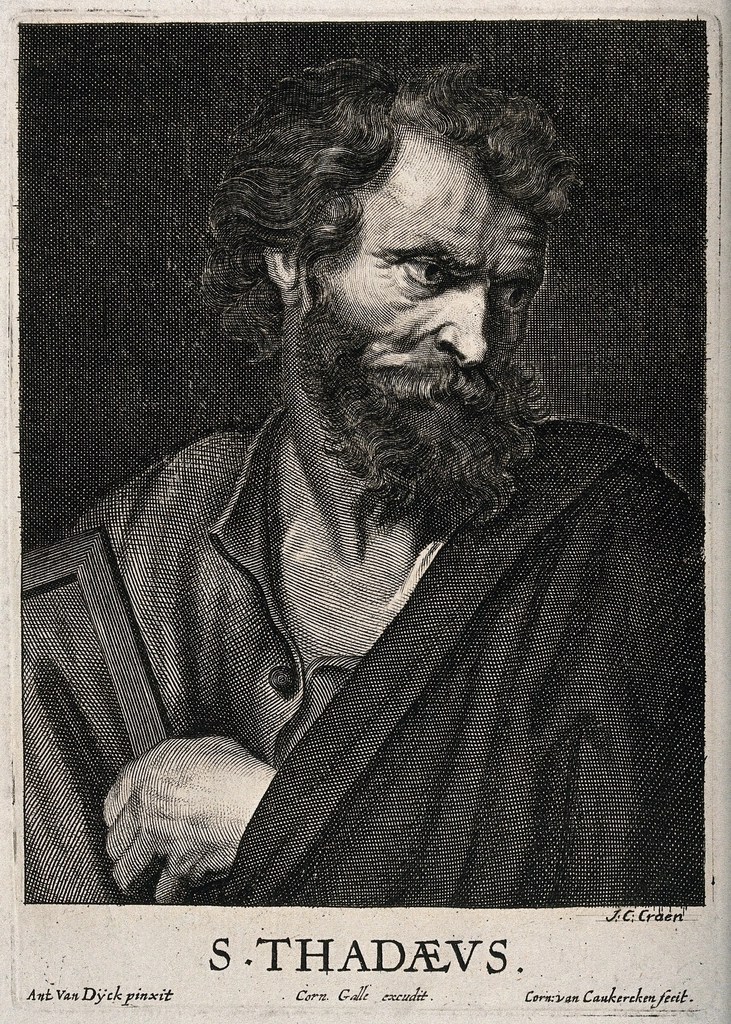
Saint Jude is the patron saint for lost causes, impossible situations and despair. It is a hard time for those of us who don’t believe empathy is a sin. When holding all that has happened in Minneapolis, thinking about Keith Porter Jr being murdered by immigration customs and enforcement, the horrific details in the newly released Epstein files, I needed to think about, and create space for despair for a bit.
When I read this Gospel passage, which is specific in the lectionary to St. Simon and St. Jude (who both share the martyrdom on 10/28), it really had my mind going. See, when I read of Jesus in this passage talking about not being of this world my context, historically, of this passage is much different than what I believe now.
For a long time I feared the idea of the day of judgment, specifically because of the language around it. I grew up around the apocalyptic concept of fire, brimstone, etc., but then I found out that apocalypse literally means uncovering in Greek, as in, learning something new. When I found this out, I dove deeper into the Jewish roots of Christianity. Because of this new information, I was deeply curious about what this day of judgment would mean. After some time, I became much more comfortable.
The idea of the day of judgement, is the work of God setting things right, the way they were supposed to be.
It is creating justice in an unjust world, and for those of us who seek justice, who seek the safety of others, who seek after the words of Jesus, it really isn’t a scary thing. Sure, there are aspects of our lives where we are continuing to hone and align the way we believe with how we live our daily life, but on the whole, the setting of things in their correct manner shouldn’t be that scary.
When we strip down the concept of wanting to live in a world where everyone is safe, no one has to worry about food, healthcare, being othered, bombs, and genocide as seen in Sudan and Gaza to name a few. These things that make us feel fear in our daily lives, these systematic issues that cause us to live into despair. As I sit with this, I feel connected to the despair that St. Jude is the patron saint of. It’s not hard right now to let those feelings consume us, but cynicism is easy.
Then I remember, despair is easy.
Hope, love, and taking care of one another in community is hard.
It takes bravery to love someone.
It takes bravery to stand up for someone.
It takes almost nothing to cast someone aside, and not only deny their humanity, but the image of God that is interwoven through their very being.
So when I read and sit with the part in Luke where Jesus says, if the world hates you, be aware that it hated me before it hated you, my mind goes to the lie that is christian nationalism. Those I have heard prosecution stories loudest, come from those that uphold white Jesus. And we know that they cannot be the people Jesus is talking about here.
Yesterday was the feast day for Saint Thomas Aquinas, who died in 1274. A Dominican priest, he came from a rich family and was the youngest of four boys. It was not uncommon for rich families to send their “expendable” children into religious orders at the time, and those same families gave heavily to the Roman Catholic Church. They supported monasteries where their kids lived, and it was also expected that they would rise to high points of leadership within the church.
Thomas’s family had hoped he would also move up the ranks of the catholic church, and when he told them he was going to join the Dominicans, they were surprised. Well, surprised may be an understatement, because they kidnapped him and held him hostage in their family castle for a year. Even after that time, he still wanted to join so they let him go, and their dreams of an important child in the catholic church went with them… not. It’s a joke, get it, because today he is a saint!
The reason why his family responded this way, was because the Dominicans were a newly formed group, barely 15 years older than Thomas was at the time. However, it was during the 13th century when Dominicans would start to be hand picked to replace judges and others, and the inquisition would be up and running. While Thomas wouldn’t be picked to find them, he started making a name for himself within the order because of how smart he was.
What Thomas clung to during his studies, was reason, and he began to show his aptitude for reading various “heretical” works and working out how they fit within his religion. The greatest example of this, is Aquinas’ work Summa Theologiae, a large work he had started after he had a mystical vision but then died three months later leaving the work uncompleted. I have not spent a lot of time reading about the saints, after all, I’m a retired evangelical, saints weren’t our thing, they were idols. The irony of that, and the rise of the celebrity preacher is not lost on me.
Since being received into the Episcopal church, I have made this a practice of mine, as we celebrate the saints and their lives of faith who came before us. Personally, it has been a fruitful endeavor as it has helped me feel more connected to the story of God. But what I enjoyed reading about St. Thomas Aquinas was the importance of reason to him. For those who do not know, the Anglican/Episcopal church rests on a three leg stool, one leg is scripture, one is tradition, and the final is reason.
Using our brains to wrestle with the world in front of us is crucial, especially in the days we find ourselves. It is because of this that I personally struggle with understanding how self professing Christians can support the policies being acted out. What the Trump administration is doing is monstrous, and there is no way we can reason ourselves into supporting it while reading Jesus’ words. The federal funding for USAID being cut, to the violence enacted by the immigration and customs enforcement agency, and everything in between is cruel and monstrous. Reason forces us to confront the parts of us that seek power over one another, and give it over to God.
There are so many things my soul cries to scream about, but instead of that, I will leave you with a poem from the hand of St. Thomas Aquinas. Found on page 127 in, Love Poems from God, by Daniel Ladinsky:
The Mandate
Because of my compassion, the sun wanted to be near me all night, and the earth deeded her fields to me, and all in heaven said,
“We have voted you our governor; tell us your divine mandate.” And I did, and God will never revoke it:
Nothing in existence is turned away.
More tender is my Lord’s heart than any heart has ever been.
So, when the divine realm asked me to govern it with one simple rule,
I looked into His eyes and then knew what to say to any angel who might serve as a sentry to God:
One of the first books I finished this year In the Name of Jesus: Reflections on Christian Leadership by Henri Nouwen, and while it is a short book, it may be one of the most impactful I have read in years around leadership. This is something that should not have surprised me consider who Nouwen was, when he was still walking this world. A man born in the Netherlands, became a Roman Catholic priest, taught at Notre Dame, Harvard, and Yale for over twenty years, but walked away from the prestige to serve at L’Arche’s Daybreak Community in Ontario.
In this book he writes about the shared life, humility, and importance of walking the downward path in leadership. Now, I am not a fan of leadership books, and I have been through my share of programs that seem to be a one size fits all. But this book, in the less than 120 pages, packs more moments where I have sat back in silence than all other leadership books I have read combined. His entire life was rewritten during his time at L’Arche, and this book is one of the the results of that transformation.
What I consider the incredibly important parts of this book, are broken up into a three sections. I phrase it like that because of course there is a conclusion, and while it is helpful to read, you could stop there. The three sections are as follows:
From Relevance to Prayer
From Popularity to Ministry
From Leading to Be Led
All of these sections are obviously impacted by the previous one, but what is so interesting about how Nouwen sees the world and this type of leadership, is how it should be pulling us downward, and not in a bad way. My concept of leadership in the church has been tainted by the evangelical money making house of cards it has always been. So to say leadership can be a motion downwards, feels antithetical to what it means to be a good leader. But what Nouwen latches on to, is that relevance for the sake of relevance, and the idea of entrepreneurship or silo ministry, this chasing of saying yes to what is happening now could be pushing us further from the presence of God in our midst.
The weight and power of saying no in ministry is not something that should be overlooked. We live in a society right now where the news cycle changes almost hour by hour, and the fears that are ratcheted up continue to find no ceiling. This can create an environment where we must say yes to everything, in order to not get lost in the shuffle, but Nouwen in this book invites us to a deeper sense of knowing. Not just knowing who we are in the family of God, but who God is calling us to be in our context and strength.
It wasn’t until the end of this book where I felt Nouwen succinctly formed his argument about not going alone, and standing where your call is at in order to lead people into the next age. He writes:
Christian leaders have the arduous task of responding to personal struggles, family conflicts, national calamities and international tensions with an articulate faith in God’s real presence.
They have to say no to every form of fatalism, defeatism, accidentalism, or incidentalism that makes people believe that statistics are telling us the truth.
They have to say no to every form of despair which human life is seen as pure matter of good or bad luck.
They have to say no to sentimental attempts to make people develop a spirit of resignation, of stoic indifference in the face of the unavoidability of pain, suffering, and death.
To say no in the face of fatalism, defeatism, accidentalism, incidentalism, despair, luck, resignation, indifference, pain, suffering, and even death pushes us to a radical limit.
To say no to how the world would normally respond is to say yes to hope. What I am not saying is that we should ignore the pain, consequences, etc. that come from these instances. I am not saying that at all, recognize and hold it.
To say no to it is to reject the acceptance of it, it is to say yes to the accountability of the people around you, and to seek justice for those who have been harmed.
To say no is to hold fast to Jesus teaching of the Sermon on the Mount, and to elevate ourselves past what is popular, and plant ourselves into what is everlasting.
To say no is to shake off the burden of societal expectations, and to say yes to a deeper way of being.
This post was originally scheduled for next week, but considering the climate, I thought I’d move it up a bit.
In late fall of 2025 I decided during my quiet time in the mornings to start reading Hebrews. The truth is, I don’t think I have looked at it, or thought much of it since I preached on chapter 11 back in 2013, so it seemed like a good time to read it. I had been trying to find a part of the Christian Bible to check out after burning through Amos, James, Exodus, and some other random parts.
When I was reading Amos, it was when there seemed to be a push by Isr**l to continue in committing war crimes by murdering journalists and medical workers in Gaza. A push that has been successful as I am sure most of us, unless we are intentionally looking, are unaware of the many times they have continued to murder innocent people in Gaza during this “ceasefire.” I bring this up because I have written in my margins how sitting with the words of Amos and the actions in that land made me want to vomit.
This has happened a few times in the past few years, reading something in the text I hold central to my religious beliefs, and looking at the world around me, local and internationally. The Ending Crime and Disorder on American Streets executive order comes to mind, where the president criminalized being unhoused while evangelicals and christian nationalists defend something Jesus would have pushed back on.
This week I was reading Hebrews 11 and I came upon this passage:
All these people were still living by faith when they died. They did not receive the things promised; they only saw them and welcomed them from from a distance, admitting that they were foreigners and strangers on earth. People who say such things show that they are looking for a country of their own… they were longing for a better country–a heavenly one.
— Hebrews 11:13-16ish (NIV)
For so long, people have come to the United States looking for a country of their own. It is how my family got here, and I guarantee how yours did too. So far this year there have been six confirmed deaths in ICE detention centers, one of which was a homicide, and as of Saturday they murdered another innocent person:
Alex Jeffrey Pretti, 1/24, homicide
Heber Sanchaz Domínguez, 1/14
Victor Manuel Diaz, 1/14
Parady La, 1/9
Renee Good, 1/7, homicide
Luis Beltran Yanez–Cruz, 1/6
Luis Gustavo Nunez Caceres, 1/5
Geraldo Lunas Campos, 1/3, homicide
What ICE has been doing in our streets to our neighbors, citizens or not, is nothing short of terrorism. Using fear, intimidation, and unlawful violence against citizens as a political means is almost literally the definition of terrorism in the Oxford Dictionary. Many people have pointed out this is how white people have acted against Black Americans throughout our history is exactly correct. This is masked terrorism supported by our countries love of white supremacy, and the inability to quit it.
What is happening is not normal in America for white people, which is why this is so jarring for most of us. I saw an Instagram reel today of friend of mine, who is a Palestinian activist rightfully lamenting the people now wanting to show up. It is a similar thing I have seen time and again when white people start to realize that the systems of violence we have upheld because they’ve been good for us start to turn on us.
It is never too late to show up for your neighbors, and I urge you to do it now.
It is hard work, and it takes a toll. But there are many ways we can do it, what I beg you to do, is not turn your eyes away again. Do not harden your heart once ICE is abolished, because this is only the beginning of the work needing to be done. We have the opportunity to make our corners of the world a heavenly country for all, if we choose to do this long term hard work.
I wrote and submitted this as an op-ed, but decided to release it here as well because it is important.
The Ohio State House is attempting to pass House Bill 486, and it should cause us concern. If passed, this bill would allow for educators in state sponsored higher education and public schools to discuss Christianity’s positive influence on culture and history in America. This proposed act also includes examples talking points to be used classrooms, as historical examples and not alleged proselytization. However, the examples in this proposal read as a complete whitewash of American history which does a severe disservice not only to students and educators, but the accuracy of Christianity’s influence in the United States of America.
The influence, whether positive or negative, that Christianity has had on American lives past and present, should be left to religious professionals to teach. To think that an educator can only talk about the positive influence and can willfully ignore the historical stance of white Americans using religion to maintain slavery, segregation, and anti-LGBTQIA+ stances is morally and ethically wrong. And, unfortunately, that is not the only moral issue in this act.
The co-sponsors of this bill have an agenda with which we should be uncomfortable. On the surface, this bill unequivocally pushes the talking points of christian nationalism. A popular movement in this country that, at its core, is antithetical to the Gospel. If we want to talk about the impacts of Christianity in history, we must do so in an unbiased and truthful way, and these conversations should be led by those qualified to do so. Not by someone that holds a degree from a bible college, which is one degree I hold, but from an unbiased institution.
The miseducation of Christian influence on a country that refuses to reconcile its sin of slavery and the mistreatment of Indigenous peoples at best could only lead to prolonged ignorance, and at worse, political or religious based violence. I encourage everyone to call upon their reps and advise against voting for this bill, especially Rep. Josh Williams, who is a co-sponsor. Now is not a time to stay silent, and it is our job to let our representatives know we do not want HB-486 to pass.
To contact OH D41 Rep Erika White, click here. To contact OH D42 Rep Elgin Rogers Jr., click here. To contact OH D43 Rep Michele Grim, click here. To contact OH D44 Rep Josh Williams, click here.
Friends, this is my sermon from this past Sunday on a passage from Luke. If you prefer to watch, you can watch above, it starts at the 24 minute mark-ish. While I go off script in the video, you can read below my notes for the morning of.
This is a good parable. Jesus is tossing out some, what I would call, weird for the day theological ideas, but it’s good. This is one of those passages I would really like to spend time digesting and getting pretty nerdy with you all. Starting with how the afterlife as a concept or belief was one held on to by the Pharisees, or how the rich guy is buried, and Lazarus died and is taken away by angels.
This sermon has gone through many drafts, which is normal, but the content has changed quite a bit. In fact, in hindsight was a joke, I asked Father Jon if he wanted to read what I was confident my final draft on Tuesday. However, as I was working to finalize this, this week, I kept growing increasingly unsettled, not just by the content but by ridiculously relevant it is. In fact, I completely re-wrote it last night after 8pm. Through the Gospels, there are times when Jesus tells a parable and the disciples have no idea what he is talking about, but not here.
There is an assumption I find with most Christians I speak to, and that is, speaking broadly, everything in the New Testament is applicable to them. While you can make the argument, what I would like you all to think about is, does. This parable apply to you or us? If it does not, how are we as readers and followers meant to hear it and interact with it? Hold onto those thoughts as we live out this week and let me know your thoughts.
Lazarus is a man who is poor, a beggar, who lives most of his time outside of a very rich man’s house. Lazarus is so down, dogs lick his open sores, and he cannot do anything about it. There is a lot that we can know about this very rich man by the description, and I am going to nickname him now. Since Lazarus gets a name so does this guy, how about… Elon Musk? I originally had another in mind, but Jon+ threw this out this week, and I decided to run with it.
So, Musk wears purple gowns, throws daily banquets, and most likely parties with his family. Musk also does not celebrate the sabbath, which means all who work for Musk do not get the time off required for their religious beliefs. Not only that, but they also get no rest, and I’m sure their pay isn’t great as well. Musk also does not care about Lazarus who is laying right outside his gate.
In his book, Jesus Through Middle Eastern Eyes, theologian Kenneth E. Bailey points out just how rich Musk is according to this parable:
“He also wore ‘fine linen.’ The word in Greek is busses, which transliterates the Hebrew word butz, which, in turn, refers to the quality Egyptian cotton used for the best underwear… This man not only had expensive outer robes, but in case anyone was interested, he also wore fine quality underwear.”[1]
Musk, in this story, is committing the same sin that God destroyed the city of Sodom over in Genesis. Hording exuberant wealth and not caring for those in need, whether they are neighbors, or those outside of the gates of their property. But we see how it turns out for Musk and Lazarus, and for Lazarus, who is the only person ever named in a parable, and his name means, “one God helps” turns out okay.
You could not get more opposite of the class hierarchy than these two, which is interesting because Baily offers another tidbit in his book. A sort of way to let the rich man off the hook, that I do not agree with. He writes:
“…it is easy to survive by developing compassion fatigue. Beggars are ever present. There are so many of them. One’s resources are limited. Finally, one doesn’t notice anymore. Compassion fatigue becomes a way to cope and a strategy for survival. Perhaps this is what happened to the rich man.”[2]
I completely agree that compassion fatigue is a real thing, and I have experienced it myself. Anyone who has worked in social justice efforts can I am sure relate. But compassion fatigue exists because our society, at almost all levels would rather uphold systems and structures that keep people oppressed then help liberate them. Those who vote for the budget cuts, and believe the lie that anyone, no matter what they are born into have the same chance of pulling themselves up by their bootstraps do not realize they are stuck in the same hole as us.
It is not compassion fatigue that caused Musk to ignore Lazarus, but the status quo. When the world allows for, according to a Forbes article from February of this year, in the USA 71.2% of the wealth is held by the top 10% in the country. Musk doesn’t help the poor because he has compassion fatigue.
Baily continues, “Lazarus was sick, hungry, and covered with sores. But his deepest suffering was psychic. Traditional Middle Eastern villages are geographically tightly compacted. The gate at which Lazarus lay was certainly within easy earshot of the daily sumptuous banquets of the rich man. Only a few feet from Lazarus a group of overfed men” in designer underwear… “while Lazarus lay hungry and in pain, listening to their conversation. Those same men passed him every day as they entered and left the rich man’s house. They didn’t need the food—he did. Help was always near at hand yet withheld from him.”[5]
In this parable, like in life, there is no economic justice, and because of this beggars, the unhoused, will always be with us. When Jesus says that the poor will always be with us, this is what he is talking about. Because we do not live in a just society, we will always have those in need. Back in May, myself, and Trinity Response Team members Becky Koskienen, Mark Dubielak, and Phil Skeldon went to Washington DC to lobby our representatives into a more just world. This meant asking them to vote against the Big Beautiful Bill. Instead of chasing compassion and justice, our Ohio senators chose to support the status quo and give men in our parable more money.
If you have been watching the news or have been on social media in the past few weeks, we have seen it in the coverage of Christian nationalist Charlie Kirk’s death, memorial service, and fallout. His fans are attempting to prop him up like a modern martyr for his faith, and how the gospel was shared in such an impactful way because of his death. But I’m sure I am not the only one that sees the lie in it all.
When there is no room for Lazarus at the celebration, there is no room for the Gospel.
The question I asked at the beginning of this was, does this parable apply to you, and if not, how are we as readers/listeners/followers of Jesus supposed to interact with this. If anyone here had the wealth gap between Lazarus and Musk, I would be surprised you’re still a member.
This parable is supposed to shake us out of apathy and into advocacy.
This parable is why Trinity works hard to develop ministries like Breakfast at Trinity. Sure, Lazarus needed the food, but he isn’t the focus of this story. Musk is the focus. This parable is the Christmas Carol without the three ghosts changing Scrooges mind!
Breakfast at Trinity doesn’t exist solely for feeding the people, but we borrow from our forbears of that space to nourish body and soul. There are a number of people who can make their own food and have the means to, but they are all weary. Musk, in this parable, is weary, but he doesn’t know a better way exists.
All Musk knows is the status quo, which are the systems that keep him in place to be that rich, and isolated.
Like water dripping on a stone, the Gospel breaks through everything and everyone. But sometimes, we need to be like Jesus and point that out for people who are unaware of how bad it is out there.
[1] Bailey, Jesus Through Middle Eastern Eyes, pg. 382
[2] Bailey, Jesus Through Middle Eastern Eyes, pg. 382/383
A few weeks ago I passed a uniquely American parental milestone: I dropped my child off at preschool after a mass shooting where two children were murdered. This, of course, was the shooting in Minneapolis at Annunciation Catholic School where kids were murdered during their chapel service. Some of you may have seen the clip of the kid talking about his friend Victor that protected him from the shooting, and Victor was struck in the back. I have been an outspoken advocate for tighter gun laws for years, and the fear at drop off that something *could* happen was horrifying.
Just another day in America.
Of course last week there were two school shootings, one in Colorado where a few kids were injured. Then there was the one in Utah were a christian nationalist podcaster was killed in front of a group of people, that has set the country on fire, as he was a divisive person that had no problem perpetuating racist, misogynistic, and homophobic rhetoric. But considering that is the current brand of conservatism in this country, it is no surprise they are trying to make a martyr out of him. Finally, Trey Reed, a young black man, was found hung from a tree near his college in Mississippi with no fowl play suspected somehow.
Just another week in America.
Two mass shootings in an unhoused encampment, again, in Minneapolis where 13 people are injured which comes on the heels of f*x news anchor Brian Kilmeade suggested euthanizing the unhoused. Of course nothing is going to happen to Kilmeade, even though real news reporters have lost their jobs for pointing out the podcaster who was killed spoke hatefully.
Another week in Ameri— wait, it’s only Wednesday.
At times like this, I return to a book written by Krister Stendahl called, The Roots of Violence: Creating Peace through Spiritual Reconciliation. In this section, he wrote about the political assassinations of the 60’s, people trying to make political change for the good, not like the guy we’ve seen in the news lately. While I do not believe there is room for political violence in this world, I understand it is here. Unfortunately, pointing out the hypocrisy of those calling for it to end, that continue to actively oppress people of color, the LGBTQ+ community, women, you name it, will do nothing but fall on deaf ears or echo chambers. So instead, I leave you with the words of Stendhal:
“We are surrounded by mass assassinations and executions, deeds that we call “terrorist” if others do them and “defense” if we do them. There is torture, which some people try to dress up by saying that it is not so bad if it is done by authoritarians, but it is bad when it is done by totalitarian. But the thumbscrews feel the same no matter who puts them on.”
– pg. 15, Roots of Violence
Stay safe, and watch out for one another. Grace and peace.
About six months ago, I purchased a bottle of Absinthe because, for some unknown reason, I thought it was a good idea. It had been at least a decade since I had tried it, and it did not go down very well. The wormwood in the drink, if you have never had it, leaves an incredibly bitter taste in your mouth if you don’t mix the properly. The other day, as I sat drinking my morning coffee, I was wondering what mixture of mouthwash/seltzer water/whatever I had that is now leaving this similar taste in my mouth.
That’ll flavor combination will wake you up.
As I am sipping this, I have been working my way through the prophet Amos in my morning quiet time. This reading of the prophet has been compounding some outlying frustration. A genocide has been broadcasting in real time, in spite of murdering journalists, in Palestine for those of us paying attention. Children, and people of all ages have been intentionally starved, and the footage of it will leave a mark. Kids, and others, have been murdered while waiting in line for water, food, etc. The intentional cruelty, and war crimes committed is an abomination.
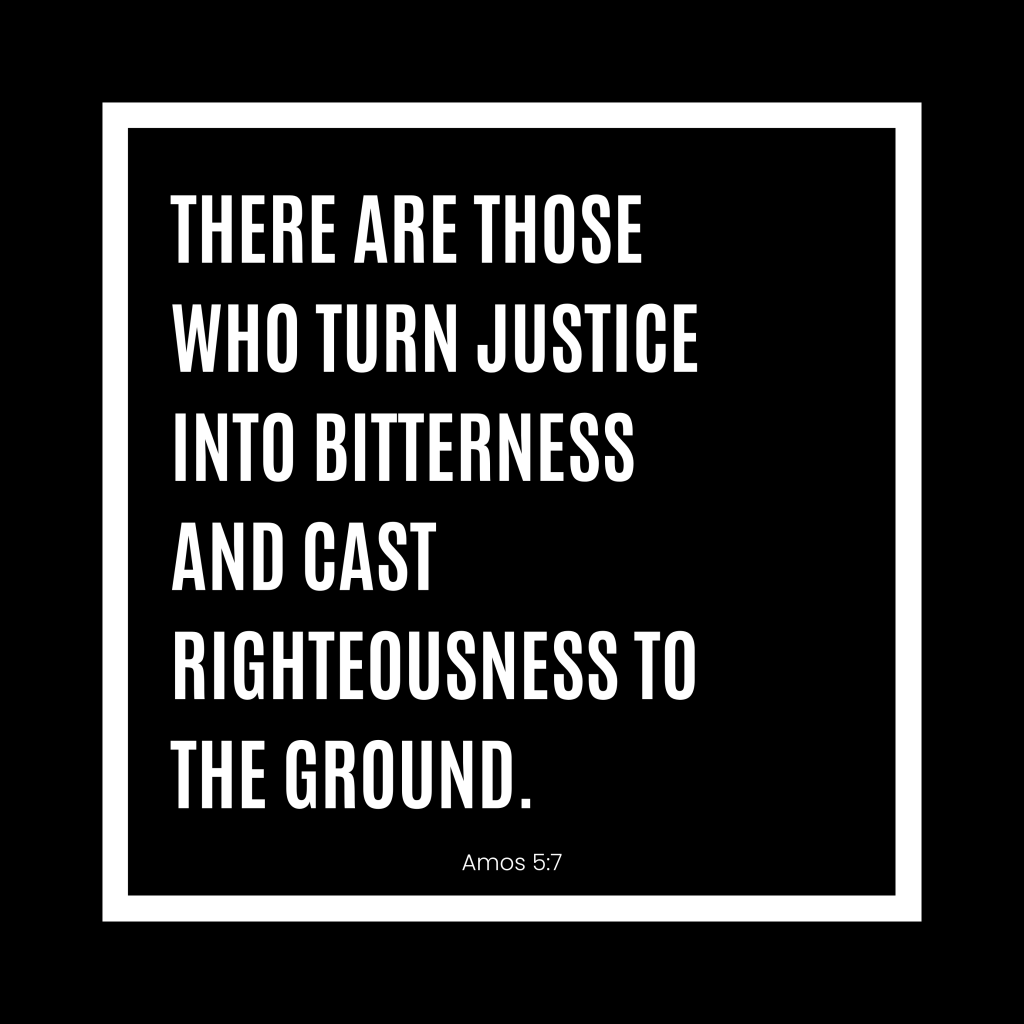
So reading through Amos, seeing this massacre play out in real time over the past 18 months and all of it taking place in the region the prophet is talking about has brought a new flavor to the text. For about a week, Amos 5:7 (NIV) has had its claws in me, “There are those who turn justice into bitterness and cast righteousness to the ground.” I have been meditating on this, and it has like a stick in my craw, but I couldn’t figure out why.
There is the obvious tug at what Amos is saying on face value, but I decided to check out the Apostolic Polyglot, an interlinear literal Greek-English of the Christian Bible. When I read it, and it made no sense, I looked to the New Oxford Annotated Bible. It is just a fancier version of the New Revised Standard Version, which reads:
“Ah, you that turn justice to wormwood, and bring righteousness to the ground!”
There it is, the stick in my craw.
The verse in the New International Version was too nice for me. Bitterness can be a variety of things. I love lemons, and they can be bitter as hell. But you know what, wormwood will make almost anyone gag!
Every time we read or see what has been happening in Palestine, Sudan, and to the Uyghurs, we should taste wormwood in our mouths.
Every time we read about those fighting against releasing the Epstein client list, we should taste wormwood in our mouths.
Every time we see another mass shooting in the news, we should taste wormwood in our mouths.
Every time we see or hear reports of ICE agents snatching people off of the streets, we should taste wormwood in our mouths.
Every time we see military personnel being mobilized against citizens, we should taste wormwood in our mouths.
In fascism, there is no peace. There is no peace without reconciliation. There is no reconciliation without justice. There is no justice in attempting to control others. Control is void of love, and without love, God can be incredibly difficult to find.
It may seem like nothing, but speaking about what is going on may help wake people up. Going on the record and contacting your representatives is called slow activism for a reason, but it is worth doing. If you have not tried 5 Calls yet, follow the link, and use it for good.
Everyone has to start somewhere, and I hope the bitter taste in your mouth that the Trump administration has helped bring about in the past eight months spurs you into action.





 George of Sylvania