Tag: black lives matter

  • Spirit, hope, and conviction.

    Spirit, hope, and conviction.

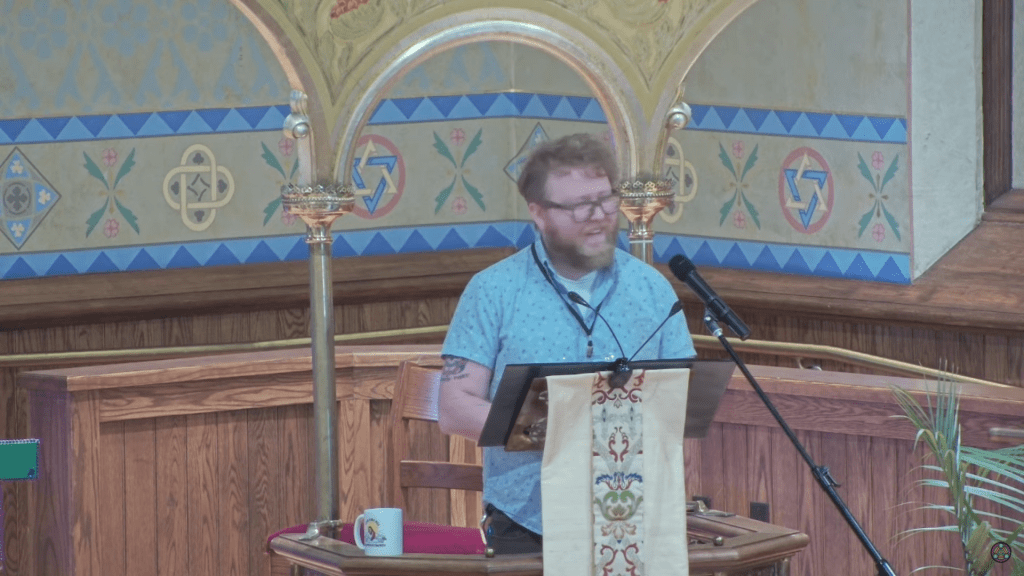
    This past Sunday I had the honor to preach at my home church. Below is the sermon, but if you feel like watching it you can start the above link at 27:20 and enjoy all the little jokes I put in.

    I’d like to open with a quote that I couldn’t find a home for, but it has latched onto me. It is from one of my favorite theologians, Ben Witherington. “It would appear that Mary’s announcement of the good news was insufficient to transform the mood of these male disciples.”[1]

    I doubt, at times, there is any disciple more relatable than Thomas. I mean, you miss one hangout with the crew and suddenly, you’re supposed to believe your teacher is alive. It makes no sense. It sounds like a giant practical joke if you’re Thomas. It would be difficult not to respond with the, “I won’t believe anything until I put a finger through his hand!”

    After all, it wasn’t like people came back from the dead all the time. But when Jesus comes back, and Thomas sees him, and while we are not told Thomas touches the wounds, we know for Thomas, the world is turned upside down.

    Jesus has pulled one over on humanity, and the rest of the world because here was someone who has moved from death to life, from cursed to redeemed.

    When Jesus asks Thomas, “have you believed because you have seen me?” what answer could be expected other than yes?

    When I read this section of John’s Gospel, the space between the crucifixion wound, the time it took for Thomas to hear of Jesus’ resurrection and seeing him really stood out.

    How many times do you think the Spirit tried to make contact with Thomas that week?

    Where their times when Thomas was sitting alone at night, awake wondering if this was true that Jesus was back, and was he pushing the door shut while the Spirit was trying to break it open?

    What makes the Apostle Thomas so relatable for me, is there is space for his doubt. Space for his thoughts. And space for him to allow God to enter his midst and partner with him.

    It is that doubt that drives Thomas back to meet with the other disciples, and it is that doubt that shatters in the face of hope.

    There is no way we get to our first reading from Acts without doubt. Everyone one in that group was Thomas, except for the people the entire history of the church owes its allegiance to, and that is the women.

    Now, this newfound hope in the future of the world changes the disciples in a way that is still echoed almost two thousand years later into this very room. I say this because there is no way we go from doubts of resurrection to the hope of the holes in Jesus’ palms and not end up in the position Peter and the apostles find themselves in, in Acts 5.

    So, this council that Peter and the others find themselves in front of, what the heck is it? Well, according to the Oxford Annotated Mishnah, we can be certain of a few things.

    When we ask, who was this council we can say:[2]

    • It is the judicial and deliberative body that was presided over by the high priest
    • This was the justice system for ancient Palestinian Jews
    • This group covered civil and penal law
    • There were two courts of judges depending on the severity of what was being decided, 23 judges or 71 judges
    • It was made up of the elders, sages, and various priestly factions of the day
    • Because it was controlled by the high priest, this group the apostles find themselves in front of, the same group that fought for the condemnation of Jesus, are the Sadducees

    What did this council do?[3]

    • Yes, they deliberated over civil and penal law, but that meant a few things
    • They oversaw when civil procedure and criminal procedure acted as a fulcrum, depending on how the case went it would be a fulcrum for criminal proceedings
    • They also were in charge of the criminal execution and capital crimes, along with the liability for each one

    Finally, who ran this council:[4]

    • At this time, the Sadducees. The Chief Priest Caiaphas that we heard from taking Jesus to Pilate during Holy Week was in charge of this group
    • According to Rabbi Jacob Neusner the Sadducees their name means “righteous one” so that’s hard to argue with
    • But they also, at the time in first century Palestine, rejected the “recent belief” of the afterlife and resurrection. Resurrection and afterlife theology belonged to the Pharisees.

    The Sadducees are only spoken of a few times, as we see Jesus mostly go toe-to-toe against the Pharisees in the Gospels.

    So why does all of this matter?

    The Apostles are standing in front of people that have the ability to kill them. The Mishnah I quoted from earlier also says that there are, “…four execution methods—stoning, burning, decapitation, and strangulation—and, while it lists almost thirty capital crimes, it gives greatest attention to blasphemy…[5]

    Now, something I want to be clear about is, this is not a bloodthirsty group, and if not careful, they can be portrayed as one. The Mishnah says, A Sanhedrin that executes a transgressor once in seven years is characterized as a destructive tribunal. Since the Sanhedrin would subject the testimony to exacting scrutiny, it was extremely rare for a defendant to be executed.[6] The care for the life of a person was extremely important to this council.

    But, if you are a person preaching of the resurrection of a perceived blaspheming rabbi, it is easy to see why the high priest would want that locked down. Not only do the Sadducees in charge not believe in resurrection or an afterlife, they had just had Jesus killed.

    Peter says, “we must obey God rather than human authority.” The God of our ancestors raised up Jesus, whom you had killed by hanging him on a tree.” Part of the culture in first century Palestine with members of ancient Judaism is calling out scripture in conversation.

    Everyone sitting in that room knew that Peter was connecting what happened with Jesus to Deuteronomy 21:22-23 which reads, When someone is convicted of a crime punishable by death and is executed, and you hung him on a tree, his corpse must not remain all night upon the tree; you shall bury him that same day, for anyone hung on a tree is under God’s curse.

    Scholar Ben Witherington writes that Josephus, a Jewish historian who was alive during the first century in Palestine, “indicates that such a public hanging of the body followed stoning and was the punishment for the crime of blasphemy”[7] So if someone blasphemed, and they were stoned for it, their body was hung on a tree as a deterrent. If you know your American history, it should be no surprise that the incredible Dr. James Cone connected this in his book The Cross and The Lynching Tree.

    When Jesus died, he was taken off the tree branches fastened into a cross and buried the same day. What Thomas is feeling in today’s gospel is the same thing the disciples felt walking on the road to Emmaus. It is the same thing Judas felt when he killed himself in the same way his friend died. Despair because the person they loved, the person they thought was going to overthrow power, empire, Rome, etc. was killed and cursed.

    For the disciples before easter, there is no coming back from death, and to be cursed by God in the manner of your death must mean it was all a waste.

    Every blister, every hungry night, every thirsty morning, the family and business you left behind to follow this Jesus around for three years amounted to nothing, because in the end he is cursed.

    That is, until God turns that doubt and despair into hope and conviction.

    This conviction and hope that the spirit burns into Peter and the rest of the Apostles, is the same hope and conviction the spirit burns into us today.

    This is the same Spirit, hope, and conviction that pushes us to say that while some may not recognize our non-binary siblings, we are emboldened to say we see you, we name you, and we love you.

    This is the same Spirit, hope, and conviction that pushes us to say that what is happening in Middle East right now breaks God’s heart, and Palestinian children deserve to grow old.

    This is the same Spirit, hope, and conviction that pushes us to say that Black lives still and always will matter.

    This is the same Spirit, hope, and conviction that pushes us to say that we love all our queer siblings.

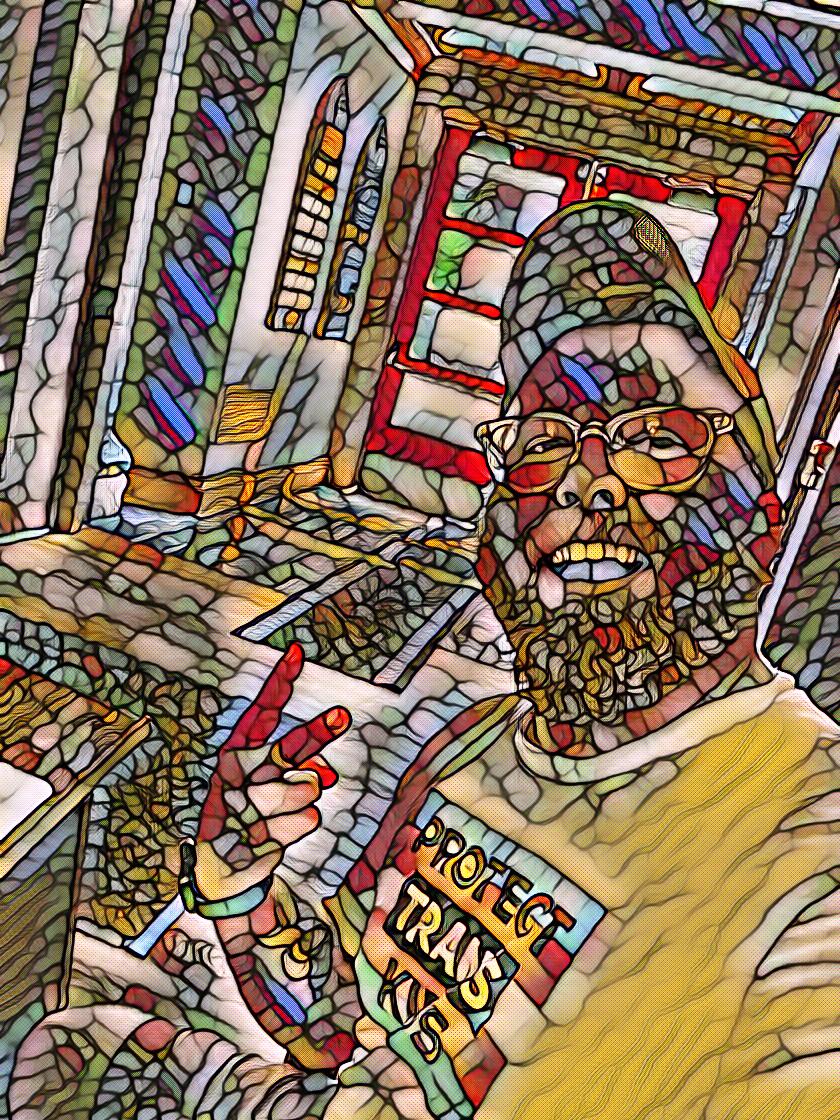
    This is the same Spirit, hope, and conviction that pushes us to say that we must protect trans kids at all costs.

    This is the same Spirit, hope, and conviction that pushes us to say that we, know no person is illegal, and we must care and watch out for our neighbors.

    This is the same Spirit, hope, and conviction that pushes us to say that pushes us to wake up every Sunday morning and make breakfast.

    This is the same Spirit, hope, and conviction that pushes us to say that we, like Father Greg Boyle, see and know the unshakeable good in all people.

    This is the same Spirit, hope, and conviction that pushes us to say that at Trinity Episcopal Church, in downtown Toledo, you are welcome, wanted, and safe.

    This is the same Spirit, hope, and conviction that pushes us to say thanks be to God, and amen.


    [1] Witherington, John’s Wisdom, pg. 342

    [2] Cohen, Oxford Annotated Mishnah vol 2., pg. 490

    [3] Cohen, Oxford Annotated Mishnah vol 2, pg. 490

    [4] Cohen, Oxford Annotated Mishnah vol 2, pg. 490

    [5] Cohen, Oxford Annotated Mishnah vol 2 Pg. 491

    [6] https://www.sefaria.org/Mishnah_Makkot.1.10?lang=bi&with=all&lang2=en

    [7] Witherington, Acts, pg. 232

  • Black History Month

    On Sunday, Black History Month kicked off, and things are a little bit different this year. While the current president made a proclamation on 1/31 of the celebrating of Black history, federal agencies are baring the celebration/observation of it and other things. In this post, I just want to share a few things about it’s official founding, a bit of importance of it, the way my denomination has been impacted by Black history, and some books to read.

    In 1976 Republican President Gerald Ford designated the month of February as Black History Month. This came after years of work from scholar Carter G. Woodson, who established the original, “Negro History Week” which took place the second week of February (make no mistake, Woodson never confined Black history education and celebration to just one week). The reason for this, was it held both Abraham Lincoln and Fredrick Douglas’s birthdays. The Association for the Study of African American Life and History (ASAALH) continues Woodson’s work and continues to be a great resource for learning about Black history. For a reading of Black history and the Episcopal Church, Joyce Crittenden has an incredible article titled, Condensed History of the Black Episcopalian, published on the website for Episcopal Church of All Saints and Ascension’s website that can be reached here.

    The importance of learning Black history can never be understated. Black history is the history of America, and we are tied to it in ways that will never be undone, no matter how may people try. It is a history that must be celebrated even if it is embarrassing or hard for white people to read. With that, I’d like to recommend a few books that changed my life for this month that will open your eyes and break your heart for the better (in no particular order):

    • The Fire Next Time by James Baldwin
    • Black AF History: The Un-Whitewashed Story of America by Michael Harriot
    • The Color of Compromise: The Truth about the American Church’s Complicity in Racism by Jemar Tisby
    • The Assassination of Fred Hampton: How the FBI and Chicago Police Murdered a Black Panther by Jeffery Haas
    • Reading While Black: African American Biblical Interpretation as an Exercise in Hope by Esau McCauley
    • On Juneteenth by Annette Gordon-Reed
    • Between the World and Me by Ta-Nehisi Coates
    • Medical Apartheid: The Dark History of Medical Experiments on Black Americans from Colonial Times to the Present by Harriet A. Washington
    • Black Birds in the Sky: The Story and Legacy of the 1921 Tulsa Race Massacre by Brandy Colbert
    • The Sword and the Shield: The Revolutionary Lives of Malcolm X and Martin Luther King Jr. by Peniel E. Joseph 
    • The Cross and the Lynching Tree by James H. Cone
    • Black Against Empire: The History and Politics of the Black Panther Party by Joshua Bloom and Waldo E. Martin Jr.
    • The Autobiography of Malcolm X as told to Alex Haley
    • Tears We Cannot Stop by Michael Eric Dyson

    As I close out this first short post on Black History Month, I would like to share the following prayer by Canon Carla Robinson. It was prayed at a Circles of Color meeting in 2023 and can be found here. This was shortly after the death of another young Black man, Tyre Nichols. Nichols was beaten by five police officers during a traffic stop, and died in the hospital three days later:

    May God bless the memory of Tyre Nichols. We pray for his family during this time of unspeakable loss and grief. His life mattered. Tragically we have been here time & time again. Lord, grants us the strength and courage to never accept injustice & cruelty as the price for public safety. And give us grace to truly strive for justice and peace and to honestly respect the dignity of every human being.

    Creator, we lift up and thank you for our Black siblings who have shaped history. We pray that the learning happening this month in schools, homes and workplaces will be meaningful and deep-rooted. We pray for open hearts and minds, and spirits willing to learn and be transformed by you. May this month be a time of curiosity and sharing, conversations and celebrations, challenge and encouragement. Loving God, help us to dig deeper, look closer, and think bigger.

    In Jesus name, amen.

    As we celebrate our beloved siblings and continue to work towards being beloved community, may we continue to learn what we do not know, and celebrate from the mountain top.

    Black Lives Matter.
    Black Trans Lives Matter.
    Black Queer Lives Matter.
    Black Women Lives Matter.
    Black Men Lives Matter.
    Black Children Lives Matter.
    Black Healthcare Matters.

    May we never stop saying it, may we never lose sight of it, and may we never forget it.

    Grace and peace friends.

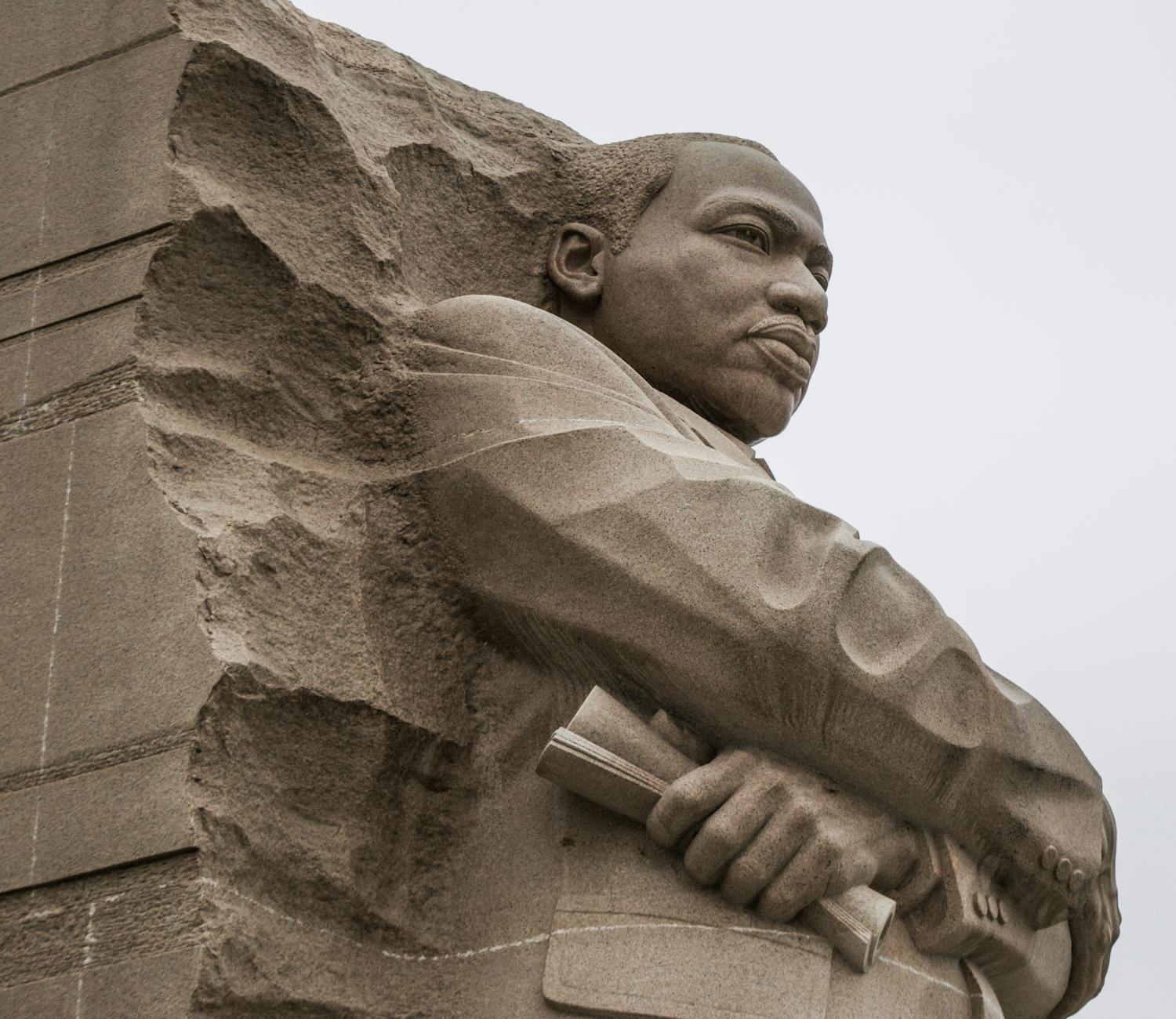
  • MLK Day 2025

    Photo by Gotta Be Worth It on Pexels.com

    It is an irregular day for a post, but considering all that is happening, I thought I’d write a little something. An attempt to put a little good in the world.

    A few years ago, I was asked to preach on MLK observance Sunday, and it was my first time preaching at the new church I was on staff at. To say it was a little intimidating would be correct. But, a few good things came from it, and as far as sermons go, not the worst I’ve preached. This is a bit of an updated excerpt from it waking toward the idea of how we can move forward.

    How can we fight for a world that is aligned with our kin-dom ideals while making room for those who may not like or agree with us? We advocate. In his letter from Birmingham Jail, Dr. King lays out the four basic steps to nonviolent protesting, to paraphrase they are:

    1. Collect the facts and determine from those facts whether injustice is alive and well in the community you’re focusing on.
    2. Negotiation. Engage in conversation with the gate holders and see if there is a way to work within the law to change what is going on.
    3. Self-purification. The attempt to purge the injustice from oneself, so that their eyes can no longer be shut to them.
    4. Non-violent direct action. Showing up and protesting whether it is a sit in, letter writing, or some other form.

    When I was a student at the University of Toledo, I minored in Peace Studies and Education, and through those courses, these four markers came up in class almost every other week. It’s tempting, when preaching to draw upon the model that Dr. King left behind, at least, the perceived model he left. For a very long time, evangelicals and other white people have used the likeness and words of Dr. King in a way that has almost made him a caricature of who he was. 2018 marked the 50th anniversary of his cold-blooded murder, and Michael Harriot wrote an article for The Root labeled, From Most hated to American Hero: The Whitewashing of Martin Luther King Jr. Harriot does not beat around the bush when he states:

    Contrary to popular belief, when King Died, he was not an icon of freedom and equality. In fact, most of the country disliked him. Sadly, on April 4, 1968, a bullet splattered bits of Martin Luther king Jr.’s brains and blood across the balcony of Memphis, Tenn.’s Lorraine Motel. Then, and only then, was white America ready to make him a hero. [1]


    In part, it was Dr. King’s approach to injustice through non-violent direct action that led to his unpopularity. However, there is another way to put it, a way that I prefer, and it was said by one of his contemporaries, Rabbi Abraham Joshua Heschel. To quote Rabbi Laurie Green:

    Upon marching with Dr. King in Selma, Rabbi Abraham Joshua Heschel famously said: ‘I felt my legs were praying.’ Heschel was as passionate about social justice as he was about the Sabbath and prayer. He taught that prayer must be revolutionary…[2]

    Growing up, I was often taught that prayer was a direct communication from myself to God, and that was about it. When I was introduced to concept of praying with one’s feet by my former mentor Don, it kind of broke my brain open about the possibilities of prayer.

    • So, when I say something like, advocate for the world we want, not the one we live in, that to me is an act of prayer.
    • Going after systems of oppression through non-violent direct action is a type of prayer.
    • Realizing that our liberation isn’t just wrapped up in Christ, but the breaking of chains of oppression for all peoples is an act of prayer.
    • Working hard for justice in an unjust is an act of prayer.

    So, on this Dr. Martin Luther King Jr. Day, 57 years since his assassination, may we remember that the work Dr. King stood for is still on going, and that in the work, we are called to be merciful, just as our God is merciful. We have a lot of work to do, and a ton of dirt to get under our nails.

    Grace and peace.

  • Darts

    There are few scenes from television that I can re-watch like the dart scene from Ted Lasso. I’m sure most of those reading will have seen it but if not, let me set the scene. Two men are playing darts in a crowded English pub, and there is a bet on the line. The bet is that if the former owner of the team Ted works for wins, he can pick the lineup for the rest of the season. If Ted wins, the former owner can’t come near the owners box while Rebecca (his ex-wife) owns the team.

    Ted is down in points, and needs to triple twenties and a bullseye to win the game. Before he takes his turn, he begins to speak to his opponent about how he has been underestimated by guys like him his entire life. Ted points out how those people aren’t curious, and their assumptions of him, had nothing to do with who he actually is. Ted comes to this because, curious people ask questions, they don’t make assumptions.

    It is a such a simple observation by Ted, but personally, it really packs a blow at the same time.

    The ability to be curious in a world we know is such a rare thing found in adulthood. This is why I think Ted Lasso stands out compared to other positive characters written for TV. It is also something I think tends to be lost in the Church, an observation pointed out to me by a former mentor. One of the things I had found most helpful during the major deconstruction phase of my faith were good questions. It took a little while for me to want to be curious about reconstructing my faith, but curiosity is what helped it grow.

    Reading rabbinic materials did a great job in re-cultivating the curiosity that evangelicalism killed. Knowing that there is space in faith traditions to play with the text, imagine what it was like, and disagree was such a foreign concept. Rabbi Dr. Tzvi Weinreb in his article, Korack: Two Jews, Three Opinions, writes:

    It is noteworthy in this regard that every single chapter of the work known as the Mishnah, which is the core around which the Talmud developed, contains a dispute between the rabbis on one point or another.

    With the heaviness of the world to come, and the rhetoric that will continue to ramp up (we saw last week at the capitol over bathrooms), it is good to remember that curiosity and questions belong. Not only do they belong, but it curiosity is how we grow and become humans deeper in the image of God. Only those who are afraid (toxic people, christian nationalists, homophobes, transphobes, etc.) will tell you otherwise. The way the writers of Ted Lasso nail this point home in such a disarming way lends to the longevity of the show.

    Stay curious my friends, it will only strengthen our resolve as we march forward. I needed a somewhat uplifting post because I have been stressed, worried, and even a little scared. I hope this gives you room to jump into something new to help balance the way things are going. You can’t fight fascism without remembering the beauty that exists and is worth maintaining. Try Ted Lasso if you haven’t seen it, or Gardner’s World with Monty Don, two sources that allow you to unplug and be filled for an hour.

    Barbecue sauce.

  • Super Tuesday

    I just left the line to vote. This is the first time since moving here that I had seen a line that will last more than 5 minutes.

    The picture above is one I took while dropping something off to a friend back in August. The heart your neighbor sign came from a group trying to reach out to neighbors. Their mission is, “during a year where neighborly love and values are tested through voting, we strive to bring neighbors together in love and harmony.

    On the surface, it’s a great idea. But I, for the life of me, cannot understand how someone can put a sign like that their yard and vote for hate. Maybe in 2016 I could have understood.

    Maybe.

    But we know better now, and I’m only speaking for myself.

    To love your neighbor is to do what is best for everyone with the privilege you hold. Former Presiding Bishop Michael Curry wrote during the 2016 election:

    Go and vote.  Vote your conscience.  Your conscience informed by what it means to love your neighbor.  To participate in the process of seeking the common good.  To participate in the process of making this a better world.  However you vote, go and vote.  And do that as a follower of Jesus. 


    I would amend that to say, if you are a follower of Jesus;

    If you are someone who seeks justice, cares about the poor, widow, and orphan;

    If you strive to till the soil of this world to usher in the kin-dom of heaven;

    Do not vote for him. Lives are on the line.

    Women’s lives are on the line.

    LGBTQIA+ lives are on the line.

    People of Color lives are in the line.

    Those who rely on social security lives are on the line.

    Those who live on the margins lives are on the line.

    I support Palestinians, and she took too long to talk about Gaza in any “meaningful” way. And I’m not sure I trust the outcome. But like uncle Bernie said, “he must be defeated.”

    I can go on, and on but I’ll end it with this:

    Christ have mercy,

    Lord have mercy,

    Christ have mercy.

  • Welcome

    Welcome

    This is my personal website. The thoughts here reflect my own, and not those of my employers, unless they overlap.

    The title of the blog came from Sister Joanne Frania, a spiritual director I saw for a short time. During one of our sessions, I was lamenting about identity in ministry. During it, she blurted out, “what do you expect, you’re just George, George of Sylvania.” At some point I knew I’d restart a blog and I had found the perfect title.

    This is a space where I’ll drop ideas about religion, poetry, or whatever thing I’m writing about. Mostly religion though, as I work in a professional religious setting.

    A little about me, best I am infrequent blogger, and it’s been that way for years. It will most likely stay that way. I’m a suburban dad that lives in an affluent part of Northwest Ohio, with his family and three cats. Privilege is something I recognize and try to use mine to support others.

    Black lives matter.

    Trans lives matter.

    LGBTQIA+ support is not a negotiation.

    Abortion is healthcare.

    God loves everyone, no exceptions.

    I’m George of Sylvania and this is my dumping ground, welcome.