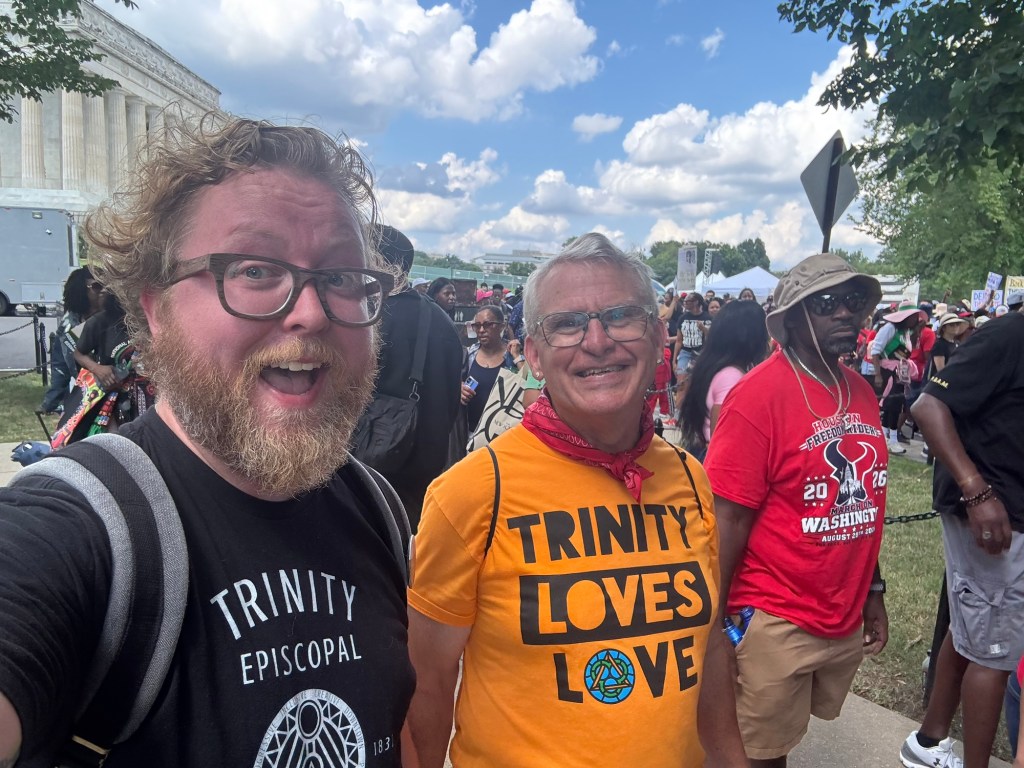
Last Thursday, myself and five other friends of mine from the church I work at drove into Washington DC for the March on Washington: Defending the Vote, the fifth type of march centered on Dr. Martin Luther King Jr’s original March on Washington for Jobs and Freedom. Co-lead by the National Action Network and the Drum Major Institute headed by Rev. Al Sharpton and Dr. Martin Luther King III respectively. It was a rather leisurely trip in taking our time, and I don’t think we could have picked a more interesting group of people to come if we had tried.
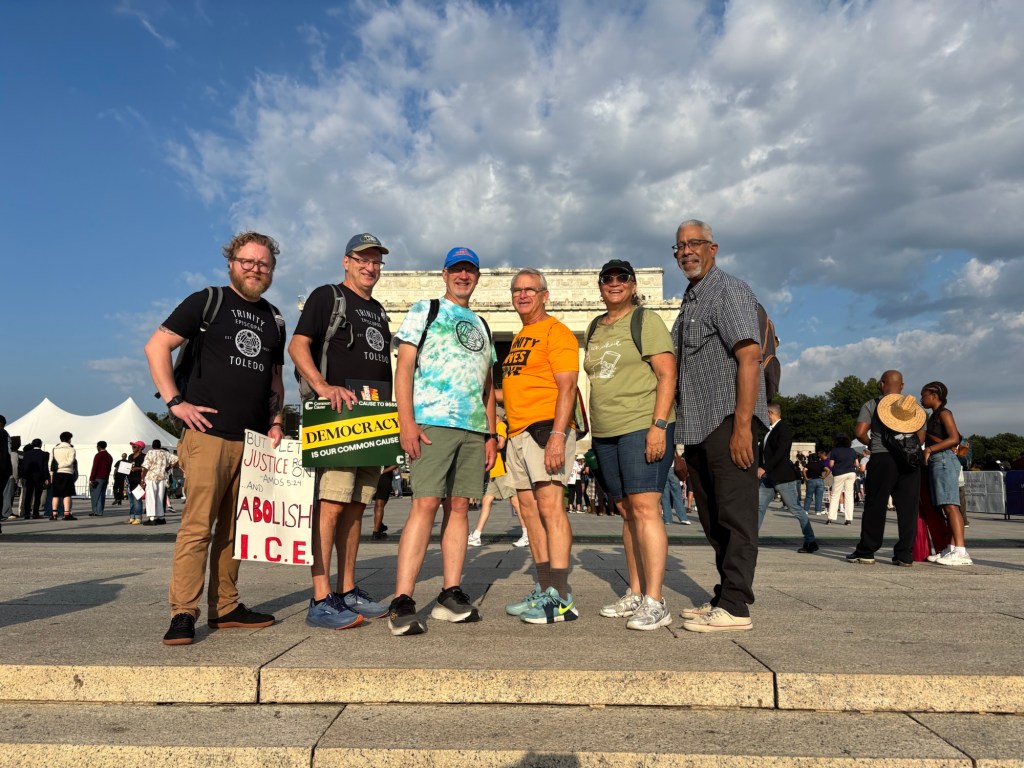
A game of “what’s your story” led us to find out one of our members had traced his lineage to when his family was brought to the US via slave ships (and found out during our drive that his X2 great-grandmother had bought her freedom sooner than he originally had thought; another met his husband on his first day of college in the 1970’s; another had joined a previous march on Washington as a factory worker when she was younger; one is the youngest of 11; and the last one likes to get to know others hence starting the game. With an incredible dinner waiting for us provided by the family member of one of our travelers at their house, we called it a night as we had an early morning.
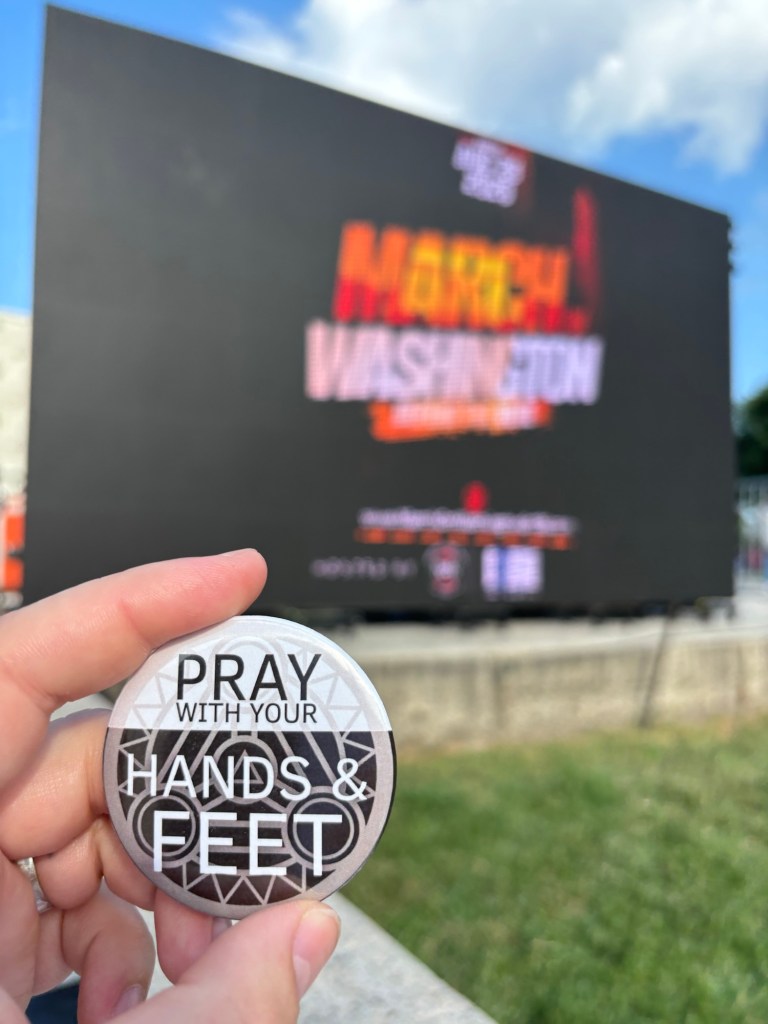
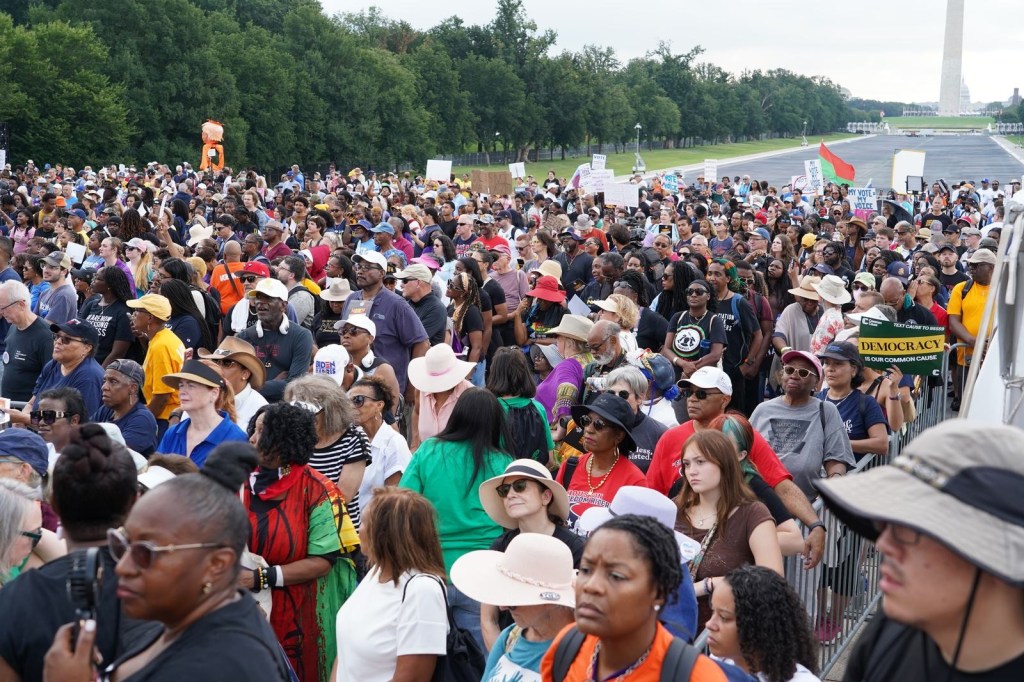
Hitting the metro and hoping off at Arlington National Cemetery we were greeted with the sight of national traitor Robert Lee’s house and then saw the incredibly tacky and generally repulsive “refurbished” gold plated Arts of Peace statutes. As we walked toward the Lincoln Memorial, we took in a moment to remember the Kennedy Center before Trump yet again has his way with it, and being episcopal nerds we may have (totally did) taken a selfie with the far away National Cathedral. Once we arrived at the Lincoln Memorial two things were very clear; one, we had more time than originally thought to get there; and two, Trump really fucked up the reflecting pool. I have been to DC maybe five or six times, and this was the most I have ever seen the city closed off. You could generously, not get within 20 feet of the pool, which made the crowd size look smaller than the amounts that were there. It also did not help that busses were cancelled last minute, and people weren’t notified until after the cancelation.
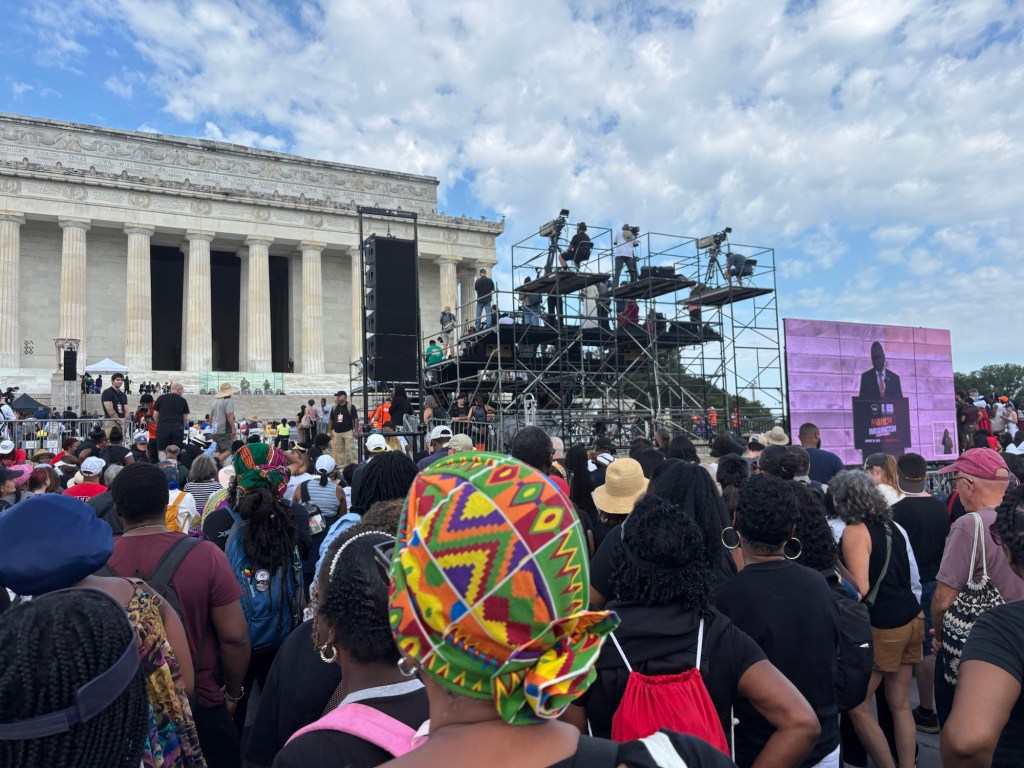
Sun-screened and ready to go, we waited until the first few speakers started after 9:30, and there was a round robin of them until the end. Some key ones for me were Rev. Sharpton, Dr. King III, Sen Bernie Sanders, Rep Ocasio-Cortez, Gov. Spanberger, Derrick Johnson, Janai Nelson, Rev. Shavon Arline-Bradley, Marc Morial, Melanie Cample, many more, and the lackluster and spineless House Minority Leader (who needs to resign) also spoke. While it was a long day, even during the lulls, there was an electricity in the air I have only experienced a few times in my life. When it came time to line up and march, somehow one of my companions and I ended up at the front near Rev. Sharpton and Dr. King, but we were quick to move ourselves further back into the crowd.
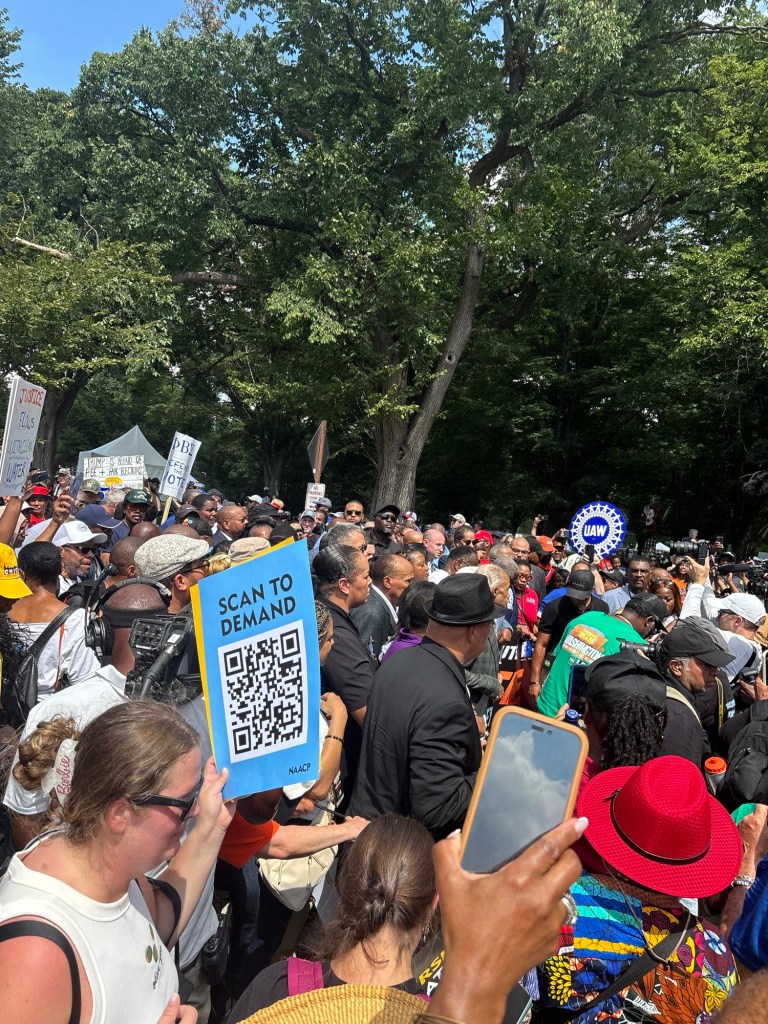
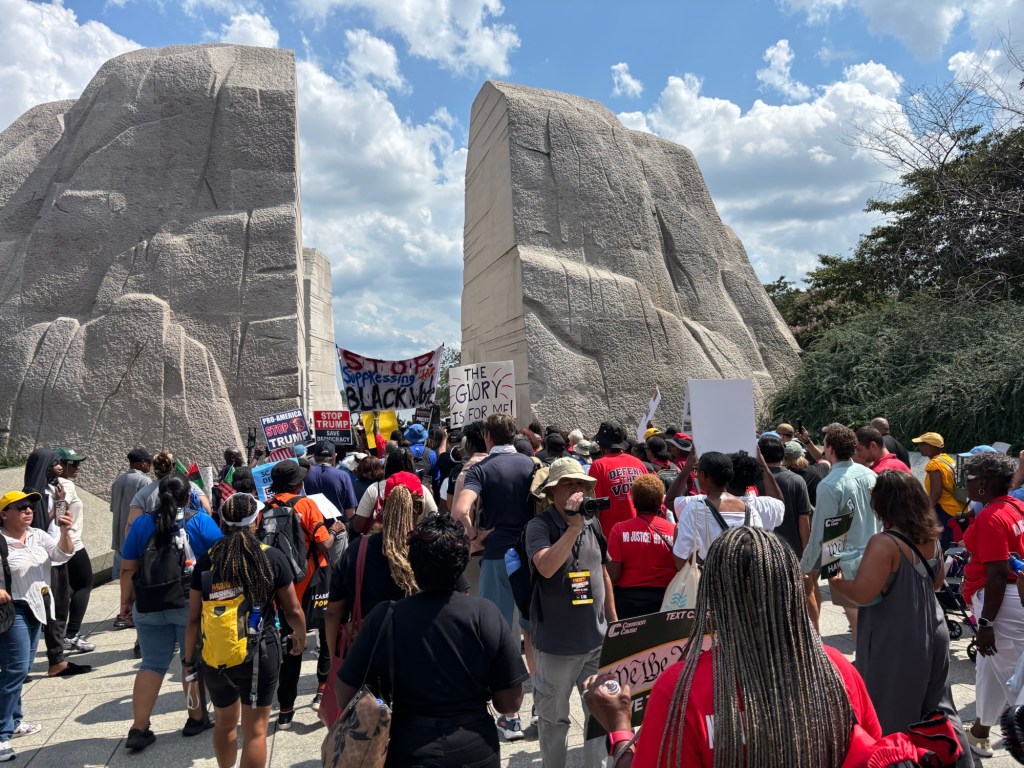
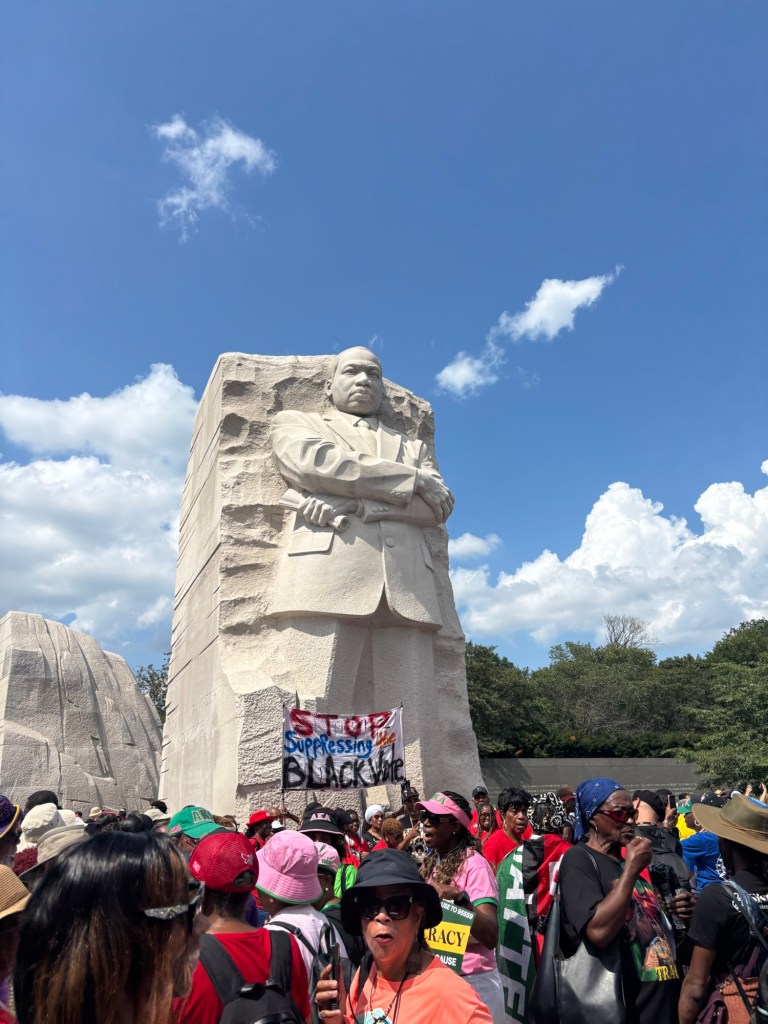
Once we started marching, eventually we made our way to the MLK Jr. national monument where some more words were to be spoken and the day’s events ended. As we were marching into the monument, there is a split wall that almost looks like Moses having parted the Red Sea which was incredibly emotional. But when the Freedom Riders who had bused in from Houston Texas that day started singing, We Shall Overcome, I was a teary mess. Eventually we were all surrounding the monument, and before I knew it, it was over. In another surreal moment, Spike Lee, Rev. Sharpton, Dr. King, and the remaining speakers walked by, some took photos, and that was that. 63 years since the original March on Washington, and people are marching for the same damn things.
As Christians, we are called to bear witness and participate in acts of justice, social and other. These acts can be as small as sharing a meal with a person and getting to know them, bursting your church’s doors open for a Pride parade, showing up like this, praying for a change of heart, writing letters to your representatives, or as Georgia Senator Rev. Raphael Warnock says a vote is a kind of prayer. No politician is perfect, or even the best of what they can be, but we can be the people calling to account and pushing for our fellow image bearers to have the same access to rights as the most privileged amongst us.
Grace and peace my friends.