Category: book recommendation

  • Ring Shout by P. Déjlí Clark

    Ring Shout by P. Déjlí Clark

    Book 3 of my 25 of 2025 is here.

    I love the horror genre, not the brutal torture and gore of the sake of it, but the jump scare, ghosts, monsters, and whatever in between. In the past few years have really delved into the bookish side. To be honest, I am not sure where the love of it comes from, maybe it was watching Ghostbusters as a toddler?

    Could it have been going to the library with my grandmother and spending all my time looking through the Crestwood House Monster Series books. A series of books where the covers were black and white photos of the Universal Monster movies that captivated my eyes and mind at a young age. Either way, this has been my genre of choice when I find that I am bored, or looking for something familiar.

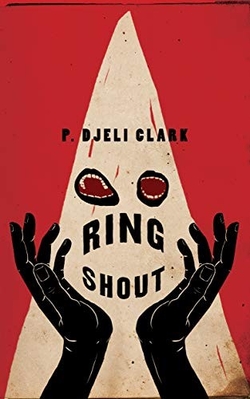
    It should be no surprise knowing this about me, that when I saw the cover for, Ring Shout, by P. Déjlí Clark, I was captivated and knew this would be on my top of the year list. If like me, you were incredibly angry at the cancellation of Lovecraft Country on HBO, this will fill a sort of gap for now.

    From Clark’s website:

    D. W. Griffith is a sorcerer, and The Birth of a Nation is a spell that drew upon the darkest thoughts and wishes from the heart of America. Now, rising in power and prominence, the Klan has a plot to unleash Hell on Earth.

    Luckily, Maryse Boudreaux has a magic sword and a head full of tales. When she’s not running bootleg whiskey through Prohibition Georgia, she’s fighting monsters she calls “Ku Kluxes.” She’s damn good at it, too. But to confront this ongoing evil, she must journey between worlds to face otherworldly nightmares—and her own demons. Together with a foul-mouthed sharpshooter and a Harlem Hellfighter, Maryse sets out to save a world from the hate that would consume it.

    American history is rich with the brutal treatment of people of color at the hands of white people, and while Clark does some really creative work with the revamp of the klan, it builds on the true and horrific history. The white legacy is of treating Black and people of color in this country would make you vomit if we taught the truth in school. That is also why this book is so important to read. After all it is easy to ignore that the United States and the way we treated Indigenous Peoples was an inspiration to Hitler and how he treated European Jewish people.

    Not only is the concept brilliant, but the way that Clark weaves many genre’s is so well done. There are so many twists and turns in this book, you really need to pay attention while reading it.

    Highly recommend this one if you are a fan of the genre, even if you’re not, get uncomfortable and read it.

    At least purchase a copy.
  • Percival Everette

    Percival Everette

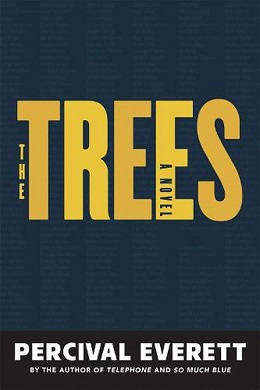
    In 2025 I read two books by Percival Everette, Assumption and The Trees. Both of these should have made my personal best of list, but I just went with the one that stuck with me most. The Trees, for me, is up there with season one of True Detective, as a perfect piece of crime fiction. Here is the description from the publishers website:

    Percival Everett’s The Trees is a page-turner that opens with a series of brutal murders in the rural town of Money, Mississippi. When a pair of detectives from the Mississippi Bureau of Investigation arrive, they meet expected resistance from the local sheriff, his deputy, the coroner, and a string of racist White townsfolk. The murders present a puzzle, for at each crime scene there is a second dead body: that of a man who resembles Emmett Till.

    The detectives suspect that these are killings of retribution, but soon discover that eerily similar murders are taking place all over the country. Something truly strange is afoot. As the bodies pile up, the MBI detectives seek answers from a local root doctor who has been documenting every lynching in the country for years, uncovering a history that refuses to be buried. In this bold, provocative book, Everett takes direct aim at racism and police violence, and does so in fast-paced style that ensures the reader can’t look away. The Trees is an enormously powerful novel of lasting importance from an author with his finger on America’s pulse.

    In what starts off as a typical brutal crime story, it evolves into a story that I don’t want to know the answers to. It is a rare thing for me to read or engage in something where I am okay not knowing all the answers to, but this is close to the top of the charts. Similar to how I would have been okay if season 3 of Twin Peaks never came to be, this could have ended a chapter early and I would have been just as happy.

    The way that Everette is able to move seemingly effortlessly between genres and stories shows how much of a master of the craft he is. My wife and I still talk about this book probably once every 3-5 weeks and it is striking how many details stick out.

    Walk don’t run to your local brick and mortar or library and get this book.

    Grace and peace.

  • Are we the Baddies?

    Are we the Baddies?

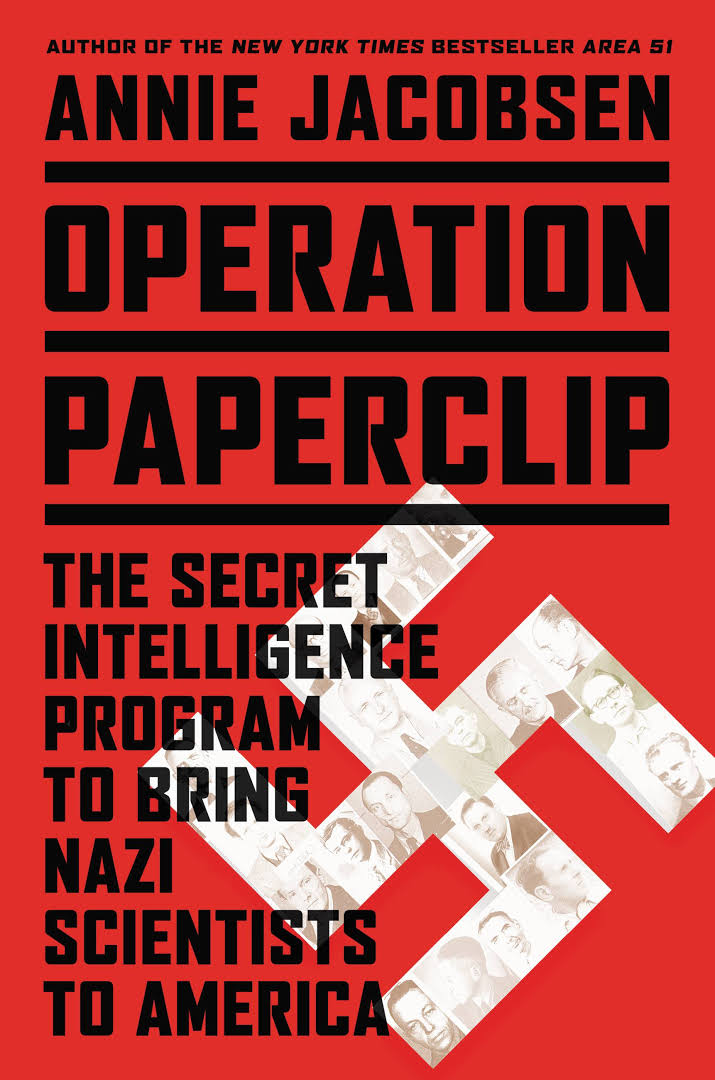
    Operation Paperclip: The Secret Intelligence Program that Brought Nazi Scientists to America by Annie Jacobsen was one of my first books out the gate in 2025, and I still think about it. When I think of the detailed research of this book, what comes to mind is, The Holocaust: A New History by Laurence Rees, another one worth your time, because of the minutia Jacobsen goes into.

    If you are unaware of Operation Paperclip, it was the name given when the United States government brought n*zi scientists into the US to work on military projects, health and medicine, and the space race. The lengths of which the government forgave the acts of despicable men in the name of “fighting” communism made me almost physically sick while reading. One doctor who was working on hypothermia continued his work in the US that had been conducted on prisoners.

    Per the books description:

    In the chaos following World War II, the U.S. government faced many difficult decisions, including what to do with the Third Reich’s scientific minds. These were the brains behind the Nazis’ once-indomitable war machine. So began Operation Paperclip, a decades-long, covert project to bring Hitler’s scientists and their families to the United States.

    Many of these men were accused of war crimes, and others had stood trial at Nuremberg; one was convicted of mass murder and slavery. They were also directly responsible for major advances in rocketry, medical treatments, and the U.S. space program. Was Operation Paperclip a moral outrage, or did it help America win the Cold War?

    Drawing on exclusive interviews with dozens of Paperclip family members, colleagues, and interrogators, and with access to German archival documents (including previously unseen papers made available by direct descendants of the Third Reich’s ranking members), files obtained through the Freedom of Information Act, and dossiers discovered in government archives and at Harvard University, Annie Jacobsen follows more than a dozen German scientists through their postwar lives and into a startling, complex, nefarious, and jealously guarded government secret of the twentieth century.

    I enjoy a hard read, and this one was difficult. The complicity of our government to do horrible things is not a secret. After all H*tler was influenced by our treatment of Indigenous people and eugenics is a very American science. But to see how quickly people are willing to throw away morality in the name of power makes me physically sick.

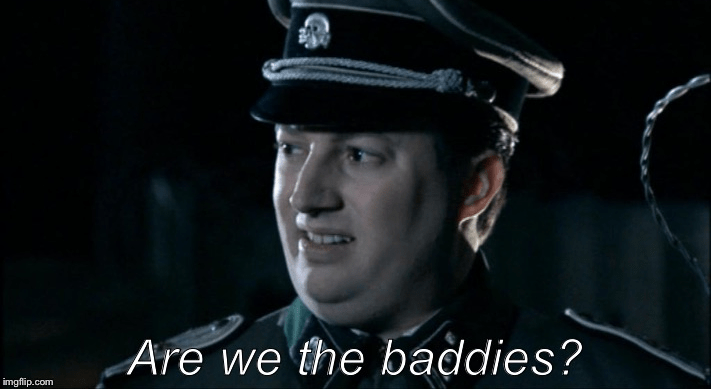
    This meme is still true, especially when we consider the cruel actions of our current administration.

    That said, 10/10 read, you should read this book. It will drop scales from your eyes in a very needed way. Some of it may be old hat, but even portions of that

    Grace and peace.

  • The Tears of Things

    The Tears of Things

    By Emil Nolde – Museum of Modern Art, New York, PD-US, https://en.wikipedia.org/w/index.php?curid=12197419

    There must be someone in every age who can tell the faith community, and society at large, Your first egoic glance at life–and God– is largely wrong! And it is largely engendered by fear.”

    – Fr. Richard Rohr

    I started reading Father Richard Rohr when I was still a reluctant evangelical. It was during the reconstructing of my faith phase where I picked up Falling Upward. If I remember correctly, I had either heard him on a Rob Bell Robcast, or a recommendation from my friend Adam. This book drove me to a place of openness not just about his work, but to my approach of God. While I laugh to myself now about being concerned reading a catholic priests book, the idea of approaching God and others at the time with love over dogma/theological treaties, coming from a Roman Catholic priest, was mind blowing.

    In October, I had just finished presiding over a memorial service for a friend when a woman I consider a prophet in our times approached me with a book. We had shared this bizarre end of life journey together with this mutual friend, and given she is a close to 90 year old spiritual director, I tend to listen when she has something to say. It was Richard Rohr’s new book, The Tears of Things: Prophetic Wisdom for an Age of Outrage. The book was accompanied by a card, and part of what she wrote inside said, “I think this may be of interest since Rohr’s contemplating and acting is much of who you are.”

    The amount that this card and her thoughts touched me, I cannot properly describe, however, I am still touched by it. Especially since I have now enjoyed Fr. Rohr’s work for well over a decade. Each one of his books build on one another, but for me this one takes the cake. The place of a modern prophet is something I have struggled with, especially considering how most of American Christianity treats the concept of one.

    This book is scratching that itch in a way I never thought possible. For quite a while, I have adopted a mantra a friend of mine introduced me to, which is, “the status quo is a bully.”As I am deep in editing my next book, which is a call for peacemaking, I spend time talking about standing against the status quo. So when I read this quote from Rohr’s new book, I had to sit in silence for a moment.

    “We have spent the centuries and millennia since constructing the same kinds of self-serving power centers that Jesus and the prophets denounced, and most of us are resigned to this status quo.” pg. 22

    Structures and systems exist for a reason, and some of these are good. Some continue to uphold the system for the sake of the system, because we have to keep the system in place to uphold the status quo.

    Any “normal” way of business that continues to keep people in states of marginalization and oppression are not “normal” or “moral.”

    The want or need to have power over another person is not a “normal” or “moral.”

    The federal level of government and how it has treated people in the United States may have been “normalized” over the centuries, it has never been “moral.”

    The kidnapping of American citizens is not “normal.”

    Abducting heads of foreign states is not “normal” especially when we are not at war is not “normal.”

    Friends, look for and listen to the prophets in your life who are calling for the liberation of the oppressed.

    Look for the ones who remind us that, as Rohr writes, “we like our illusions, we like having enemies, and we are quite accustomed to our wars and prejudices as much as we insist the contrary.”

    Look for the ones calling for leading with love, and accountability for those who have been wronged.

    We need them, and you, now more than ever.

    Grace and peace.

  • Top 25 of 25: Book Look Back

    Top 25 of 25: Book Look Back

    Books, not my actual home library
    Photo by Juan Pablo Serrano on Pexels.com

    I enjoy reading, a lot. I do not care if it is physical, digital, or audio, books are a constant companion in my life. To the point where I have averaged reading about 73 a year since I started tracking them in 2020.

    I just love the concept of them, how words can contain multitudes of worlds. The smell of them, the thrill of finding one you’ve been looking for. This is not always a relationship I have had with them. Growing up I also liked the idea of them, I would read almost any of the Great Illustrated Classics I could get a hold of. As someone with a reading disorder, that was incredibly embarrassing, those classics were perfect for me. Every other page was an illustration, and it helped immerse me in the story.

    The only books I remember reading that was required in high school were A Tale of Two Cities (which I love) and A Catcher in the Rye (which I hate). When I joined the navy, I spent time out to sea reading in the tower I worked in, and would get through maybe a book a month. Then I found out about audio books, which started my practice of purchasing two copies, one to listen to, one to mark up and use for rereading/bettering comprehension.

    As my interest in theology deepened so did my insistence on reading physical copies of books. This allowed me to destroy whatever book was in my path; underlining, writing in the margins, dog-earing, whatever. I still do this, then pull out whatever half filled moleskin I thought would fix me to start writing the ideas and thoughts that came with whatever I had just read.

    During the pandemic, my wife encouraged me to try out more fiction, which was something I did not really want to do. Do not get me wrong, I was not taking an elitist position, it was just that fiction wasn’t something I liked outside of my comic books or graphic novels. At the time I just preferred to read non-fiction or theology if I was going to dedicate the time to picking up a book. I wanted to learn something true about the universe/world/life/whatever, if I was giving up anywhere from 5-12 hours of my time. It was when I started back to school to finish my bachelors degree, and after we had our kid that I took her advice.

    I was so wrong for waiting so long.

    With all of that in mind, please enjoy the top 25 books I read in 2025. These are listed in no particular order, and over the next year I will be posting about each one individually. Some posts may be long, some will be short, but in the dark time we find ourselves in where Americans are being abducted by masked police, a white kid who has no business podcasting are trying to break into daycare’s, and abducting a leader of a foreign country, sometimes a book recommendation will help provide some balm to the soul.

    1. Operation Paperclip: The Secret Intelligence Program that Brought Nazi Scientists to America by Annie Jacobsen
    2. The Ethnic Cleansing of Palestine by Ilan Pappé
    3. We Uyghurs Have No Voice: An Imprisoned Writer Speaks by Ilham Tohti
    4. Katabasis by R.F. Kuang
    5. The Bible Told Them So: How Southern Evangelicals Fought to Preserve White Supremacy by J. Russell Hawkins
    6. Tender is the Flesh by Agustina Bazterrica 
    7. Ordinary Men: Reserve Police Battalion 101 and the Final Solution in Poland by Christopher R. Browning
    8. Monk and Robot: A Psalm for the Wild Built and A Prayer for the Crown Shy by Becky Chambers
    9. One Day Everyone Will Have Always Been Against This
    10. Nuclear War: A Scenario by Annie Jacobs
    11. The Whole Language: The Power of Extravagant Tenderness by Gregory Boyle
    12. Between Two Fires by Christopher Buehlman
    13. Ring Shout by P. Djéli Clark
    14. The Trees by Percival Everette
    15. The Bone and Sinew of the Land: America’s Forgotten Black Pioneers & the Struggle for Equality by Anna-Lisa Cox
    16. The Burning: The Tulsa Race Massacre of 1921 by Tim Madigan
    17. The Color of Compromise: The Truth about the American Church’s Complicity in Racism by Jemar Tisby 
    18. The Black Wolf by Louise Penny
    19. Coming Up Short: A Memoir of My America by Robert B. Reich
    20. Slewfoot: A Tale of Bewitchery by BROM
    21. Erasing History: How Fascists Rewrite the Past to Control the Future by Jason Stanley  
    22. The Message by Ta-Nehisi Coates
    23. King of Ashes by S.A. Cosby
    24. Bringing the War Home: The White Power Movement and Paramilitary America by Kathleen Belew 
    25. Twilight of Democracy: The Seductive Lure of Authoritarianism by Anne Applebaum

    Grace and peace my friends, and happy new year.